Error-Ref.com

You are here: Home / Search for "off center"

Search Results for: off center

Retained Cuds: Horizontal Offset

PART IV. Die Errors:

Cuds:

Retained Cuds (with horizontal offset)

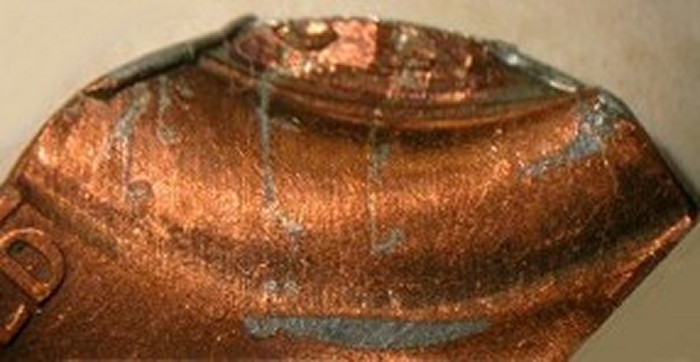
Definition: A retained cud is a piece of a die that breaks off completely but is held in place. Retained cuds of the anvil die are held in place by the collar while retained cuds of the hammer die are presumably held in place by the bolts that secure the die in its recess. Retained cuds of the hammer die are much rarer, as die fragments tend to fall out with the assistance of gravity.

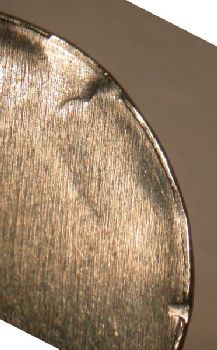
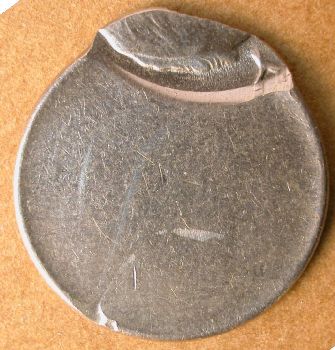
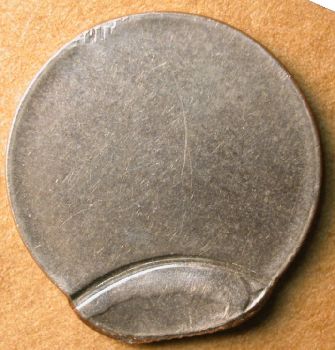
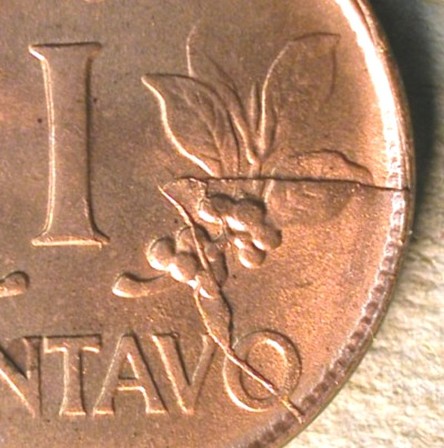
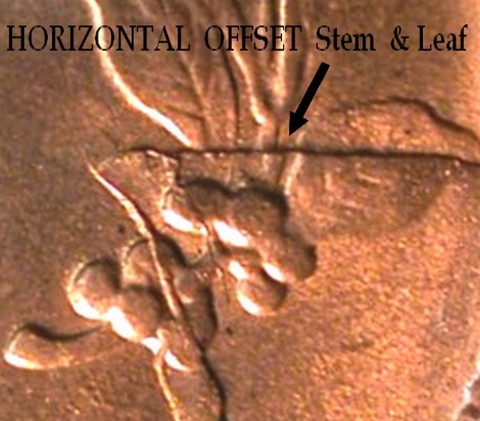
In order to diagnose a retained cud, one needs to see vertical displacement and/or horizontal offset. Vertical displacement simply means that the die fragment sinks in below the level of the die face, leaving the coin’s design sitting on a corresponding plateau. Horizontal offset means that the fragment slides along the break, leaving contiguous parts of the design out of alignment with each other on either side of the break.

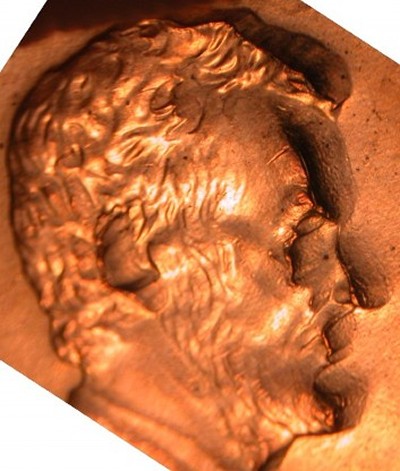
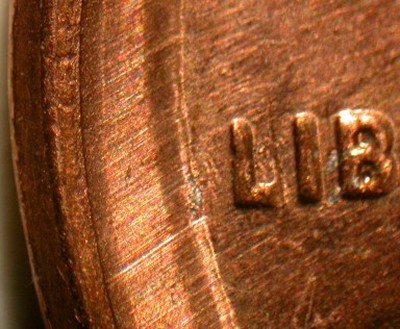
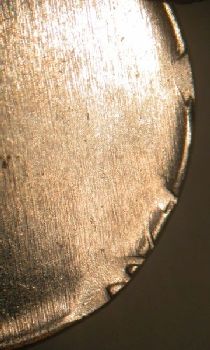
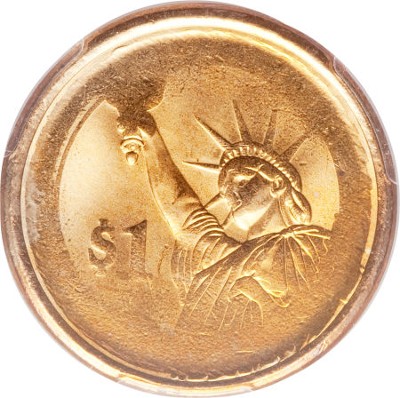
Depicted below are close up images of a Columbia one centavo with a retained cud. While there is more going on here in addition to the horizontal offset, it is our focus for this illustration.
Irregular Planchet Off Metal

PART V. Planchet Errors:

Irregular Planchets:

Scraps / Fragments:

Off-metal

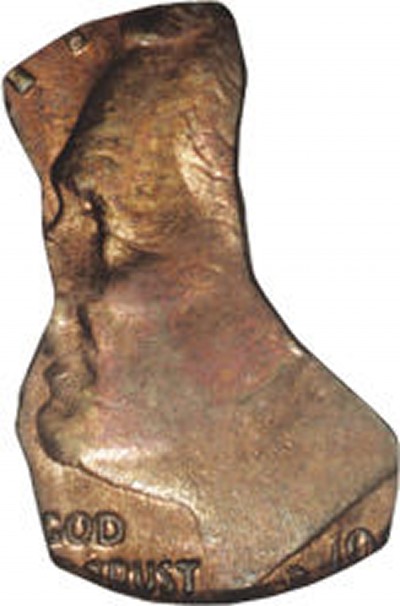
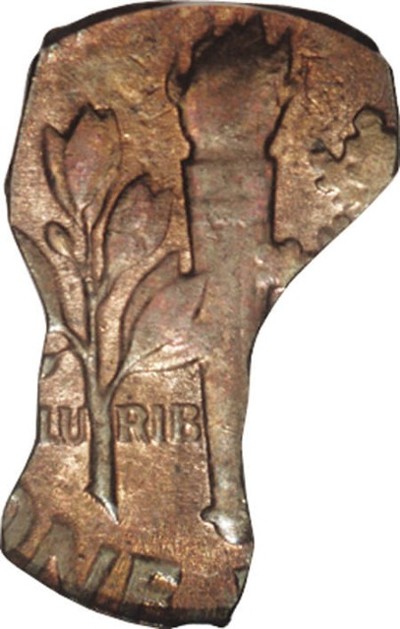
Definition: Occasionally fragments of metal are struck that have a composition different from the coin whose design it carries.  Sometimes the composition of these fragments matches those of another denomination.  In other cases the composition is quite exotic.

This undated Roosevelt dime has been struck on a piece of copper scrap metal.

Images are courtesy of Heritage Auctions.

Design Scraped Off Ablation First Strike

PART VI. Striking Errors:

Design Ablation Error:

On First Strike

Definition: The die-struck design on the surface of a coin is scraped off by lateral (horizontal) die movement.

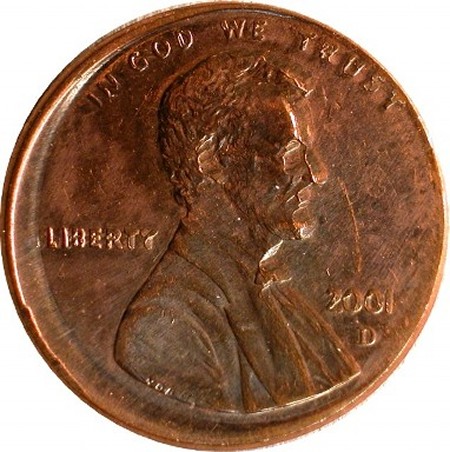
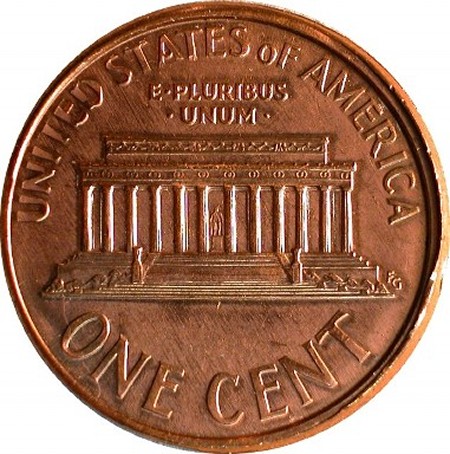
This 2001-D Lincoln cent exhibits a design ablation error on the first strike.  The hammer die made initial contact with the planchet in a centered position but settled in a misaligned position.  During its lateral shift toward the northeast, the hammer die continued its descent through the body of the coin.  The completion of the downstroke amounted to no more than a fraction of a millimeter of vertical distance.  The combination of movements (vertical and horizontal) left a crescentic “zone of ablation” on the left side of the coin.  All design elements that were generated by the initial, centered impact of the hammer die were completely scraped off.  The zone of ablation is filled with fine parallel striations and shows a very gentle downward slope that begins at the original design rim.

After reaching the lowest point of its downstroke, the hammer die lurched toward the southwest, dragging itself through the newly-struck design.  This left the design grotesquely distorted.  This form of distortion is classified as a form of machine doubling known as slide doubling.  Design ablation errors that occur on the first strike are usually associated with severe slide doubling.

Design ablation errors on the first strike are usually misidentified as simple misaligned die errors.

Design Scraped Off Ablation Second Strike

PART VI. Striking Errors:

Design Ablation Error:On Second Strike

Definition: The die-struck design on the surface of a coin is scraped off by lateral (horizontal) die movement.  This can occur on a first or second strike.

This quadruple-struck 2000-D Lincoln cent was struck with inverted dies (reverse die acting as hammer die).  The first strike was normal.  The third and fourth strikes were received in tandem as the coin straddled two adjacent striking chambers (a saddle strike).  The second strike was off-center, uniface, and incorporates a design ablation error.

During the second strike, the impact of the hammer die on the reverse face was relatively weak, even though the aggregate thickness it confronted was doubled by the presence of an an underlying planchet.  After making light contact with the surface of the coin, the hammer die shifted a considerable distance toward 12:00 (reverse clock position).  As the die moved northward, it completely scraped off the first-strike design elements and whatever second strike design elements were generated during the initial impact.  All that is left is a series of fine parallel striations that expose a little bit of the zinc core.

This is the only known example of a design ablation error on the second strike.

Broadstrike: Uncentered

PART VI. Striking Errors:

Broadstrike:

Uncentered

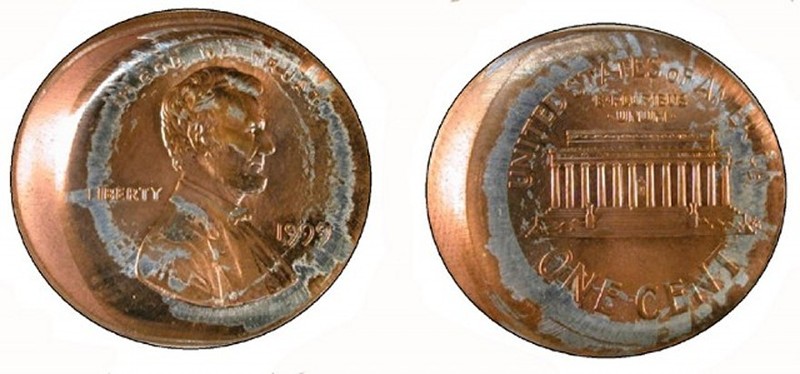
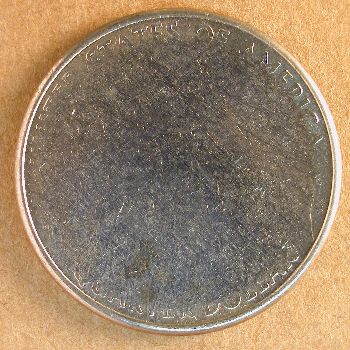
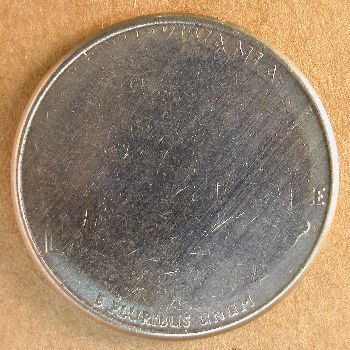
Definition: When a planchet is poorly centered and then struck out of collar, it ends up as either an off-center strike or an uncentered broadstrike.  To qualify as an uncentered broadstrike, the design must be fully present on both faces.  If the design is cut off at the edge on one or both faces, it is an off-center strike.

Various factors determine whether a poorly centered planchet ends up with some of the design cut off at the edge.  One factor is, of course, how far to one side the planchet settles.  Another factor is the strength of the dies’ impact.  A very strong impact will cause significant expansion of the planchet and turn what would ordinarily be an off-center strike into a an uncentered broadstrike.  The third factor is the coin’s design.  If peripheral lettering is separated from the design rim by a significant gap, it has a greater chance of ending up as an uncentered broadstrike, all other things being equal.  Likewise, if the design rim is quite broad, the coin once again stands a good chance of ending up as an uncentered broadstrike, if we control for planchet positioning and striking pressure.

The above images show an uncentered broadstrike that occurred on a 1999(P) Lincoln cent.

Bi-metallic Misaligned Center Hole

PART V. Planchet Errors:

Bi-metallic Errors:

Misaligned Center Hole

Definition: Bi-metallic error coins are restricted to foreign countries. These coins may experience any of the many types of striking errors listed in the Error-Variety Ready Reference however, one must understand we are dealing with two components, a ring & a core. Any number of exotic possibilities or combinations of die varieties, die errors, planchet errors & striking errors can be found on bi-metallic coinage.

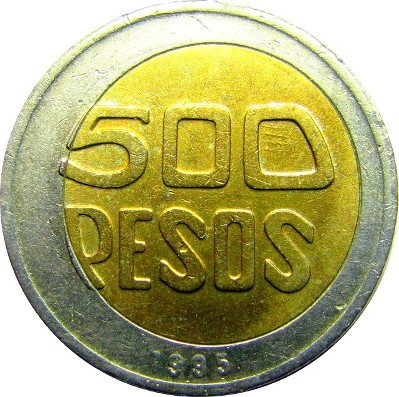
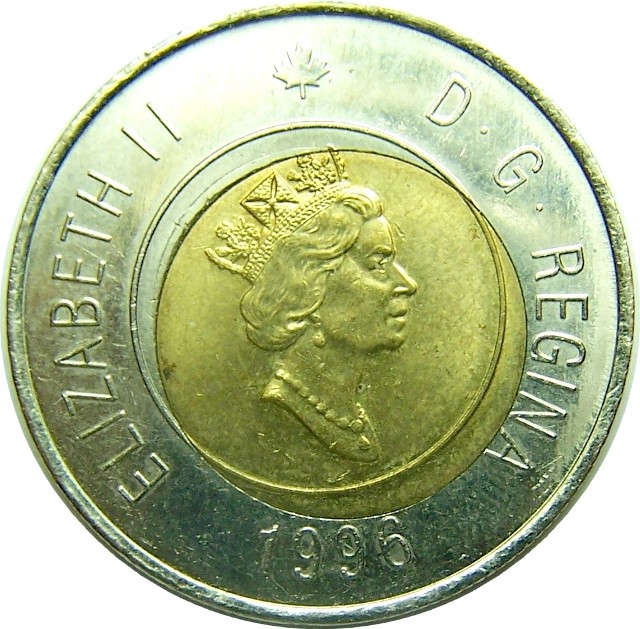
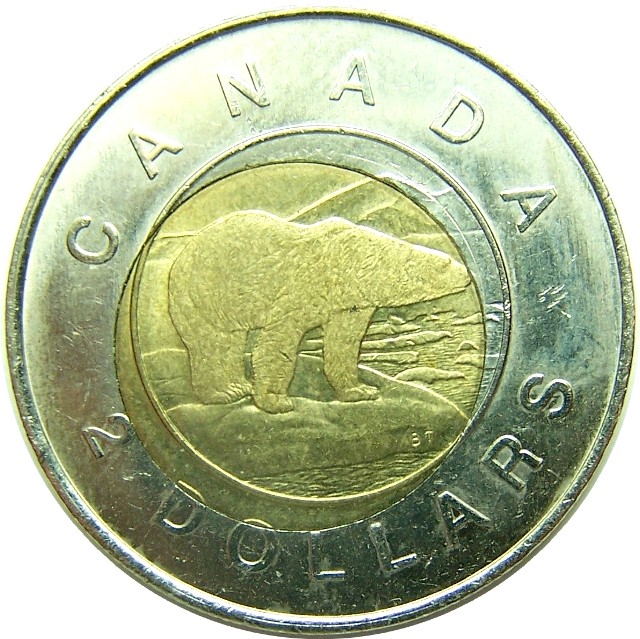
Either the punch or the solid ring planchet was misaligned when the disc was pierced. The core itself appears misaligned only because the center hole is off-set.

Two specimens are shown.
A 1995 Columbia 500 pesos with center hole misaligned.

A 1996 Canadian polar bear two dollars. The center hole is clearly misaligned.

Rim-Restricted First Strike

Part VI. Striking Errors:

Weak Strikes:

Rim-Restricted First Strike

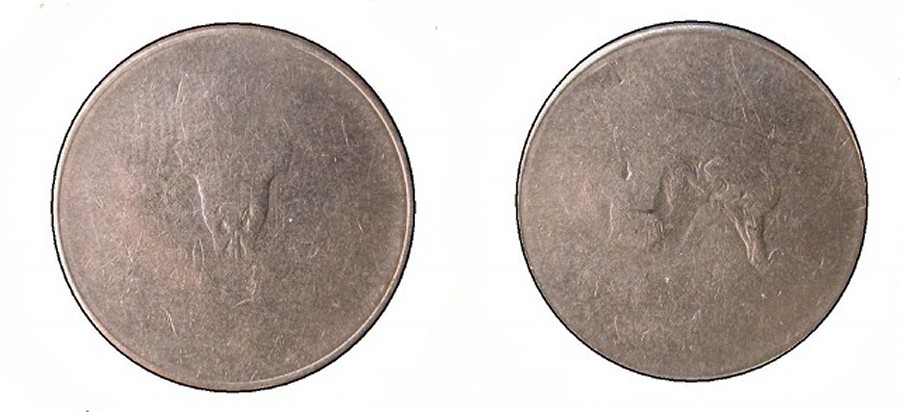
Definition: A weak strike caused by insufficient die approximation in which the dies are so far apart at their closest approach that they only manage to contact the planchet’s proto-rim.  This error can appear on centered planchets and off-center planchets.


The dies that struck this 1999 Pennsylvania quarter were so far apart that they only managed to strike the planchet’s proto-rim.  This created a halo of design on both faces while leaving the center of the coin unmarked.  Since the inward slope of a strongly developed proto-rim can extend further into the planchet than the design rim, it is possible to get a rim-restricted first strike on a perfectly centered planchet.


This dime was struck approximately 70% off center by excessively spaced dies.  There is a faint trace of Roosevelt’s throat in the field.  Otherwise, obverse design elements are restricted to the proto-rim.  These include his lip, chin, and back of his neck..  Reverse design elements appear exclusively on the proto-rim and include portions of the flame and several olive leaves.  Interestingly, the planchet is pristine, having avoided all tumbling marks that are ordinarily picked up in the annealing drum, chemical rinse bath, riddlers, and other sources of planchet-to-planchet contact.


This dime received two off-center strikes.  It’s not clear whether it is a saddle (tandem) strike.  The off-center strike that is die-struck on both faces is very weak.  In the obverse field, there is a faint trace of Roosevelt’s forehead and crown.  A more strongly struck impression of his brow appears on the proto-rim.  On the reverse, the first three letters of PLURIBUS appears on the proto-rim, with no design elements visible in the field.  The other off-center strike is well-struck, in part because a previously-struck dime was taking up any excess space that may have existed (generating a “mirror” brockage of the obverse design on the reverse face).

Weak Strikes

PART VI. Striking Errors:

Weak (Low Pressure) Strikes

Definition: A weak strike results from two proximate causes, inadequate ram pressure or insufficient die approximation (excessive minimum die clearance). Ram pressure is the tonnage applied to a planchet of normal thickness. Insufficient die approximation refers to the minimum approach the dies make to each other in the absence of a planchet.  In many cases it is difficult or impossible to assign proximate cause.  However, when a weak strike is accompanied by another error, or a weak strike progression can be assembled, the most common proximate cause appears to be insufficient die approximation.  The dies simply don’t approach each other closely enough to leave a strong impression.

Ultimate cause is virtually impossible to determine.  A weak strike could be due to a loose or cracked press frame, a loose or broken knuckle joint, a mistimed anvil or hammer die, a broken cam associated with either die, a jam-up in the guts of the press, a jam-up associated with an adjacent die pair, a broken circuit breaker, or simply dies that have fallen out of adjustment.  A weakly struck coin could also be a test piece, otherwise known as a “die adjustment strike” or a “die trial”.  Many weak strikes are labeled as such.  But unless you were there the moment it was struck, there is no way to know.  Therefore the terms “die trial”, “die adjustment strike”, “test piece”, and “set-up piece” should be abandoned.

Most, if not all weak strikes available in the marketplace appear to be the result of spontaneous equipment malfunction.  The evidence for this is abundant and manifold.

  1. These errors are far too abundant to represent escapees from a test run.  Test strikes are supposed to be set aside and consigned to the furnace for melting.  You wouldn’t expect many coins to escape this fate.
  2. If these were test pieces, then you’d expect the greatest number of weak strikes to involve the denomination that is produced in greatest abundance – cents.  However, weak strikes occur most frequently in dimes.  That’s what you’d expect of weakness caused by spontaneous equipment malfunction.  Dies that strike thin planchets have a very narrowly constrained minimum die clearance.  If the clearance grows just a little bit, the strike will be weak.  If the clearance shrinks even slightly, the dies are likely to clash.  Thicker denominations have a much more generous clearance range.  It is among these denominations that you’d expect to find fewer weak strikes, and this is indeed the case.
  3. Weak strikes can be found in association with a wide range of errors – double strikes, triple strikes, saddle strikes, misaligned die errors, clashed dies, indents, partial brockages, full brockages, struck-through errors, etc.  Given how rare escaped test pieces are projected to be, multi-error test pieces should be as rare as unicorns.
  4. On multi-struck coins, a weak strike can immediately follow a strong strike and a strong strike can immediately follow a weak strike.  Such rapid changes in die clearance (or ram pressure) would not be expected in a test run.
  5. Weak strike progressions can move in either direction – from weak to strong or from strong to weak.  Such a progression can also show an erratic pattern of strengthening and weakening.  That’s not what you’d expect of a test run.
  6. On saddle strikes, one off-center strike can be strong and the other weak.  With respect to saddle strikes on previously-struck coins, the first strike can be weak while the two off-center strikes can be strong.  The reverse situation has also been recorded.  A weak first strike can then receive a saddle strike in which one of the off-center strikes is weak and the other is strong.  None of these patterns is consistent with a test run scenario.

Weak strikes are sometimes confused with grease strikes – coins that are struck through a heavy layer of compacted die fill.  It’s actually quite easy to tell the two errors apart.

  1. A weak strike will show a poorly developed or absent design rim.  A grease strike will show a very well-developed design rim.
  2. A weak strike will retain some, most, or all of the planchet’s original proto-rim.  The proto-rim is erased in a grease strike.
  3. A weak strike will retain the beveled rim/edge junction of the  planchet.  The bevel will be lost in a grease strike.
  4. The edge will be weakly struck and relatively narrow in a weak strike.  The edge will be tall and vertical in a grease strike.
  5. Reeding will be weak or absent in a weak strike.  Reeding will be very strong in a grease strike.
  6. In a weak strike, extent and pattern of weakness will be essentially the same on both faces.  Uneven weakness is a hallmark of most grease strikes.

The photo below shows a weakly-struck 2007 Montana quarter.  It was struck on a Schuler press, a model that doesn’t even require ram pressure and die clearance to be adjusted by means of a test run.  The design rim is fairly well formed because state quarter dies have a relatively flat die face (very little die convexity).

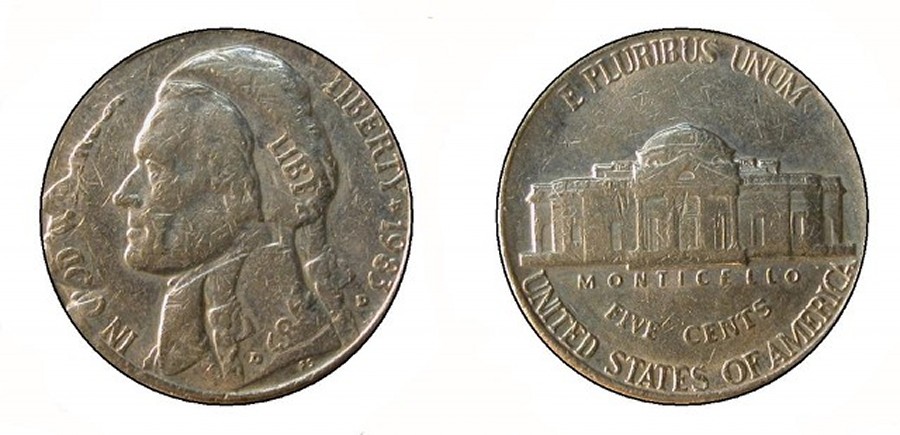
Shown below is a 1983-D 5-cent coin with a weak second strike delivered by a rotated (25 degrees) and misaligned (26%) hammer die.

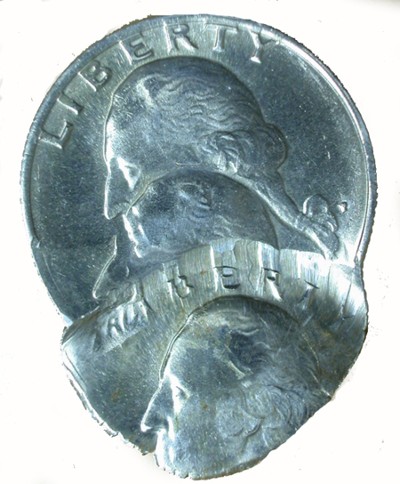
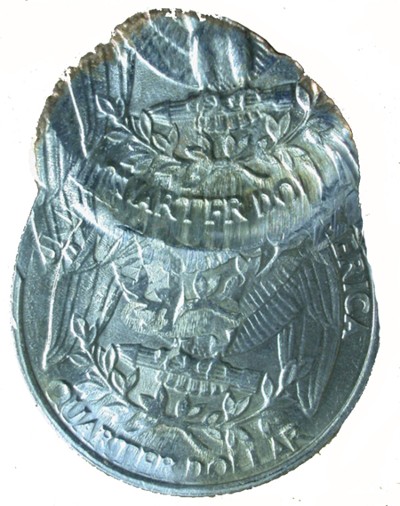
This quarter dollar was struck three times by the same die pair. The first strike was normal while the second was 40% off-center and exceedingly weak.  The third strike was 75% off center and forcefully delivered.  This specimen also illustrates the self-correcting nature of some malfunctions responsible for weak strikes.

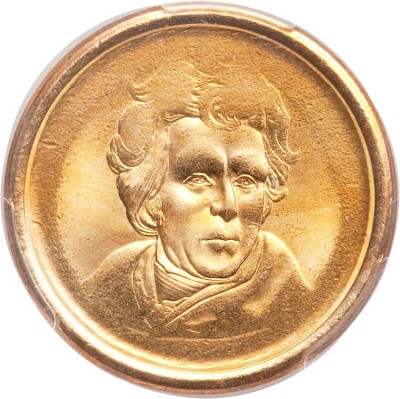
This 2008-P Andrew Jackson dollar coin did not receive a full strike. Insufficient ram pressure (applied tonnage) or insufficient die approximation are the culprit in this case. This error is often  erroneously called “a die adjustment strike”.

Images are courtesy of Heritage Auctions

Mulitple Strikes Flip Over

PART VI. Striking Errors:

Multiple strikes:

Flipover Double and Multi-Strikes

Definition: Most multi-strikes show the same face struck repeatedly. Coins that flip over between strikes are rarer.

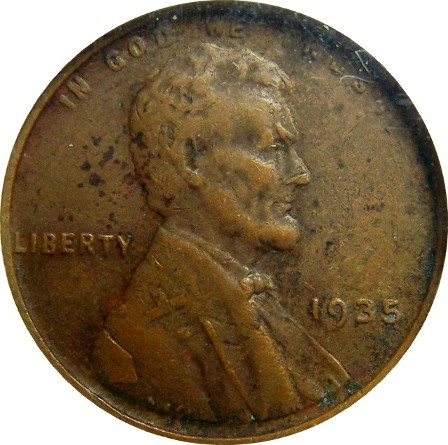
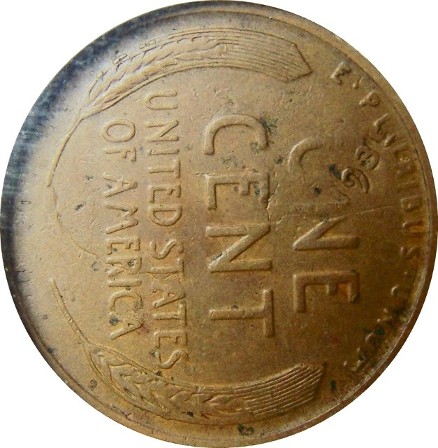
The 1935 Lincoln cent shown below is an in-collar, flipover double strike.  After a normal first strike, the coin flipped over and landed back inside the collar.  It was then struck a second time.


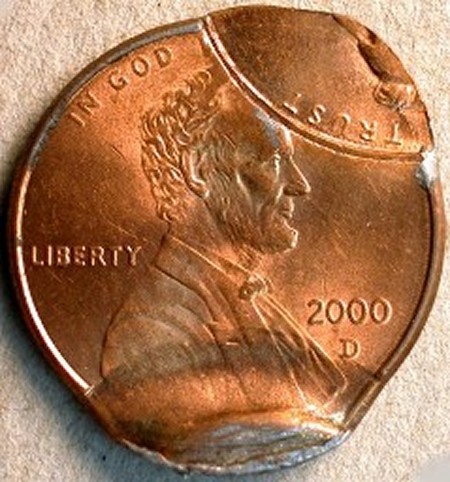
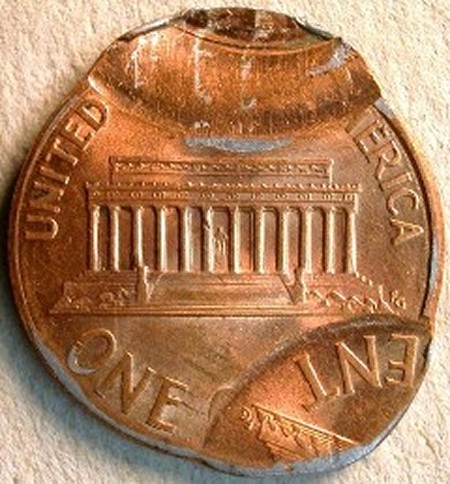
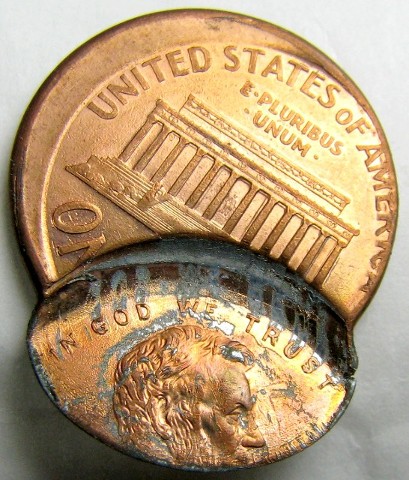
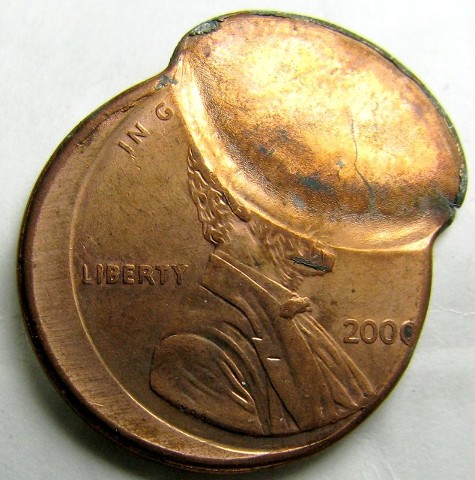
The 2000 Lincoln cent shown below was first struck off-center.  It then  flipped over and was struck a second time
even farther off-center.  The second strike is uniface (struck against another planchet).

Index Of Completed Entries

Index entries are a mixture of higher-level and lower-level entries.  Lower-level entries are often inserted into the index in alphabetical order and may therefore be separated from the higher-level entry they fall under in the Checklist.

A

Abrasion Doubling

Absent Edge Lettering

Abnormally Strong Strike: Due to Stacked Coins or Planchets

Abnormally Strong Strike: Extremely large Broadstrike

Abnormal reeding: Low, Narrow Reeds

Abnormal Upset

Accidental Die Abrasion

Acid Jobs

All Clad or Coreless Coins 

Alloy Errors: Intrinsic metallic inclusions

Annealing Error: Improper Annealing

Anvil Die Collar Clash

Arcing Rim-to-rim Die Crack

Assay Clips

Assay Value Repunched 

Asymmetrical: Split die

 B

Bilateral, Radial, Antipodal Die Breaks

Bilateral Split Collar

Bi-level Die Cracks

Bi-metallic coin 1993, 50 Roubles; temporal/transitional mule

Bi-metallic coin with Doubled Punched Center Hole

Bi-metallic coin with Incomplete Trilaminar Core

Bi-metallic coin with Misaligned Center Hole

Bi-metallic coin with Misaligned Core

Bi-metallic coin with Ring Accidentally Punched from Solid Metal coin

Bi-metallic coin with Ring Incomplete Punch

Bi-metallic coin with Struck Core

Bi-metallic coin with Struck Core from Another Country

Bi-metallic coin with Struck Outer Rings

Bi-metallic coin with Wrong Core Inserted

Bi-metallic design struck on wrong bi-metallic planchet

Bi-metallic planchet Struck by Solid Denomination Design

Bi Metallic Ring Struck with dies From the Wrong Country

Bi-metallic Solid Denomination Planchet Struck by Bi-metallic Dies

Blakesley Effect

Blank

Blanking and Cutting Errors

Blanking Burr

Blanking Press

Blistered Plating

Blunder Date

“Blow Hole”; Ragged Perforation in Planchet

Bonded Coins

Bonding Mill

Bowtie Clips 

Brassy Plating

Broadstrike: Centered

Broadstrike: Cupped

Broadstrike: Forced

Broadstrike: Uncentered

Brockage: Aligned Partial Brockages

Brockage-counterbrockage Combination

Brockage: Full

Brockage: Partial

Brockage: From Large Dropped Filling

Brockage: From Struck Die Fill

Broken Hub

Broken Punch

“Buffalo” Nickel, 1913; Type I and Type II

Business Strike on a Proof Planchet

C

Canadian “Assisted” Error Coins

Canceled and Waffled Coins

Capped Die Doubling; Incused

Capped Die Doubling, Raised

Capped Die Strike: Struck Through a Late Stage Die Cap

Catastrophic Collar Failure

Catastrophic Die Damage

Catastrophic Die Failure 

Chain Strike

Chatter Clash

“Cheerios” Dollar; 2000-P Sacagawea Dollar Coin

Chinese Fabricated Error coins

Chipped Collar

Circumferential Cuds

Clad Planchet

Clash: Counter Type I

Clash: Counter Type II 

Clashed Cap Strike

Clash Marks

Clash Marks: Multiple

Clashed Dies

Clashed Dies: 2000P “Superclash” nickel

Clip diagnostics (see Blanking and Cutting errors)

Clip: Assay

Clip: Bowtie

Clip: Corner

Clip: Curved

Clip: Elliptical

Clip: Incomplete punch (see Incomplete punch)

Clip: Multiple clips and combination clips

Clip: Ragged

Clip: Straight

Coin Struck on Planchet Fragment

Coin struck on washers, gears, and other hardware

Collar Cuds: Bilateral split collar

Collar Cuds: Complete collar break

Collar Cuds: Chipped collar

Collar Cuds: Irregular collar break

Collar Cuds: Retained collar cud

Collar Cuds:  Rotating collar cud

Collar Cuds: Vertical collar crack

Collar Damage

Collar: Wide 

Collar Shimmy

Compound Misalignment: Horizontal and Rotated 

Compound Misalignment: Horizontally / Vertically

Concentric Lathe Marks

Conceptual Design Flaw: Inaccurate Design

Conceptual Design Flaw: Misspelling

Connected to die crack or split

Convexo – Concavo Dies

Copper foil: Retained Struck Through

Coreless or All Clad Coins

Counterbrockages 

Counterbrockages: Rebound

Counterclash Type I

Counterclash Type II

Counterfeit Dies

Counterfeit Second Strike “Non Error”

Cracked Planchet

Cracked and Peeling Plating

Crazed Die

Crenellated Rim

Crescent Curved Clips

Cud

Cud: Circumferential

Cud: Crescentic Cud

Cud: Elongate

Cud: Irregular

Cud: Ovid

Cud: Progression on 1863 Token

Cud: Retained on the Anvil Die

Cud: Rim

Cupped Off-center Strike

Curved clips 

Curvilinear Blanking Burr

Cutting Burr

D

Date: Misplaced

Deeply-punched mintmark  

Defective Punch

Deformed Collar

Delayed Second Strike

Design/Composition Mismatches

Design Ablation Errors

Detail-Erasing Die Wear

Design Berms

Design Creep 

Design Decapitation Error

Design-Devouring Die Wear

Design Error: 1828 Half Cent with 12 Stars

Design Extension Dimples

Design Hub Doubling

Design Modification; 1797 dime with either 13 or 16 stars

Die Alignment Errors: Forced Misalignments

Die Attrition Error

Die Break

Die Break Caused by Impact

Die Cap: Obverse

Die Cap: Partial off-center

Die Cap: Reverse

Die Cap: Shifted Strike

Die Chip

Die Clash

Die Clash: Floating

Die Clash: Horizontal Misalignment

Die Clash: Radically Misaligned

Die Clash: Rotated

Die Clash: Vertical Misalignment

Die Crack: Die Crazing

Die Crack: Arcing rim-to-rim die crack

Die Crack: Rim to Rim

Die Crack: Bi-level die cracks

Die Crack: Impact-Induced Die Cracks

Die Crazing

Die Damage: Die Dent

Die Damage: Die Scrapes

Die Damage: Die Rings (Tiny Rings, Semicircles, Crescents, And Spirals)

Die Damage: Peripheral die damage

Die Damage: Die attrition errors

Die Dent

Die Deterioration/deformation: Die subsidence

Die Deterioration/deformation: Die deterioration doubling

Die Deterioration/deformation: Incused Doubling 

Die Deterioration/deformation: Raised Doubling

Die Deterioration/deformation: Well-defined rings on Euro coins

Die Deterioration/deformation: Reciprocally deformed, convexo-concavo dies

Die Deterioration; Parallel Flow Lines

Die Exfoliation Errors

Die Gouges

Die Rings (Tiny Rings, Semicircles, Crescents, And Spirals)

Die Scrapes

Die Subsidence 

Different Denomination: Dual Country

Different Mintmark Styles

Different Placement of Mintmarks Within the Same Year

Distended Hub Doubling

Distorted Hub Doubling

Division Lines

Domestic Struck on Foreign Planchet

Double Denomination; Same year

Double Die

Doubled Dies

Doubling: Abrasion

Doubling: Master Die 

Doubling: Reduction Lathe

Draped Bust dime 1804; with 14 stars on the reverse

Dryer Coins “Non Error”

Dual Denomination; Different Years 

Dual Denomination: Same Year

Dual Mintmark 

Dual Misalignment of both dies (hammer and Anvil)

E

Earliest Inverted Die Setup

Early, mid and late-stage counterbrockages

Edge Lettering: Absent 

Edge Lettering: Lettering Die Inclusion

Edge Lettering; Two Sets

Edge Strikes

Edge Strike: with Off-center or Broad Strike

Ejection Doubling

Ejection Impact Doubling

Elliptical clips

Elliptical Strike Clips 

Elongate Cud

Embedded Matter: Lettering Die Inclusion

Embedded Matter Struck In

Encircling Pressure Bumps

Exogenous Floating Die Clash

Expansion Ripples

Experimental Bath and / or Rinse

External Disc Impressions

External Struck-through Errors (with Cupping)

Extrusion strikes: With indents and partial brockages

F

Fabricated Error Coins: Chinese

Feeder Finger 

Feeder/Ejector Scrapes 

Filled Collar / Obstructed Collar 

Field-Restricted Struck-Through Errors

Finning

Fissure – Ragged & Smooth

Flan

Flat Field Doubling

Floating Collar Clash

Floating Die Clash

Foldover Strikes 

Foldover Strike: Axial Fold 

Foldover Strike: Double or Z-fold

Foldover Strike: Outward Fold 

Foldover Strike: Paraxial

Forced Broadstrike

Foreign Denomination struck on a U.S. Planchet

Foreign Object Chain Strike

Freestanding Interior: internal die breaks

Full Indent 

Full Uniface Strike

G

Gang Punch

“Garage Job”

Gas Bubbles

“Ghost” Images

Ghost Images Formed by Grease

Grease-Generated Counterbrockage

Grease-mediated radial-smear

Grease-Mold Doubling

H

Heavy Die Scratching

Hidden Initials And Symbols

Horizontal Mint mark 

Horizontal Misalignment of the Hammer Die

Hub Doubling

Hubbed-In Debris

I

Illicitly Applied Die Impressions

Improper Annealing

Improper Alloy Mix

Inaccurate Design: Conceptual Design Flaw

Incomplete Plating

Incomplete Proof Laser Frosting

Incomplete Punch 

Incuse Machine Doubling

Indented by a Smaller Planchet

Indent; Full

Indent; Partial

Inside Corner clip (see Assay Clip)

Intentional and Assisted Mint Made Errors

Interior Die Break Connected to a Die Crack or Split

Interstrike Damage

Intra-strike Damage

Inverted Die Installation

Inverted Hump

Inverted Mintmark

Invisible strike

Irregular Planchet: Heavier than Normal Coin of the Same Denomination

Irregular Planchet: Scrap Metal, Feeder Finger Material

Irregular Planchet: Scrap Metal, Off-metal

Irregular shaped Cuds

Isolated Machine Doubling

J

Janvier Reduction Lathe

Jefferson Nickel, 1942; with and without mintmark

L

Lamination Error: Cracks

Lamination Error: Loss After Strike

Lamination Error: Loss Before Strike

Lamination Fold-over Before Strike

Lamination in Clad Coins

Lamination: Retained

Large Cent with 15 stars on the obverse; 1817

Large Over Small Mintmarks

Large and Small mint mark variations used in the same year

Late-stage Brockages

Liberty Head Nickel, 1883; with and without the word CENTS.

Lincoln cent, 1909; with and without designer’s initials (V.D.B.)

Longacre’s Doubling

Loss of Design Elements Due to Abrasion

M

Machine Doubling

Machine Doubling: Incused

Machine doubling in more than one direction

Machine Doubling: Isolated

Machine doubling on both faces of same coin

Machine Doubling: Push Doubling

Machine Doubling: Slide Doubling

Machine Part Impingement

Malaysian “assisted errors” 2005-2007

Malrotation Errors

Master Die Doubling

Mated Pair

Median (bisecting): Split die

Mid-stage Brockages

Mintmark Variety: Different Styles

Mintmark Variety: Dual

Mintmark Variety: Horizontal

Mintmark Variety: Inverted

Mintmark Variety: Large over Small

Mintmark Variety: Misplaced

Mintmark Variety: Omitted

Mintmark Variety :Over Mintmark

Mintmark Variety: Phantom

Mintmark Variety: Repunched

Mintmark: Variety Tilted

“Mirror” Brockages

Misaligned Collar Clash

Misaligned Hubbing (Uncorrected)

Mismatched business / proof dies: 1999 $5 and $10 gold eagles W-mintmark

Misplaced Date

Misplaced Mint mark 

Missing Clad Layer: After strike

Missing Clad Layer; Absent Before Rolling is Completed; Full

Missing Clad Layer: Before strike

Missing Clad Layer: Both

Missing Clad Layer; Partial

Misspelled: Conceptual Design Flaw

Misspelling on Working Dies

Modified Hub Doubling

Mule: 1959D Lincoln Cent

Mule Clash

Mule Clash: 1857 FEC / 1857 SLQ

Mule Clash: 1857 FEC / 1857 SLH

Mule Clash: 1857 FEC / $20.00 Gold

Mule Clash: 1864 2c reverse die clashed with Indian cent obverse die

Mule: Coin Die Matched with Private Token Die

Mule: Collar mules

Mule: Involving Pattern Dies

Mule: Mule die larger than normal die and collar)

Mule: Pseudo-mules

Mule: Regular-issued die muled with commemorative die

Mule: Regular-issue die muled with government medal or token die)

Mule: Temporal – 2000 Macedonia 1 Denar

Mule: Temporal – 2008 Silver Eagle w/ 2007 Reverse

Mule: Temporal/Transitional Bi-metallic 50 Roubles

Mule: Two different countries

Mule: Two anvil dies

Mule: Two hammer dies

Mule: Washing Quarter / Sacagawea Dollar

Mule: Wrong anvil die

Mule: Wrong hammer die

Mule: Wrong hammer and anvil die

Mule: Wrong anvil die – 1993-D and 1999 cent dime mules

Mule: Wrong hammer die – 1995 cent/dime mule

Multiple Clash Marks

Multiple clips and combination clips

Multiple Counterbrockages

Multiple Misaligned Strikes

Multiple strikes: Flipover

Multiple strikes: In-collar/out–of-collar

Multiple strikes: On-center/Off–center

N

Near Date; Susan B. Anthony 1979-P dollar

No Mintmark

Notching

Number of Stars on the Obverse of the U. S. Dime, Half Dollar and Dollar; 1796 to 1799 

Numerous Closely Spaced Strikes

O

Obstructed Collar / Filled Collar

Obverse Die Cap

Off Center Strike Uniface Strikes

Off Center Strike with Collar Scar

Off Metal: Domestic

Off Metal: Unidentified Origin & Purpose (Orphan)

Off-metal/Wrong planchet Error: Design struck on larger planchet or coin

Offset Hub Doubling

Omitted Design Elements on a Working Die

Omitted Mintmarks

Orange Peel Texture

Other Forms of Doubling

Outthrust Die Fragments

Over Date: Caused by Reengraving or Repunching

Over Date: Caused by Second Hubbing

Over Mintmark

P

Partial Collar

Partial (off-center) Die Cap

Partial Indent

Phantom Mint mark

Pine Cone (bonded coins)

Peripheral Die Damage

Peripheral Die Expansion and Erosion

Peripheral Doubling

Pile-ups

Pivoted Die Error

Pivoted Hub Doubling

Planchet

Plated Coins: Intentional/Assisted Error

Plating Disturbance Doubling

Plating Error: Thick plating

Pre-cud die crack (see Arcing rim-to-rim die crack)

Pre-strike Damage

Pre-strike Damage: Rockwell Test Mark in planchet

Pristine Planchets

Progressive Indirect Design Transfer on Dimes

Progressive Indirect Design Transfer on Foreign Coins

Progressive Indirect Design Transfer on Lincoln Cents

Proof Finish: Frosting in Wrong Place

Proof Finish; Offset Frosting

Proof Finish, Frosting Slop-over

Proof Strike on a Business Planchet

Push Doubling (Machine Doubling)

R

Radial Flow Lines

Radically Misaligned Die Clash

Ragged clips

Ragged Perforations on a Planchet; “Blow Hole” 

Raised Clash Marks

Rebound Counterbrockages

Reciprocally Deformed Dies

Recurring die subsidence error

Reduction Lathe Doubling

Reeding: Abnormal

Re-engraved Denomination

Re-engraved Designer’s Initials on a 1944-D Half Dollar

Re-punched Date

Re-punched Denomination

Re-punched Design Elements

Re-punched Letters

Re-punched Mintmark

Re-punched Mintmark with Two Different Fonts

Retained Collar Cud

Retained Cud: on the Anvil Die

Retained Cud: on the Hammer Die

Retained Cud: Protrudes Beyond Die Face

Retained Cuds: with horizontal offset

Retained Cuds: with vertical displacement

Retained Interior Die Breaks

Retained Interior Die Breaks: Connected to die crack or split

Retained Interior Die Breaks: Freestanding

Retained Lamination

Retained Struck-though: Copper foil

Retained Struck-through: Die Fill 

Retained Struck Through Errors

Retained Struck-through: Scrap Metal

Retained Struck-through: Struck-in Plastic

Retouched Date

Retouching of Design Elements; 1920-1940

Reverse Die Cap

Riddler

Rim Cud

Rim-restricted Design Duplication

Rim-Restricted First Strike

Rim-Restricted Second Strikes

Rim-to-rim Cud

Rockwell Test Mark in die

Rockwell Test Mark in planchet

Rolled-in scrap: Bristles from descaling brush

Rolled-in scrap: Steel sinuous wire

Rolled-Thick Planchet

Rolled-Thin Planchet

Rolling Fold (see Blanking Burr)

Rolling-Induced Fissures

Rolling Mill Error: Rolled-Thick Planchet

Rolling Mill Error: Rolled-Thin Planchet

Rolling Mill Error: Rolled-In Patterns and Textures

Rolling Mill Error: Rolled-In Cloth Pattern

Rolling Mill Error: Rolling Indentation

Rotated Die Error: Dynamic Rotation

Rotated Die Error: Stable Rotation

Rotated Hub Doubling

Rotated Mintmark

Rotating Collar Cud

Rotational Machine Doubling

Rusted Dies

S

Saddle Strike: Die Positioning Head to Base

Saddle Strike: Die Positioning Head to Head

Saddle Strike: Gap Between Adjacent Dies is Wide

Saddle Strike; With Hump

Saddle Strike; Without Hump

Saddle Strike; On Quarter Dollars

Sandwich Strike

Scraped-in Debris 

Second Strike Die Rotation

Second Strike Misalignment: Horizontal 

Second Strike Misalignment: Vertical

Second Strike-Same Denomination-Different Years

Shattered Die

Shattered Die: Broas Brother Baker Store Card Token 1863

Shield Nickel, 1867; with and without “rays” on the reverse

Shifted Die Cap Strike

Sideneck Strike

Single Squeeze Doubled Dies

Silver Eagle 2008 w/ 2007 reverse 

Skidding Coin Errors

Skidding Die Errors

Skidding Misalignment

Slag Inclusion

Slide Doubling (Machine Doubling) 

Slide Zone Ghost Elements

Small and Large Mint Mark Variations Used in the Same Year

Soft Die Errors 

Solder on Coins

Spackled Dies (Intentionally Applied Grease)

Split Dies: Asymmetrical

Split Dies: Median Bisecting

Split planchet: After strike

Split planchet: Before strike

Split Plating

Split Plating Afterimage

Split Plating Doubling

Solid Metal Denominational planchet Struck by Bi-metallic Dies

Squeezed in Debris

“Squeeze Job”

Standing Liberty Quarter, 1917; Type I and Type II

Stiff Collar Strike

Straight clips

Stress-Induced Surface Irregularities

Stretch Strikes

Struck Clad Layer Split Off After Strike

Struck-In Die Fragments

Struck on ‘Aluminum’ Feeder Fingers 

Struck on Experimental Planchet; Statehood Quarters

Struck on Feeder Fingers

Struck on Hardware

Struck on Larger Planchet or Coin: Malaysian assisted errors

Struck on Emery Disc

Struck on Thick Plating

Struck on a Blank  (“Type I Planchet)”

Struck on a Washer 

Struck Over Pre-Existing Wrong Planchet/Off-Metal Error

Struck Through Bulging Die Filling

Struck Through a Clad Layer

Struck Through a Dropped Filling; Isolated

Struck Through: Feed Finger

Struck Through: Grease /Oil

Struck Through Floating Encrustation

Struck Through: Hardware

Struck Through a Late Stage Die Cap

Struck Through: Cloth

Struck Through Shavings

Struck Through a Split Die Cap

Struck Through a Split or Torn in two by struck-through object

Struck Through String

Struck Through Wire

Stutter Strikes

Stutter Strikes (Type I):

Stutter Strike (Type II):

Stutter Strike (Type III):

Stutter Strikes due to Planchet Flexion 

Subsurface Corrosion

Surface Film Effects

Susan B. Anthony 1979 dollar; Near Date

T

Tapered Planchets

Thinning of Design Elements Due to Abrasion

Tilted Die Clash (see Vertical Misaligned Die Clash)

Tilted Die Error

Tilted Hub Doubling

Tilted Mintmark 

Totally Separated Mintmarks

Trails

Transitional Reverse 1940 nickel with reverse of 1938 or 1940

Transitional Reverse 1964-D quarter with the “Type C” reverse of 1965

Transitional Reverse 1969, 1970, and 1970-D dime with 1968 proof reverse

Transitional Reverse 1988-D and P Lincoln cents with reverse of 1989

Transitional Reverse 1992-D and P cent with “Close AM” reverse

Transitional Reverse 2008-P Silver Eagle Bullion Coin with 2007-P Reverse

Two Anvil Dies

Two Hammer Dies

U

Uniface strike (full) 

Un-plated coins (non-error)

Un-plated Lincoln Cents

Unstruck Planchet (Type I)

Unstruck Planchet (Type II)

Upset Mill Error: Abnormal Upset

Upset Mill

Use of cancelled and defaced dies 

Use of Flat, Featureless Dies

V

Vertical Collar Crack

Vertically Misaligned Die Error

Vickers Test Mark left in die

W

Waffled Coins

Wavy Steps

Weak Strike

Well-Defined Rings on Euro Coins

Wide Collar

With and Without Arrows; 1853 U. S. Coins

Wrong Date

Wrong Metal and off-metal: Wrong Stock Planchet Errors

Wrong Metal and off-metal: Coins struck on washers, gears, and other hardware

Wrong Ring

Wrong Stock – Off Metal

X – Y – Z

Yanked-Out Fillings

Z-fold

Zinc Core 

Zinc Deterioration on Copper Plated Lincoln Cents

  • « Previous Page
  • 1
  • 2
  • 3
  • 4
  • …
  • 21
  • Next Page »
  • Home
  • Introduction To This Website
  • Error-ref.com News
  • Comprehensive Error-Variety Checklist
  • Index Of Completed Entries
  • Part I. Die Subtypes:
  • Part II. Die Varieties:
  • Part III. Die Installation Errors:
  • Part IV. Die Errors:
  • Part V. Planchet Errors:
  • Part VI. Striking Errors:
  • Part VII. Post-Strike Mint Modifications:
  • Part VIII. Post-Strike Striking Chamber Mishaps:
  • Part IX. Post-Strike Mint Damage:
  • Part X. Wastebasket / Composite Categories:
  • Part XI. Non Errors:
  • Featured Articles Of Interested
  • Interest & Not So Interesting Facts
  • Other Sites And Forums Of Interest
  • Our Thanks Go To
  • About The Authors
  • Contact Us

Copyright © 2026