Error-Ref.com

You are here: Home / Search for "die break"

Search Results for: die break

Doubled Dies

PART II. Die Varieties:

Doubled Dies

Definition: A doubled die (hub doubling) is caused by a misalignment or a mismatch between a working hub and a working die.  The misalignment or mismatch occurs between a first and subsequent hubbing or sometimes in the course of a single hubbing. Misalignments can occur along three orthogonal planes and three orthogonal axes.  Doubled dies that are the result of a misalignment are variously characterized as rotated, offset, pivoted, or tilted.  Doubled dies that are the result of a design mismatch are variously characterized as “distended”, “distorted”, “modified” and “design hub doubling”.  A total of eight classes are recognized.

Coins struck from a doubled die will show doubling of the design elements. Doubling can be limited to one element or encompass much of the design. Doubling can be subtle or so extreme as to produce entirely separate elements of equal strength. All coins struck from a doubled die will show the same degree of doubling from coin to coin.

The correct terminology for this anomaly is “doubled die” or “hub doubling”.  No other term is acceptable.

CLASS I- Rotated Hub Doubling:

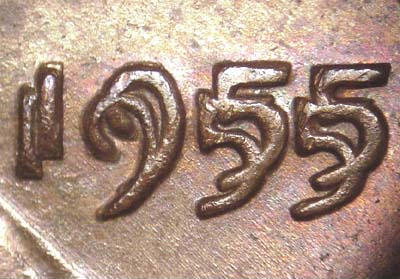
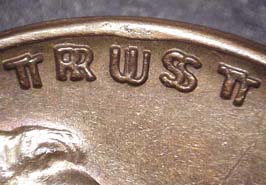
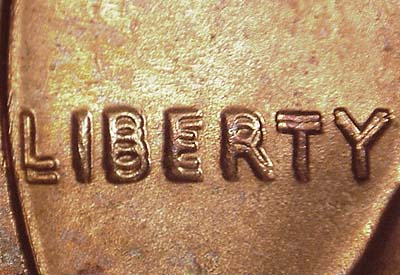
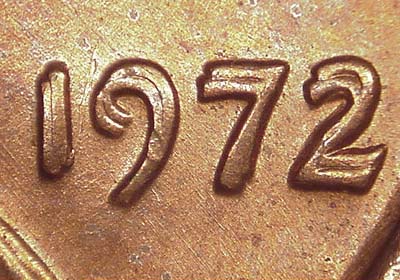
“Rotated hub doubling occurs when the die is turned either clockwise or counter clockwise on an axis near the center of the design between hubbings. It is characterized by having all devices nearer the rim doubled the most,while those near the center of the design are not doubled at all” ¹

1955-P Lincoln cent with rotated hub doubling or Class I.

Photographs courtesy of Coppercoins
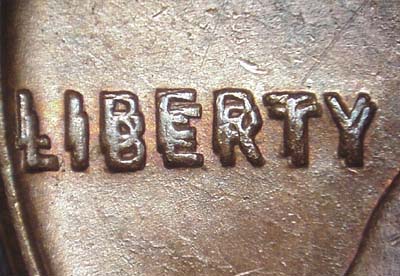
1972-P Lincoln cent with rotated hub doubling or Class I.

Photograph courtesy of Coppercoins.


CLASS II – Distorted Hub Doubling:

“This class occurs when a hub flattens out between hubbings on a single die. This happens because the hubs are used to create a number of dies (often over a hundred). As with any malleable material, the steel flattens outward as it is used. If a die is first hubbed with a hub that is rather new and subsequently with an old hub, the devices near the outer edge will show doubling either towards the center of the design (flattened hub used first) or towards the edge of the design (flattened hub used last”.

“Class II hub doubling is most often characterized by doubling that parallels the outside edges of the  devices closest to the rim. The two primary requirements are that the spread be  directly toward or away from the rim (without rotation or pivot) and that there be clear separation lines in the doubling” ¹

1964P Lincoln cent with distorted hub doubling or Class II.


 Photographs courtesy of Coppercoins.

CLASS III – Design Hub Doubling:

This class of hub doubling “is caused when two different hubs with different designs are used to create one die. The design differences can be as minor as the exact placement of a single letter or design feature, or it can be as major
as two differently dated hubs.”¹

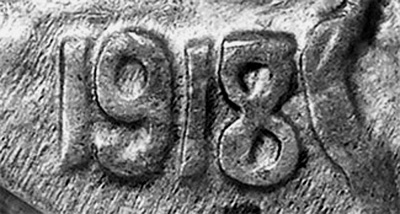
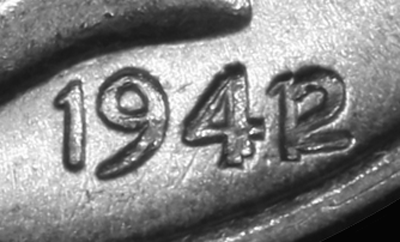
“ALL examples of what people refer to as “over-dates” in the twentieth century coin types are actually Class III doubled dies. This includes the 1918/7 – D nickel, both 1942/1 dimes, the 1943/2-P nickel, as well as others.”¹

“Design hub doubling is characterized by a difference in some part of the design rather than a misalignment of the design.”¹

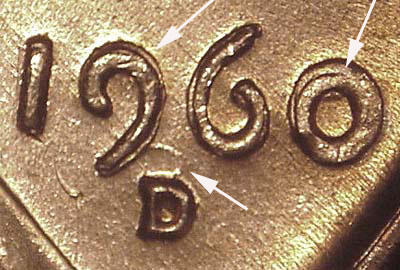
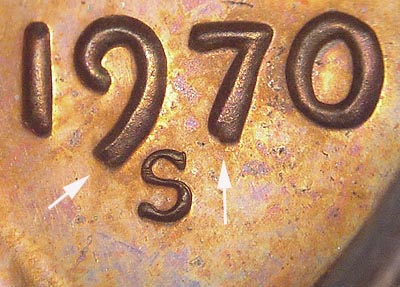
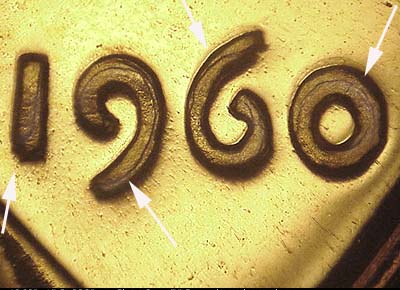
A 1960 Lincoln cent proof die and 1960-D business strike working die, along with a 1970-S Lincoln cent proof working die, were hubbed with both the small date and large date hubs.

Class III: 1918/7-D Nickel                                                                   Class III: 1942/1-P Dime


Class III: 1960-D cent, small date over large date      Class III: 1970-S cent, hubbed with large and                                                                                                                                                                          small date                                                   

                                                                                    Photographs courtesy of Coppercoins

Class III: 1960-P Proof Lincoln cent hubbed with a small date over a large date. 

Photographs courtesy of Coppercoins
 

CLASS IV – Offset Hub Doubling:

“Offset hub doubling is caused when a die is returned to the hubbing press but is shifted to one side. The result is doubling of the design in a single cardinal direction – north, south, east, southwest, etc. This form of doubling is found more often affecting the center of the design than other classes of doubling, because regardless of the strength of the offset, all devices, including those in the center of the design, will show the same spread of doubling”. ¹

Class IV doubled die found on the reverse of the 1983-P Lincoln cent. Notice that the doubling is shifted directly to the north. 

Photographs courtesy of Coppercoins.


Class IV doubled die found on the obverse of a 1984-P Lincoln cent. Notice that the doubling is shifted directly to the south. 

Photographs courtesy of Coppercoins
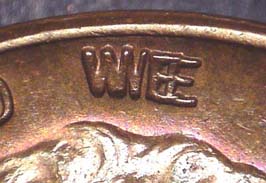
 

CLASS V– Pivoted Hub Doubling:

“This class of hub doubling is one of the more common types of doubling. Its cause is very similar to that of Class I rotated hub doubling in that the alignment of the die that created the doubling involves clockwise or counterclockwise rotation. But in the case of Class V hub doubling, the center of rotation is at or near the rim, causing more doubling on one side of the design (the area opposite the pivot point) and little or no doubling near the pivot point.” ¹

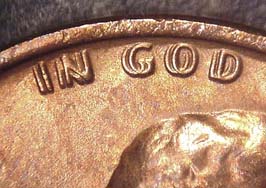
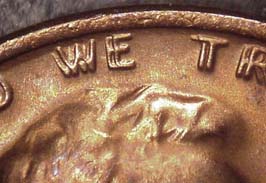
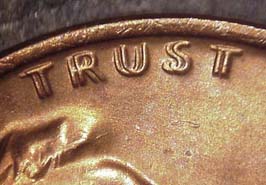
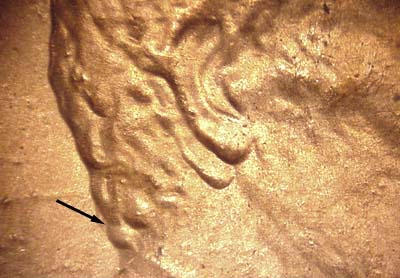
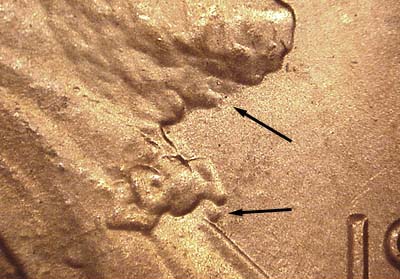
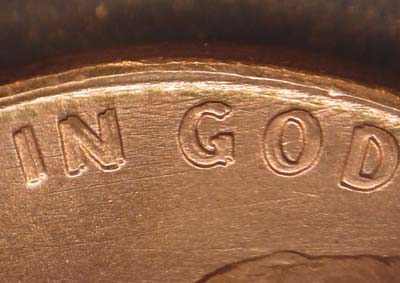
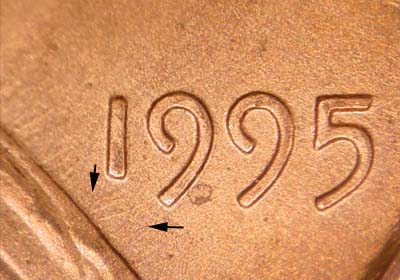
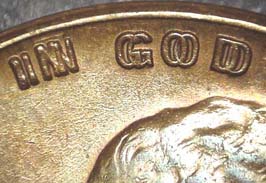
This is a Class V doubled die found on the obverse of a 1995-P Lincoln cent. Notice that there is a well defined doubling on the letters in LIBERTY. Even the letters in IN GOD show considerable doubling while the date shows virtually no doubling what so ever. The pivot point was near the date and accounts for this feature of no doubling on the date. The black arrows are indicators pointing to die markers found on the obverse die.
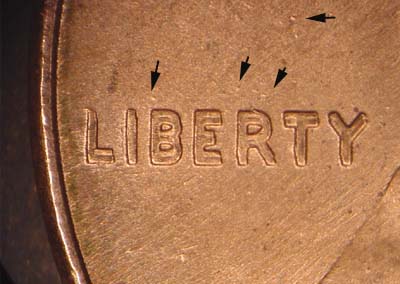
 Photographs are courtesy of Coppercoins.


CLASS VI – Distended Hub Doubling: 

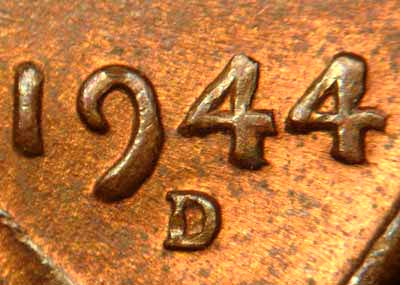
“This class is generally caused by using hubs to impress designs into improperly annealed dies. The design flattens out and becomes stretched or die tended toward the outside of the design. Like CLASS II doubled dies, CLASS VI doubled dies generally show their characteristics close to the rim.

The picture below shows a strong class VI doubled die, found on the obverse die of a 1944-D Lincoln cent. Notice the extra thickness on the bottoms of the digits in the date.
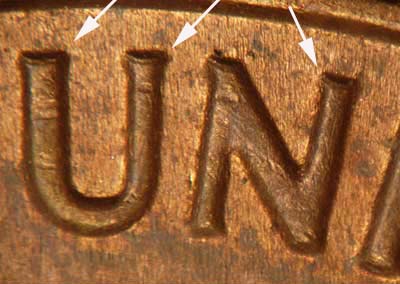
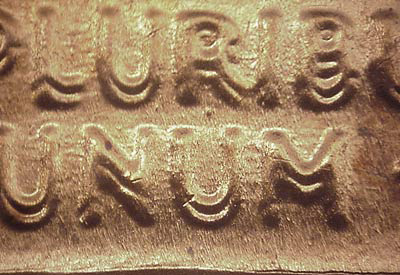
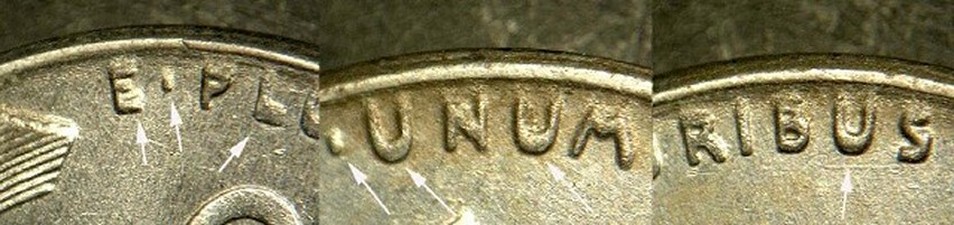
The pictures below show the same extra thickness in the motto E . PLURIBUS UNUM on the reverse die of a 1943 Lincoln cent. Notice the extra thickness in the dots and the bottoms of the letter U. This is a typical class VI doubled die. These photographs are courtesy of Coppercoins.
 

CLASS VII – Modified Hub Doubling:

“This class of doubling is caused when an errant part of the design is ground off a hub in an effort to replace it. If the errant portion of the design is not completely removed by the grinding it will leave its mark on any die created from the hub. The errant element is usually a digit or digits of the date, but it can be other parts of the design.” ¹

While modified hub doubling is an actual class, there is no substantiated evidence to prove that any examples of this class of doubling do exist. Any modification to a working hub that would show the type doubling described above would appear on numerous working dies and this has not been the case. It would also be senseless for the Mint to modify a working hub, use that hub to impress just one working die and then retire that hub; there has been no evidence to support that occurrence either. While there are various listings which have some Class VII doubled dies, there is no consensus between those various listing as to which particular dies are actually Class VII.

With the ambiguities surrounding this class of doubled dies, we shall not attempt to show examples of what this doubled die may appear as. However, we do support the definition of this class in hopes that a verifiable example
can be found.


CLASS VIII – Tilted Hub Doubling:

“Tilted hub doubling occurs when a die is set in the hubbing press tilted and rotated clockwise or counterclockwise from the hub. The resulting doubled die will show doubling on part of the design close to the rim, and the rest of the
design will be normal.” ¹

Again, some ambiguity surrounds this class of hub doubling. Some variety experts have included the tilted hub, instead of solely the tilted die, as the cause for this type of doubling. In this scenario the tilted hub accounts for
the majority of the single squeeze hubbed doubled dies (see Class IX) with or without a specific rotation to the hub.

A misnomer associated with this class is trail dies (including wavy steps). Some listings have this anomaly type under this class of die doubling. Our contention is that trail dies are not doubled dies and thus should not be listed under any class of hub doubling.

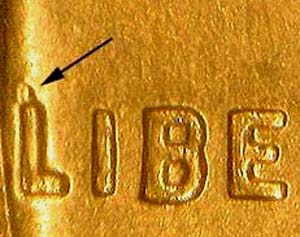
The photos below show a Class VIII hub doubling found on a 1964-P Lincoln cent. Notice the extra vertical bar above the L of LIBERTY and the slightly clockwise rotated second impression of the word IN.
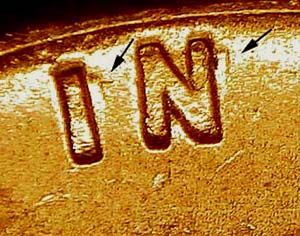
 All photographs are courtesy of Coppercoins

.

CLASS IX – SHIFTED HUB DOUBLING:

“This form of doubling happens when a slightly misaligned (tilted) die “pops” into position under the constant pressure of the hub and its thousands of pounds of force.” ¹

 “It is most often characterized by a slippage of the design, in a cardinal direction – much like the Class IV offset hub doubling.  It most often affects centrally located design elements.  The main difference, with respect to causation, is that the design is never “picked up” off the die during the hubbing. Rather, it suddenly “slides” into place creating doubling in the design.” ¹

Once more there are some differences of opinions among the variety experts. John Wexler writes,” Class IX. God Only Knows – This class of doubling is for those doubled dies that are simply unexplained. It is for those extremely few doubled dies that defy logic and common sense. It is where the physical evidence does not support a reasonable conclusion on how the working die was hubbed to produce the secondary image.”

Those files that have the Class IX use it for listings of doubled dies that were made by the single squeeze hubbing system. However, this presents a problem for there is a grey area when the U.S. Mint used both the single squeeze and multiple hubbings to make dies. This transitional period extends from before 1986 (the first year that the U.S. Mint reported using the single squeeze hubbing system) to 1997 (when the single-squeeze hubbing was finally and fully implemented at both the Denver and Philadelphia mints for all denominations).  This time span contains a lot of doubled dies that cannot be confidently assigned to one or the other hubbing system.

Again, there are some listings in the Class IX doubled dies that contain files for trail dies(wavy steps). We feel that this is incorrect and that trail dies, including what is called wavy steps, are not doubled dies, but a different type of anomaly.
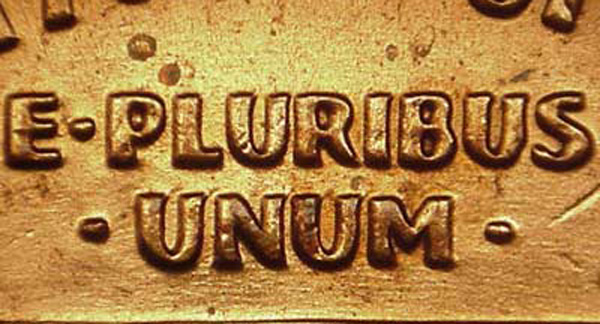
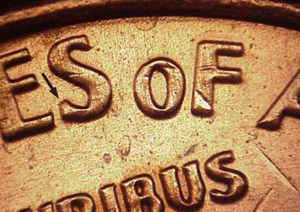
 

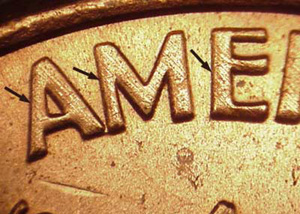
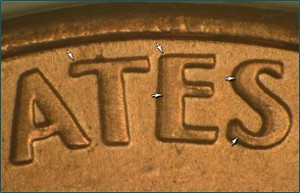
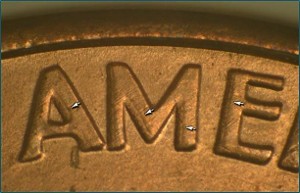
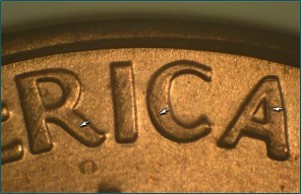
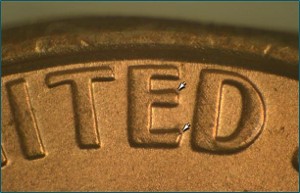
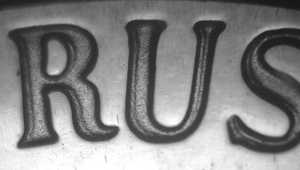
Notice the distortion seen in E . PLURIBUS . UNUM with extra thickness seen in the east / west plane. On early die state coins, division lines can be seen in the letters AME of AMERICA and the word OF. Also notice the split bottom serif on the last S of STATES.

These photographs are courtesy of Coppercoins

The second type of die doubling see with the single squeeze hubbing system occurs when the same offset in placement of the hub to the die occurs. Once again, the hubbing is initiated, but stopped by the press operator when the offset is detected. The the hub to die placement is correct and hubbing once again started. This start – stop – start of hubbing leaves Central located design doubling. Two examples of this type doubled die are shown below on 2004-P Lincoln cent reverse dies.

Photographs are courtesy of Coppercoins and taken by Gene Nichols.
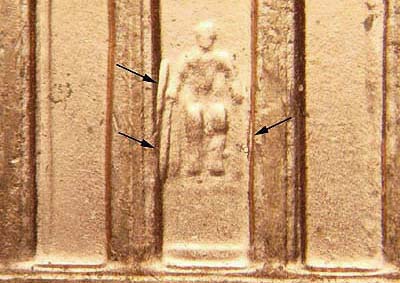
 

Single squeeze hubbing produces doubled dies under two different scenarios. The first involves a hub that is offset relative to the die when the hubbing begins. During the hubbing, the offset is corrected by the increasing pressure that is felt on the hubbing plate, which causes the hub to slide into the correct position. Such doubled dies will have a “smeared” or elongated distortion to the design elements affected. Early die state coins will have division lines, along with split serifs, in the lettering and digits. Such an example is seen below which occurred on a 2004-P reverse die Lincoln cent.

Peripheral doubling is rare when the single squeeze hubbing system is used. The photos below show such doubling in the form of split serifs and division lines on the reverse of a 2004P Lincoln cent. The working hub had reached a point where most if not all of the design had already been transferred to the working die before the shift took place.
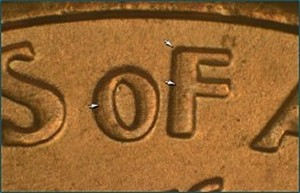
All photographs are from Billy Crawford.


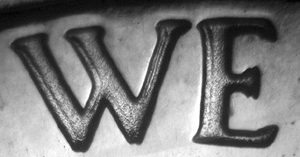
Another example of single-squeeze peripheral design doubling occurs on a 2004-P Jefferson nickel, also known as the Peace nickel. Not only does the motto IN GOD WE TRUST show doubling, but also LIBERTY, the date, the star, the mint mark, the designer’s initials and Jefferson’s eyebrow.
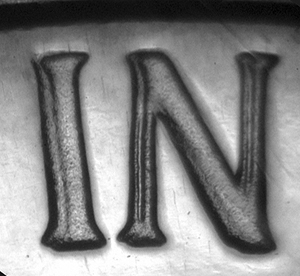
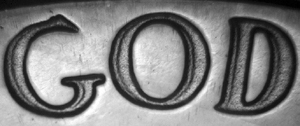
¹ All quotations in this section are attributed to Chuck Daughtrey, unless otherwise indicated.
Die Chips

Part IV. Die Errors:

Die Breaks:

Die Chip:

Definition:  A small piece (less than 4 square millimeters) that falls out of the die face and has no direct connection to the design rim.  The missing piece leaves a void in the die face into which coin metal flows.  As a result, the coin shows a featureless lump in the affected area.

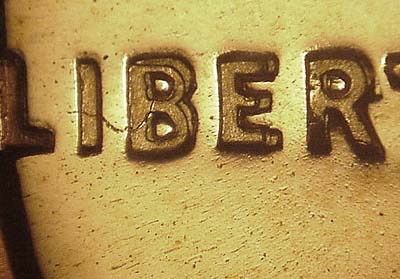
A die chip can be connected to a die crack or it can be freestanding.  Die chips frequently develop within narrow interstices in the design, such as the gap between the letters of LIBERTY.  Hence the so-called “BIE” errors.

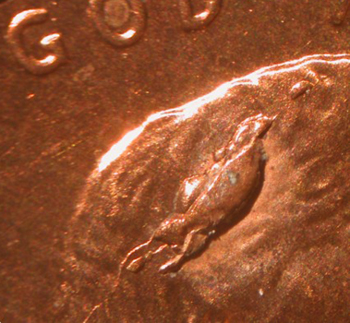
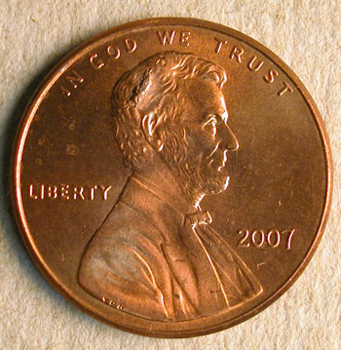
This 2007 cent displays a fairly substantial die chip in Lincoln’s hair.  A short die crack extends from one corner of the chip.

Die Crack Rim To Rim

PART IV. Die Errors:

Die Cracks:

Rim to Rim

Definition: A die crack that extends from one point on the rim to another.  A rim-to-rim die crack can more-or-less bisect the die face.  In that case we can designate it a median or bisecting rim-to-rim die crack.  A rim-to-rim die crack can also be located well off to one side.  In that case we can designate it an asymmetrical rim-to-rim die crack.

The course of a rim-to-rim die crack can be straight, irregular, or curved.

A curved rim-to-rim die crack is sometimes called a “pre-cud die crack” even though there’s no guarantee that it will progress to a cud (marginal die break).

A rim-to-rim die crack will typically show lateral spread, leaving a thin raised line on the coin.  In some cases, a segment of the die crack will exhibit slight vertical displacement. If the entire die crack exhibits vertical displacement, horizontal offset, or a mixture of the two, it is designated a retained cud.

A rim-to-rim die crack can worsen and extend deep into the die neck.  This allows the sides of the crack to spread apart.  If the raised line on the coin is unusually wide, it is usually designated a “split die”.  The threshold separating a rim-to-rim die crack from a split die is subjective and arbitrary.  Mike Diamond considers any split wider than 0.5 mm to be a split die.

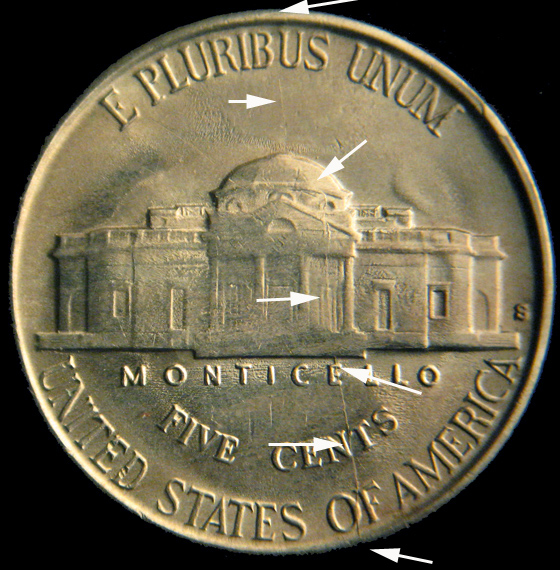
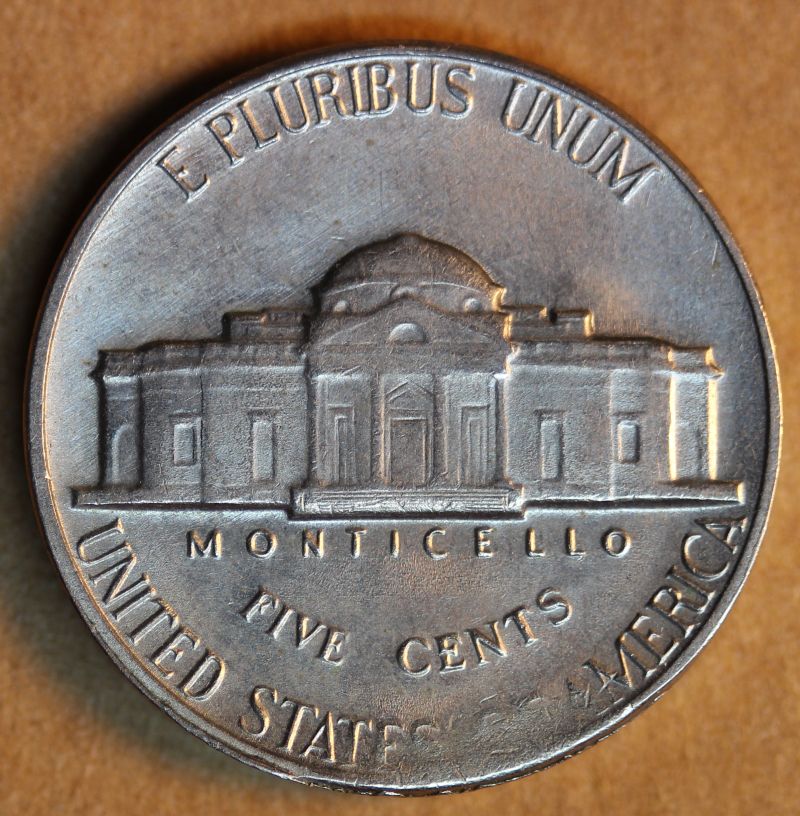
The image above of a 1941-S Jefferson nickel shows a bisecting, rim to rim die crack. The die crack wich begins above the B in PLURUBS transits downward through the dome of Monticello and into the field below that building. The termination point of the die crack is through the O in the word OF and into the rim.

For more rim to rim die cracks see HERE

Die Attrition Error

Part IV. Die Errors:

Die Damage:

Peripheral Die Damage:

Die Attrition Error

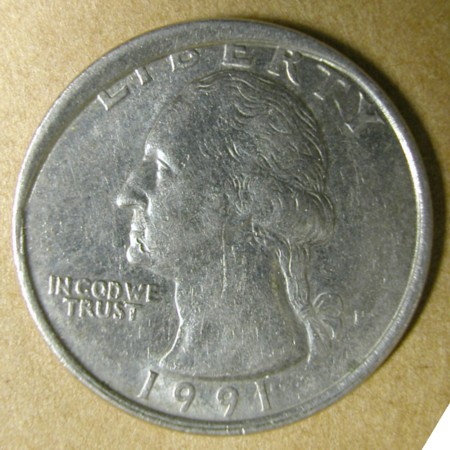
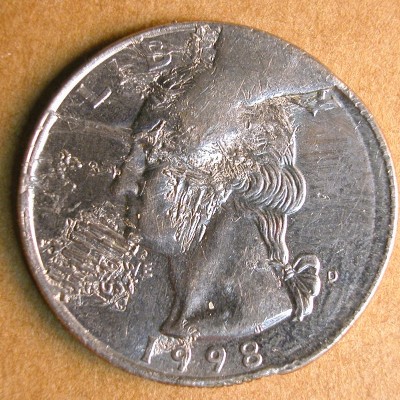
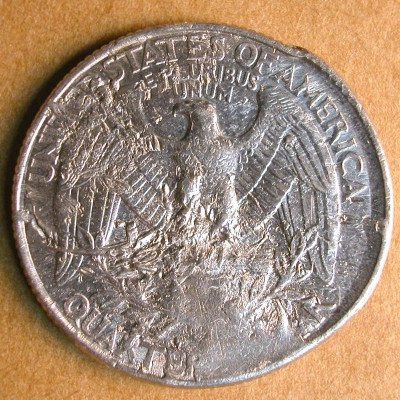
Definition: This is the most recognizable and regular form of peripheral die damage.  A die attrition error is generated when a temporarily misaligned hammer die smacks repeatedly against the beveled entrance of the collar.  This wears away the edge of the field portion of the die and sometimes the entire rim gutter.  This leaves the coin with an unstruck, raised crescent on the face struck by the hammer die.  The internal margin of the crescent is smooth.  Particularly severe die attrition errors can leave peripheral letters significantly truncated.

Die attrition errors are especially abundant among 1983 cents.  A die attrition error
will only be detected after the hammer die has returned to center.

Die attrition errors are sometimes mistaken for cuds (marginal die breaks) and sometimes confused with other, more erratic forms of peripheral die damage and die loss.

The 1991-P quarter shown at upper left displays a severe die attrition error in the northwest quadrant of the obverse face.  The letters of LIBERTY are severely truncated.

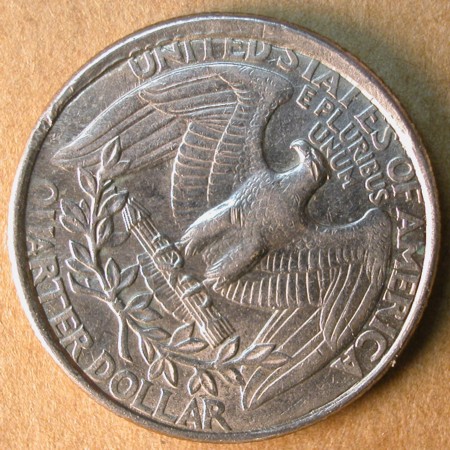
The reverse face of a 1998-P quarter is shown at upper right.  The coin was struck with inverted dies (reverse die as hammer die).  The reverse face is nearly encircled by a die attrition error which is visible for about 300 arc degrees.  The attrition is most severe in the northwest quadrant.  The hammer die could have been rotating while it was experiencing a horizontal misalignment in a consistent direction.  It’s also possible that the hammer die (or die assembly) was shifting laterally in many different directions.  When this coin was struck, the hammer die had returned to center but was rotated 140 degrees counterclockwise relative to the obverse face.  The photo shows the orientation of the reverse face when the coin is flipped from left-to-right, with the obverse design oriented north.

48692990_scaled_384x351

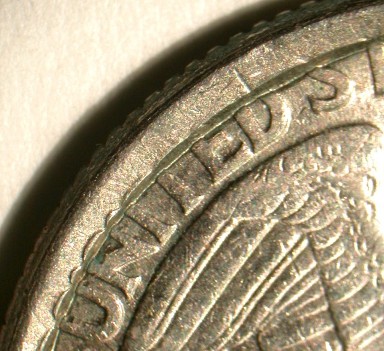
Close-up of the word UNITED, where the tops of the letters have been lost.

48692557_scaled_352x132

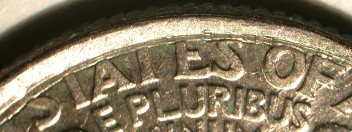
Close-up showing the words STATES OF. Die loss becomes gradually less severe as you travel around the perimeter.

Complete Collar Break

PART IV. Die Errors:

Collar Cuds: 

Complete Collar Break

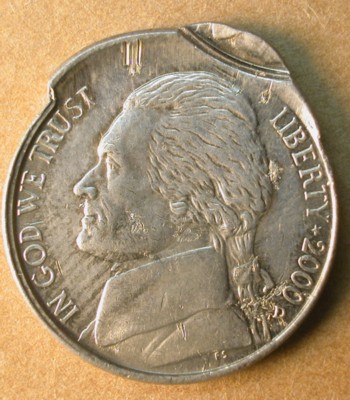
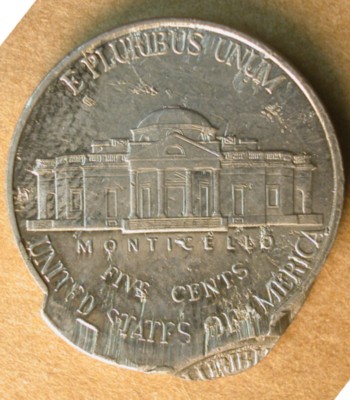
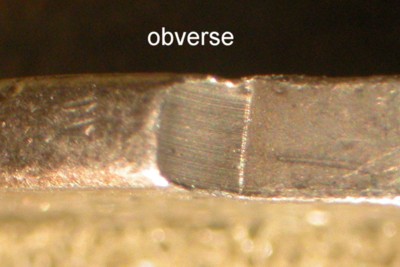
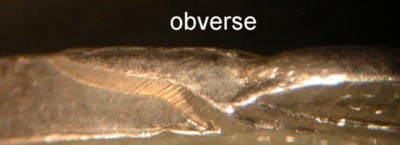
Definition: Here an entire segment of the collar’s working face (or hardened lining) breaks away, leaving a void that begins and ends quite abruptly. A key diagnostic for a full collar break is a “step-up” at both endpoints. The step marks the transition from the normal portion of the edge that shows collar contact to the area where coin metal was free to expand.

This 2000-D nickel depicted below is a stellar example of a complete collar break. About 100 arc degrees broke away, allowing the coin metal to flow into the resulting void. Both die faces show heavy die damage. The damage could be from fragments of the collar, or could indicate that both the collar and the dies were damaged by foreign matter that entered the striking chamber. Another sweet bonus is the small second strike that interrupts smooth convexity of the collar break at 1:00.

Because the gap in the collar was considerably smaller than 180 degrees, the planchet had no choice but to settle against the intact side of the collar. But this is not always the case, especially when the gap in the collar equals or exceeds 180 degrees

Left end of the collar break.

                         Right end of the collar break.


Catastrophic Die Damage

Part IV. Die Errors:

Die Damage:

Catastrophic Die Damage

Definition: Severe impact damage that covers an extensive area on one or both die faces.  Such damage can result from the dies striking a large mass of foreign matter that is hard and brittle.  It can also result from a piece of a broken die or broken collar entering the striking chamber and shattering on impact.

Both of the dies that struck this 1998-D quarter were heavily damaged after installation.  In addition to widespread impact damage, the obverse die features a large cud (marginal die break).  The right side of the collar has also broken off, leaving a collar cud (collar break) that extends from 2:00 to 5:00 (obverse clock position).

It’s possible that the impact damage, cud, and collar cud were all generated when a large piece of brittle metal intruded into the striking chamber and shattered upon impact.  Alternatively, it could be that the process was initiated when a fragment from the obverse die or a fragment of the collar fell between the dies and exploded upon impact.

Catastrophic Die Failure

Part IV. Die Errors:

Die Breaks:

Catastrophic Die Failure

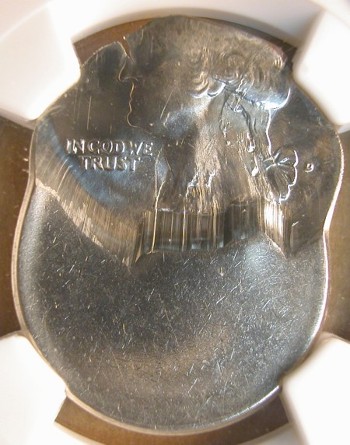
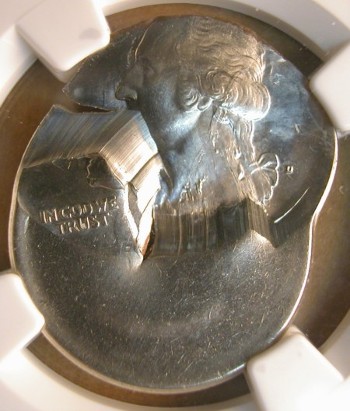
Definition: Massive spontaneous brittle failure that results in large portions of a die breaking away.  We’re often witness to the aftermath of such failure in the form of enormous marginal die breaks (“cuds“).  We often get advanced warning of such failure in the form of shattered dies and split dies.  But seldom is the failure captured as it happens.

For more information see the May 11, 2013 Coin World. 

This two-coin progression documents the breakup of a quarter dollar obverse die.  The quarter on the left has already lost the portion of the die containing the date.  The intact portion of the die shows some die damage.  When the quarter on the right was struck, a large portion of the die containing IN GOD WE TRUST and Washington’s chin broke off.  This portion of the design is wildly displaced.  This coin shows heavy clash marks that are absent from the first coin.  Evidently there was at least one other strike interposed between the strikes that generated these two quarters.  That strike was delivered in the absence of a planchet and the dies clashed heavily. This may have contributed to the loss of the additional die fragment.

Broas Brothers Pie Bakers Shattered Die

PART IV:

Die Errors:

Die Cracks:

Shattered Dies:

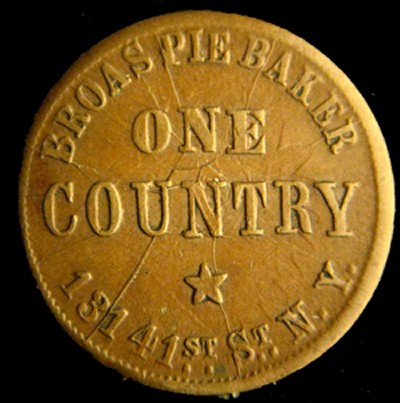
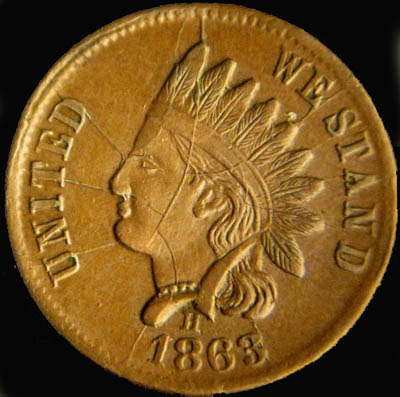
Broas Pie Baker Token, 1863

Definition: A “shattered die” features numerous intersecting die cracks.  Along with the profusion of die cracks, a
shattered die can also incorporate other forms of brittle fracture such as die breaks and retained die breaks.

A shattered die generally indicates a terminal die state, i.e, a die just short of catastrophic failure.

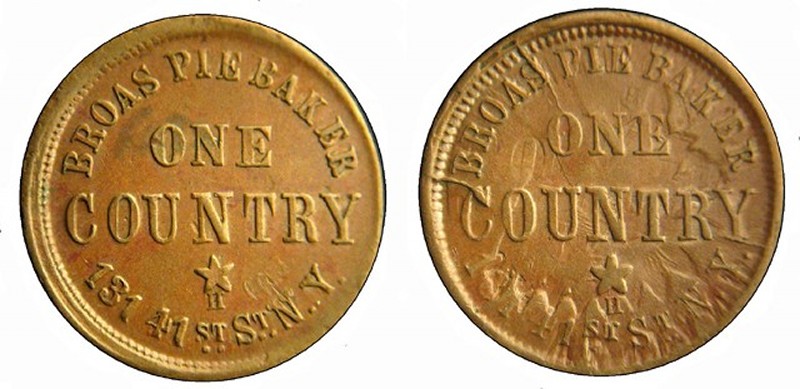
The 1863 Broas Pie Baker Store Token shown below was struck by a pair of shattered dies. The reverse die shattered soon after it was placed into service, but it continued to strike many planchets. After this die finally failed, the manufacturers of the token used another obverse die in its place. The original obverse die in this pairing was replaced with another obverse soon after it, too, had shattered. The image to the left shows the shattered original obverse die, while the image to the right shows the shattered reverse die typically found in this issue.

NOTE: The Civil War store card tokens of this era are unlike contemporaneous U. S. cents. The obverse face of the token is considered to be the advertisement with the store name and address. The reverse is generally some iconic figure such as Washington and Franklin, an allegorical bust of Liberty, or an Indian head.

The obverse-to-obverse Broas Pie Baker store token is seen in images below. Notice the different positions of the H below the star, indicating that two different dies were used. Also note that the shattered obverse die seen above does not have the H (which may be the designer’s initial).

The obverse die to the right shows three sets of clash marks.  Two sets show the Indian head (reverse design).  One set depicts the obverse design (OUR COUNTRY). Presumably the clash marks of the Indian’s head occurred earlier, when the obverse die was paired with a normal reverse die.

Anvil Die Retained Cud

PART IV: Die Errors:

Retained Cud:

Anvil Die


Definition: A retained cud is a marginal die break that that has not fallen out.  In other words, the die fragment, though completely detached from the intact portion of the die, is held in place.  Retained cuds involving the anvil die are held in place by the collar.  A retained cud may progress to a fully-fledged cud.

The image to the lower left shows an 1892 Indian cent with a rim-to-rim die crack.  Several other die cracks connect up with it.

The image to the lower right shows a 1945-(P) Lincoln cent with retained cud involving the upper portion of the right wheat ear.

Collar Damage

Part IV. Die Errors:

Die Damage:

Collar damage


Definition:
Mechanical damage affecting the working face of the collar. This damage can appear as scratches and grooves that are horizontally or vertically oriented.

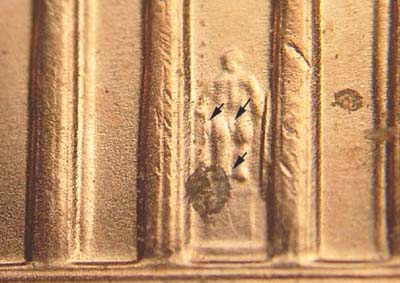
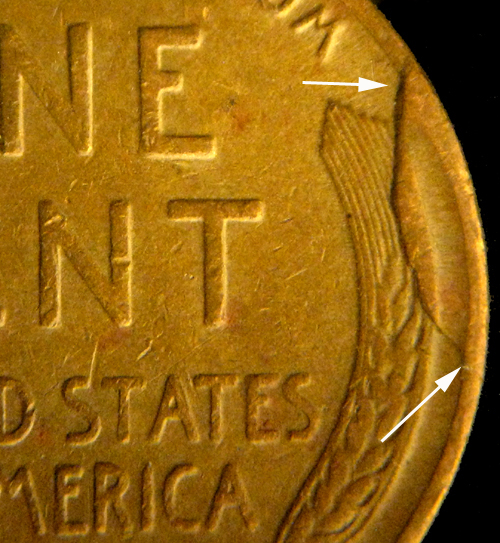
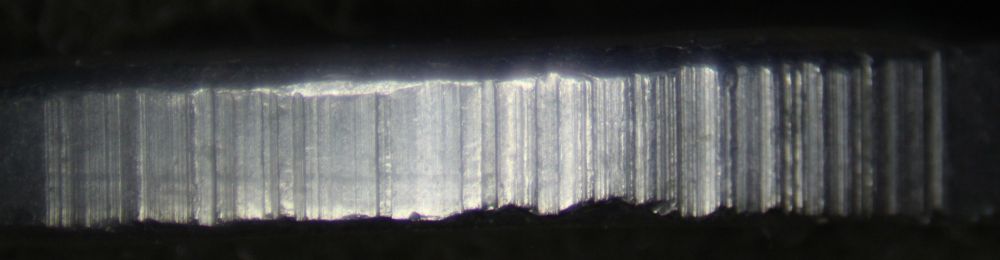
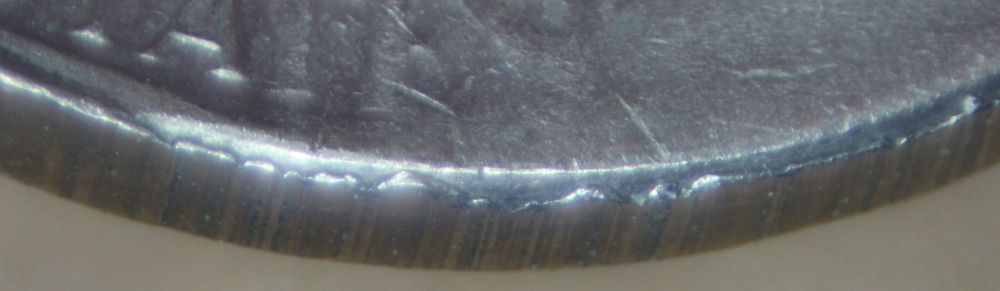
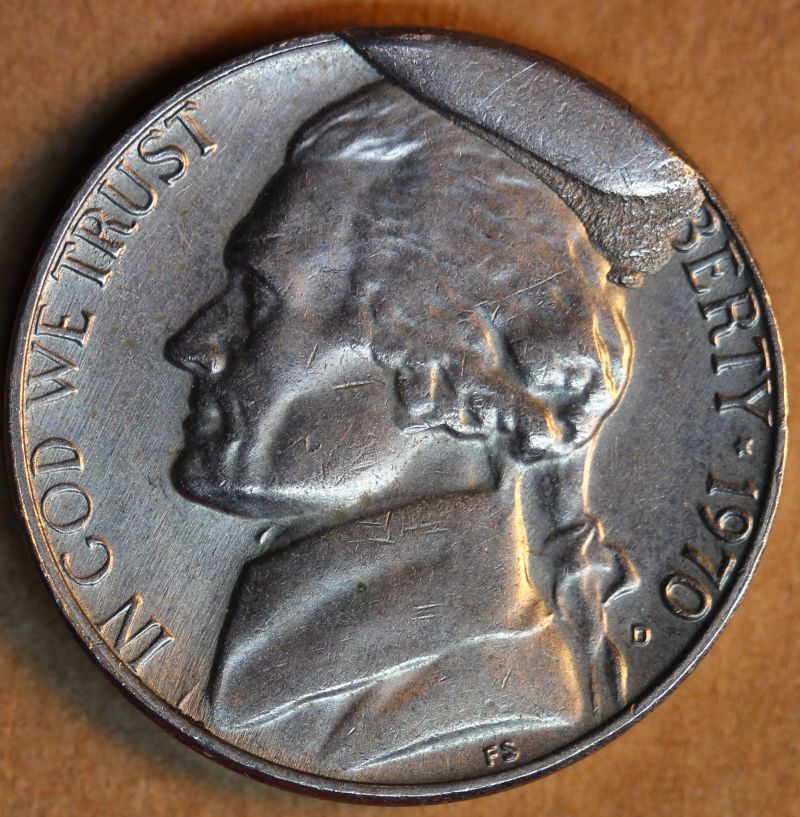
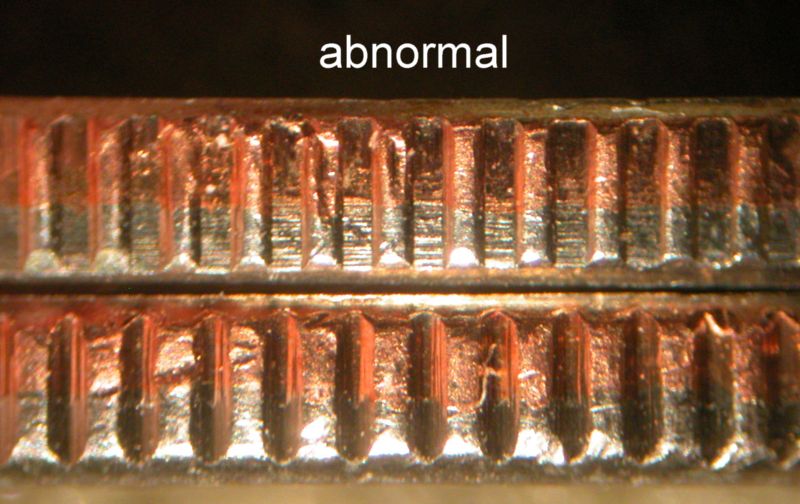
This 1970-D nickel features a sizeable cud (corner die break) on the obverse. The section of the edge next to the cud carries coarse vertical grooves that reflect damage to the collar. It’s possible that gritty debris derived from the collar break became trapped between the neck of the anvil die and the collar. Either that, or a collision with a foreign object that was responsible for the cud also caused that foreign object to shatter, with the resulting debris getting trapped between the die neck and the collar. Vertical movements of the anvil die relative to the collar ground the debris against the collar, generating the vertical grooves. Every nickel struck afterward carries the impression of that damage. The grooves on the nickel could be partly an impression of the damage and partly due to the nickel scraping against the damaged portion of the collar during ejection.


The upper member of these two 2008-P New Mexico quarter dollars displays unusually wide, flat valleys between the reeds, with the valleys carrying heavy horizontal scratches. This appearance reflects the fact that the ridges on the working face of the collar were abraded and truncated. Similar damage is known from other dates, including 2007-P Wyoming quarters. This damage may have been produced when the beveled entrance of the collar was being machined or de-burred. The rotating machine tool may have slipped into the functional portion of the collar, damaging the reeding.

  • « Previous Page
  • 1
  • 2
  • 3
  • 4
  • 5
  • …
  • 7
  • Next Page »
  • Home
  • Introduction To This Website
  • Error-ref.com News
  • Comprehensive Error-Variety Checklist
  • Index Of Completed Entries
  • Part I. Die Subtypes:
  • Part II. Die Varieties:
  • Part III. Die Installation Errors:
  • Part IV. Die Errors:
  • Part V. Planchet Errors:
  • Part VI. Striking Errors:
  • Part VII. Post-Strike Mint Modifications:
  • Part VIII. Post-Strike Striking Chamber Mishaps:
  • Part IX. Post-Strike Mint Damage:
  • Part X. Wastebasket / Composite Categories:
  • Part XI. Non Errors:
  • Featured Articles Of Interested
  • Interest & Not So Interesting Facts
  • Other Sites And Forums Of Interest
  • Our Thanks Go To
  • About The Authors
  • Contact Us

Copyright © 2026