Error-Ref.com

You are here: Home / Search for "die break"

Search Results for: die break

Shattered Die

PART IV. Die Errors

Die Cracks:

Shattered Die

Definition: A “shattered die” features numerous intersecting die cracks.  Along with the profusion of die cracks, a shattered die can also incorporate other forms of brittle fracture such as die breaks and retained die breaks.

A shattered die often indicates a terminal die state, i.e., a die just short of catastrophic failure.  A series of coins struck by a shattered die can often be arranged in a progression of increasing severity.

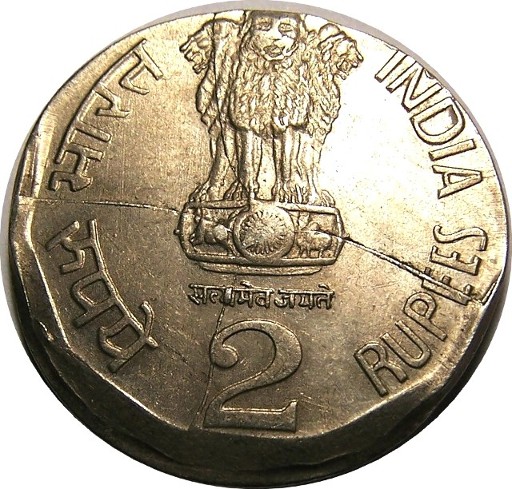
A network of intersecting bi-level cracks constitutes one type of shattered die. In a bi-level die crack, there is vertical displacement at the site of the crack. This means the die face has sunk in on one side of the crack.

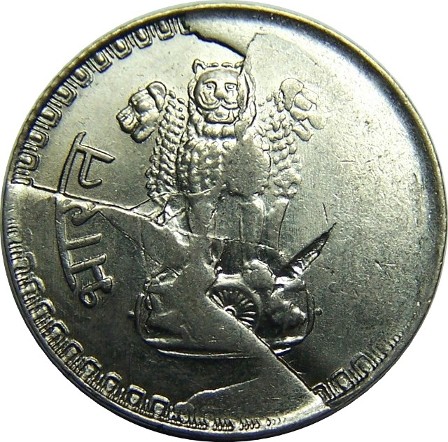
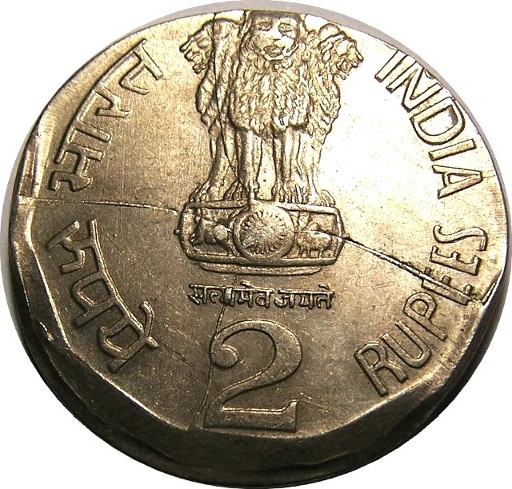
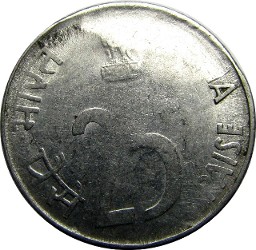
An example of converging radial bi-level die cracks can be seen in this 2000 Indian 2 rupees coin. These bi-level die cracks meet in the center of the obverse face.
49080279_scaled_512x489

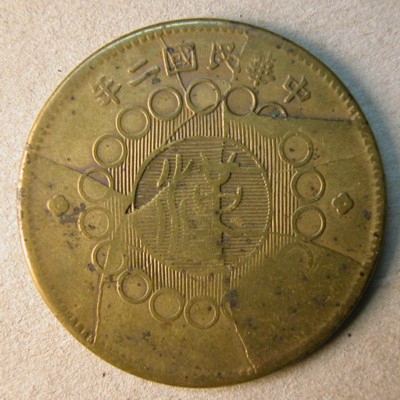
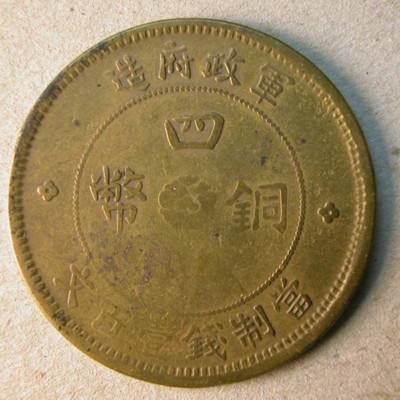
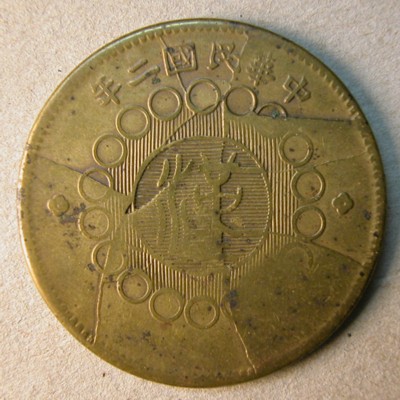
A more extensive set of bi-level die cracks can be seen below in a 1913 Chinese 100 cash coin.  The obverse face shows at least seven bi-level die cracks and a few smaller conventional die cracks. At least one crack shows characteristics of both. This is not that unusual, as you can have both horizontal spread and vertical displacement in the same location, or a transition from vertical displacement to horizontal spread as you proceed along the crack. Despite its tenuous structural integrity, this die was nowhere near terminal failure and was likely able to strike quite a few more coins in this condition.
 4926231749262318

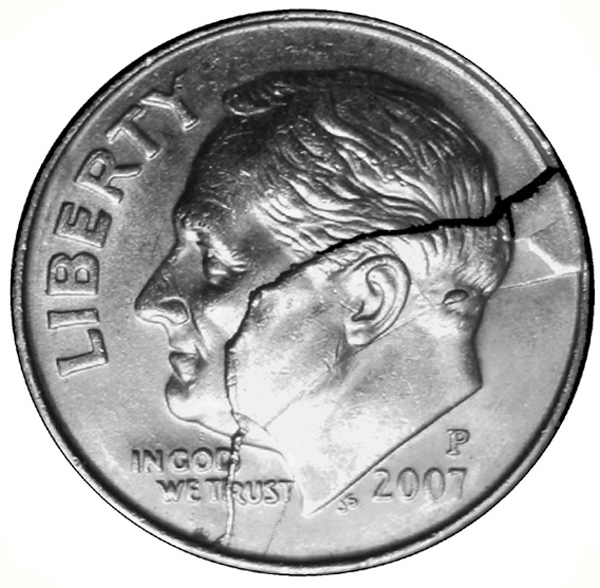
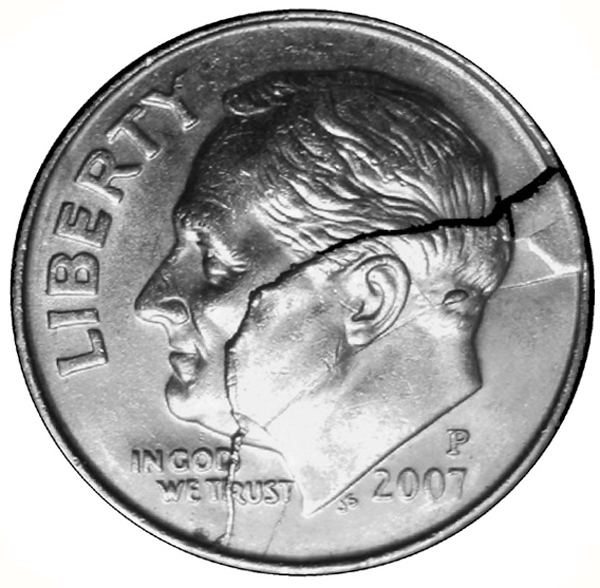
The shattered die found on this 2007-P Roosevelt dime consists of a 50% retained cud with numerous bi-level die cracks within the body of the retained cud.  At least seven similar shattered obverse dies are known among 2007-P dimes.
60271989

This coin is in the collection of Richard Creny. Image by R. Mentzer.


The shattered die shown below has extensive evidence of brittle fracture. Many types of brittle fracture may be represented, e.g., die breaks, retained die breaks, die cracks, a split die, etc. The die may or may not be approaching catastrophic failure (see Catastrophic Die Failure). Not surprisingly, a series of coins struck by a shattered die can often be arranged in a progression of increasing severity.

Note: Two separate specimens are shown below.

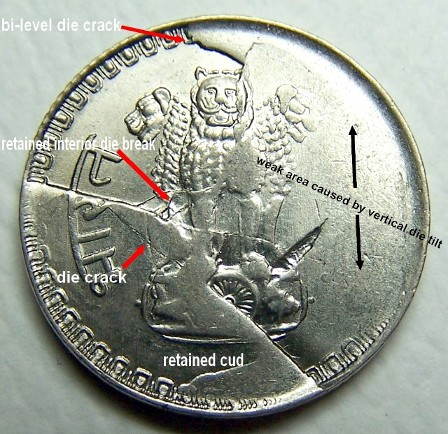
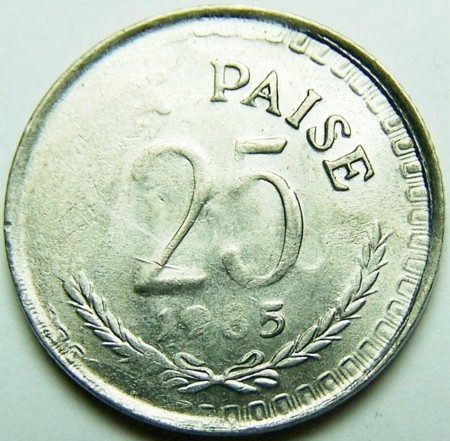
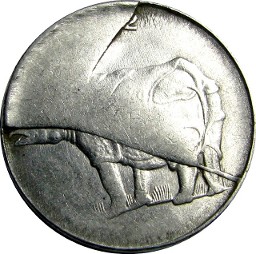
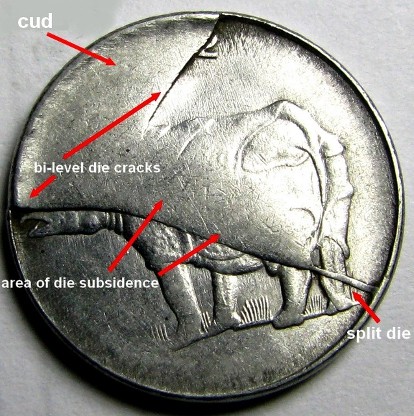
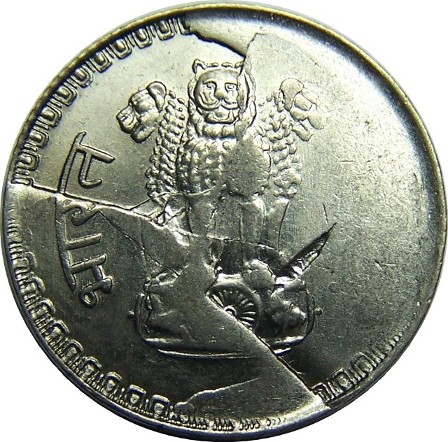
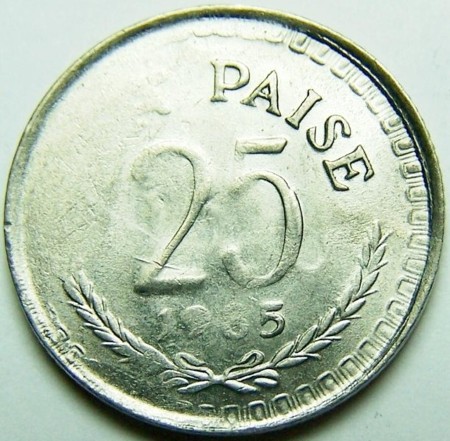
The 1985 India 25 paise shown below Features a large retained cud, a small retained interior die break, and numerous die cracks, most of them bi-level. The right side of the obverse face and the corresponding left side of the reverse face are weakly struck. This is largely due to a tilted die error (vertical misalignment) of the entire obverse face. The left side of the obverse is quite strongly struck, despite the large retained cud. This should have led to a reduction in effective striking pressure. The fact that it didn’t indicates that this part of the obverse die face was tilted down, while the opposite pole was tilted up. This tilt was most likely due to a break at the base of the die or through the shaft of the die – a break that allowed the die to tilt down strongly toward one pole.
 6071168360711691 60822613

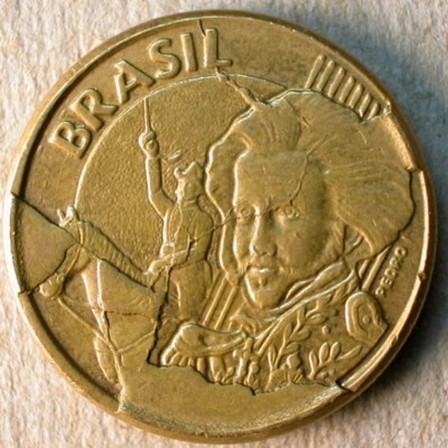
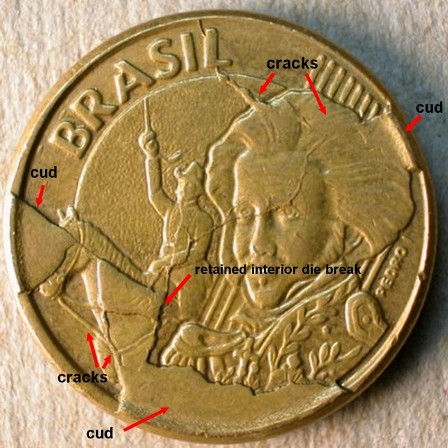
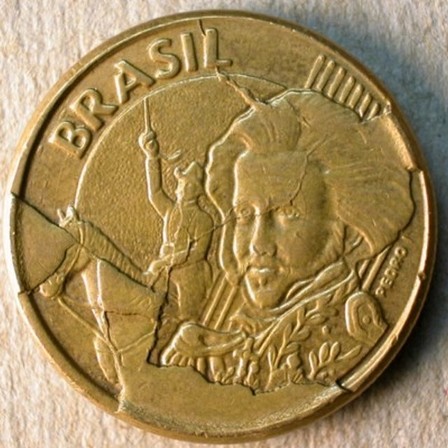
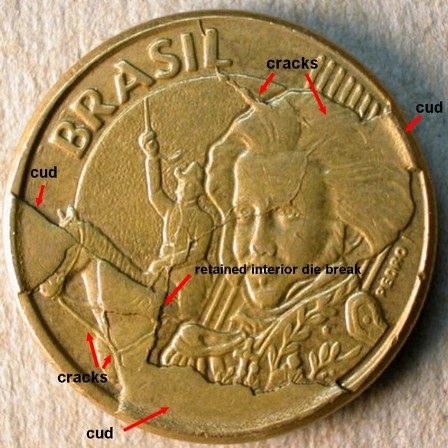
The 2002 Brazilian 10 centavos shown below expresses various forms of brittle fracture.  There are three cuds, one retained interior die break, and a tracery of intersecting die cracks of both the conventional and the bi-level type.
60711717 60711720


Retained Cud Hammer Die

Part IV. Die Errors

Die Breaks:

Retained Cuds:

Retained Cuds of Hammer Die


Definition: A retained cud is a fragment that breaks off the edge of the die but is nevertheless held in place. Retained cuds are rarely found in connection with the hammer die.  That’s because gravity usually insures that the fragment falls out and is lost.  It’s been said that the fragment is held in place by the bolts or clamp that secure the hammer die in its recess within the die assembly.  But this cannot be the case because the die neck (where retained cuds form) is free.  It is the die shaft and base that are tightened down.  There must therefore be another mechanism responsible for retained cuds of the hammer die.

The vast majority of claimed retained cuds of the hammer die are probably invalid.  Most of these alleged retained cuds were probably still connected to the rest of the die neck.  Slight to moderate displacement is likely due to subsurface deformation beneath a cracked die face.

In cases of severe horizontal displacement, it’s possible that the die fragment breaks free, shifts position, and then fuses to the roof of the void during the next strike.

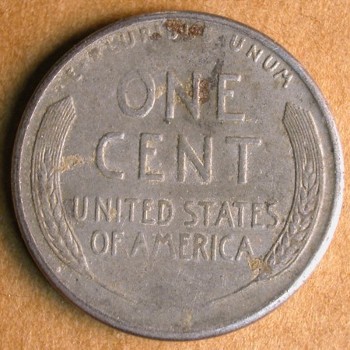
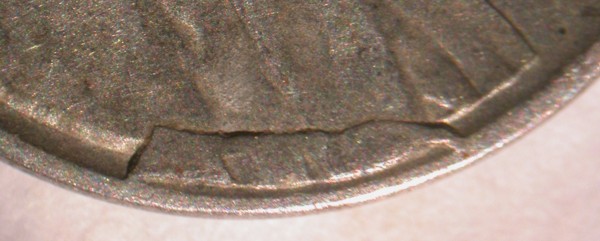
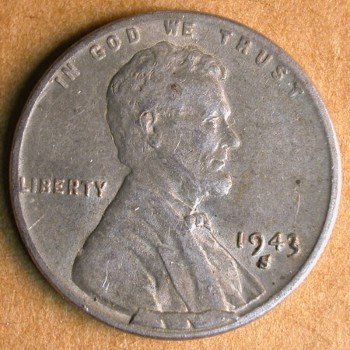
This cent represents a reasonably good candidate for a retained cud of the hammer die (in this case the obverse die).  The island of design at the base of Lincoln’s bust shows a great deal of lateral spread and horizontal offset.  The amount of vertical displacement is slight, however.  If this is a true retained cud, it’s likely that the die fragment fused to the roof of the void after breaking free and shifting position.  If not, then we can assign the movement to subsurface deformation.

Retained Cud That Protrudes Beyond Die Face

Part IV. Die Errors:

Die Breaks:

Cuds:

Retained Cuds:

Retained Cud that Protrudes Beyond Die Face

Definition:  Most retained cuds (retained marginal die breaks) sink in below the plane of the face.  On rare occasions the die fragment will protrude above the plane of the die face.  Any coin the die strikes will show a corresponding area of design that is recessed relative to the rest of the design.

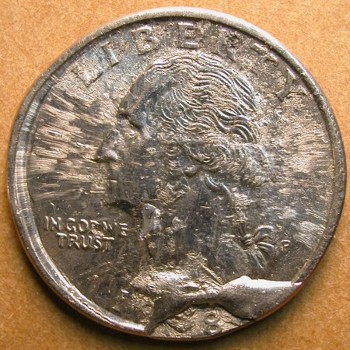
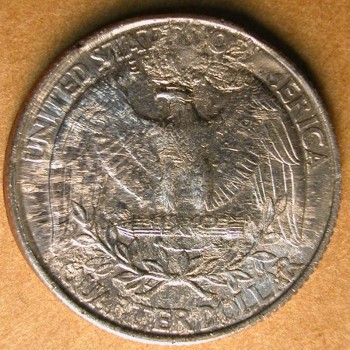
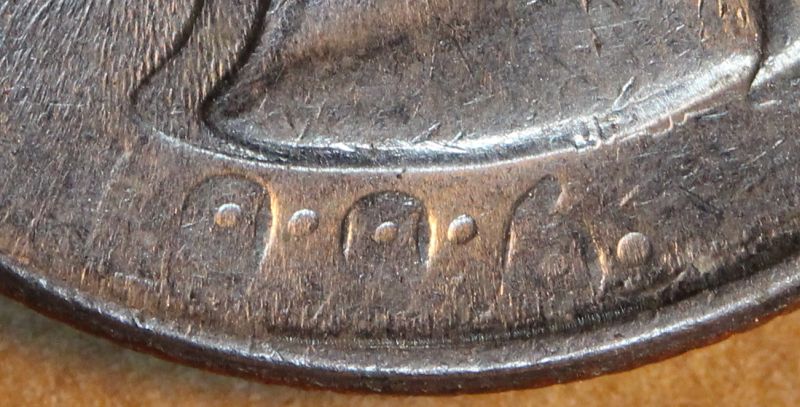
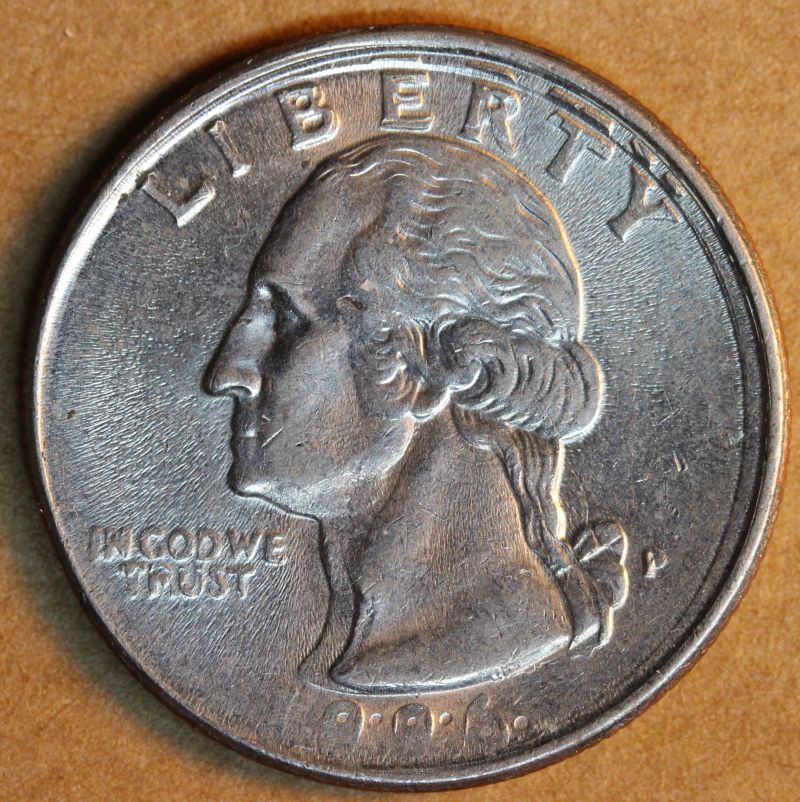
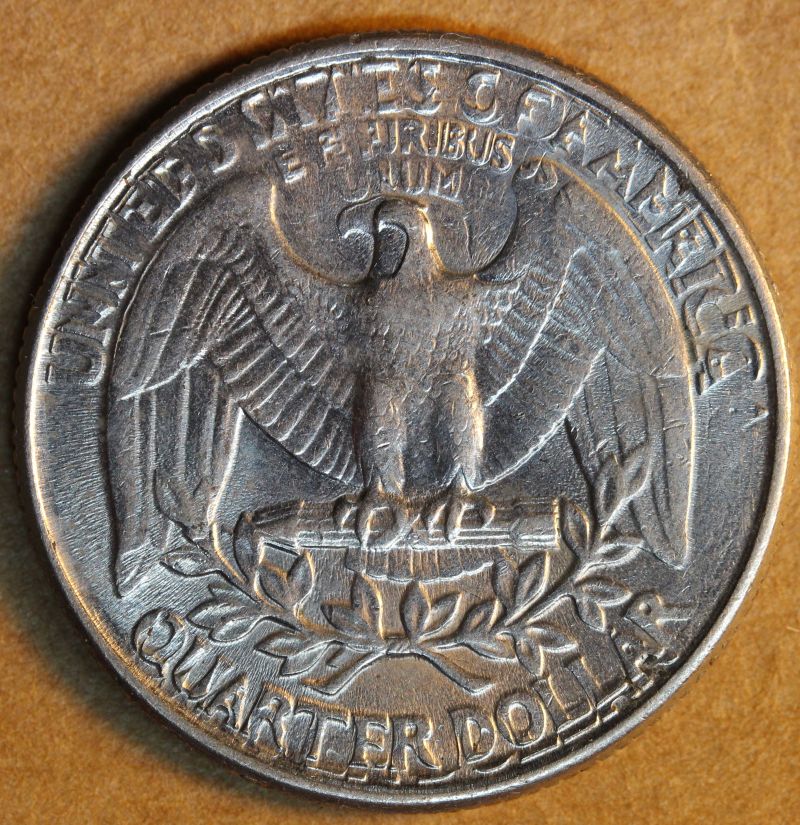
This 1998-P quarter dollar was struck by a heavily damaged pair of dies.  The obverse face displays a dumbbell-shaped, rim-to-rim cud and, below that, a retained cud that encompasses the last two digits of the date.  This retained cud shows spectacular lateral spread and horizontal offset.  Unlike nearly all retained cuds, it is also recessed.  The retained cud that generated this island of design clearly projected beyond the plane of the die face.  It’s possible that a piece of die shrapnel or a piece of foreign matter lodged in the gap between die fragment and die neck, causing the die fragment to protrude.

Part IV. Die Errors:


Reeding vs. no reeding varieties (foreign only)

Concentric lathe lines (ES Nov/Dec 2003)

    • Various years and denominations
      • Common on the 1996-D Lincoln cent

Rusted dies (CW 12/1/08)

Excessively deep rim gutter

    • 1991 cents

Rockwell test mark left in die (hemispherical bump seen on coin) (ES July/Aug 2006)

Vickers test mark left in die (pyramidal bump) (CW 5/15/17)

Collar manufacturing errors

    • Wide collar (ES Nov/Dec 2002; CW 5/17/10)
      • Created by improper machining or improperly machined broach
      • Created by use of wrong broach
      • Improper use of correct broach
      • Widening due to wear
      • Widening due to 3 or more vertical collar cracks and associated expansion (CW 5/17/10)
    • Abnormal reeding
      • 1921 Morgan dollar with infrequent reeding
      • 1924-D Mercury dime with infrequent reeding
      • 2015 American Eagle 1/10oz gold bullion coin with narrow reeds (CW 7/13/15)
      • Low, narrow reeds caused by truncation of ridges on collar face (ES March/April 2010; CW 1/25/10, 4/16/12)
        • 1964-D 25c
        • 2008-P New Mexico 25c
          • COIN WORLD SPECIAL: article posted HERE

Hub retouching

    • Channeling: Retouching of design element on master and/or working hubs (1920s to 1940s) (CW 7/23/12)
    • Re-engraved master hub (CW 1/1/24)

Die retouching (CW 5/30/16, 9/30/19)

    • Re-engraved designer’s initials “AW” on 1944-D half dollar (CW 2/2/04, 2/16/04, 3/1/04)
    • Re-engraved tail feathers on business-strike 1957-D quarter
    • Re-engraved front of Lincoln’s coat (1953 proof cent)
    • Re-engraved queue on 1952 – 1954 proof nickels
    • 1938 proof nickels with re-engraved letters and design details (ES Jan/Feb 2009)
    • Retouching of the 1944 date on the Lincoln cent master die
    • Retouching of the date on 1946-S Lincoln cent working dies

Die damage (ES Nov/Dec 2004, Jan/Feb 2003; CW 5/21/12)

    • Die dents (ES Nov/Dec 2004, July/August 2005, Nov/Dec 2005; CW 9/15/03, 12/22/14, 3/28/22, 7/31/23)
    • Die scrapes (CW 4/23/07)
    • Accidental die scratches
    • Die gouges
    • Impact scars
    • Accidental die abrasion (CW 9/8/14, 12/16/19)
    • Intentional die abrasion (“die polishing”) (CW 3/29/10, 5/31/10, 9/8/14, 3/20/23)
      • Heavy die scratches
      • Thinning and loss of design elements
        • Two Feather Indian Head Nickel (various dates)
        • 3-legged Indian Head Nickel (1937-D)
        • 3 ½ legged Indian Nickel (1936-D)
      • Abrasion affecting entire die face
      • Localized abrasion
    • Defects related to die polishing
      • Over-polished proof and Special Mint Set dies (CW 2/21/11)
      • Trails and Wavy Steps (ES July/Aug 2006, Sept/Oct 2006, Nov/Dec 2006, Jan/Feb 2011; CW 3/8/10)
      • Localized removal of field from proof polishing (CW 2/14/2011)
        • COIN WORLD SPECIAL: article posted HERE
    • Die attrition errors (ES May/June 2003, March/April 2005, March/April 2009; CW 1/4/10, 12/24/12, 4/14/14, 11/4/19, 7/3/23, 10/16/23)
    • Other forms of peripheral die damage (ES March/April 2005; CW 8/9/21, 3/14/22)
    • Catastrophic die damage (ES March/April 2002; CW 9/15/03, 9/12/11, 9/19/11, 5/20/13, 10/27/14, 6/19/17)
    • Cancelled or defaced dies (foreign only) (CW 5/8/17, 12/31/18)
      • 1994 Hong Kong bimetallic 10 dollars
      • Egypt 25 piastres struck by defaced 50 piastres dies (CW 5/12/14)
      • 1966 Bolivia 10 centavos struck by pair of canceled dies (CW 5/8/17)
      • Chilean test dies with concentric cancellation pattern struck over struck foreign core (CW 5/8/17)
    • Rockwell test mark in die (CW 5/15/17)
    • Vickers test mark in die (CW 5/15/17)
    • Die rings (tiny rings, semicircles, crescents, and spirals)  (CW 2/20/17, 1/18/21, 6/13/22)
        • Centrally-located
        • Offset
  • Collar damage (ES March/April 2010; CW 1/25/10, 4/16/12, 6/17/19)
    • Horizontal abrasion (CW 1/25/10, 4/16/12)
    • Vertical abrasion (CW 6/17/19)

Hubbed-In debris (CW 5/27/13)

Deformed collar (CW 12/18/20)

Clashed dies (ES March/April 2002; CW 3/22/10, 4/30/12)

    • Clash marks
    • Multiple clash marks (CW 6/25/12, 11/11/19)
      • Chatter clash
  • Raised clash marks (CW 8/11/14)
  • Double clash with reciprocal counterclash (Type 1) (ES Nov/Dec 2004; CW 12/13/10, 7/29/19)
  • Misaligned die clashes (ES May/June 2004, July/August 2004; CW 6/25/12)
    • Horizontally misaligned die clash
    • Vertically misaligned (tilted) die clash (CW 1/3/11, 5/9/11)
      • COIN WORLD SPECIAL: article posted HERE
    • Pivoted die clash
    • Radically misaligned, rotated, pivoted clashes – produced at installation? (CW 7/12/10, 12/31/12, 5/27/19)
      • Co-occurrence with conventional clash (CW 8/17/15)
    • Rotated die clash (CW 1/22/18, 6/26/23)
    • Combination clashes
  • Mule clash errors, e.g. (ES July/August 2002; CW 11/17/08, 8/13/18, 8/20/18, 4/8/19)
    • 1864 2c reverse die clashed with Indian cent obverse die
    • 1857 1c obverse die clashed with Seated Liberty 50c obverse die
    • 1857 1c reverse die clashed with Seated Liberty 25c reverse die
    • 1857 1c obverse die clashed with Liberty $20 obverse die
    • (For detailed information concerning the 1857 die clashes CLICK HERE)
    • 1870 Shield nickel obverse clashed with Indian Head cent obverse
    • 1999 cent reverse die clashed with another cent reverse die
  • Floating die clash (collision with die fragments) (ES May/June 2002, May/June 2005; CW 7/19/10)
  • Superclash (full reciprocal design transfer) (CW 3/22/10, 10/22/18)
  • Circumferential clash marks (CW 12/10/18)
  • Grease-enhanced clash marks (CW 10/16/17)
  • Associated with weak strikes (CW 12/2/19)
  • Clashed die progressions (CW 5/15/23)

Collar clash (CW 6/11/07, 2/24/22)

    • Hammer die
    • Anvil die
      • Inverted die setup (uncommon)
      • Traditional die setup (extremely rare) (CW 10/30/23, 12/18/23)
    • Floating collar clash (CW 4/17/17)
    • Misaligned collar clash (CW 2/13/23)

Die damage with design transfer

    • Floating die clash (ES May/June 2002, May/June 2005; CW 7/19/10)
      • Exogenous floating die clash (CW 6/20/22)
    • Floating (Type 2) counterclash (ES May/June 2002, July/August 2002, Sept/Oct 2002, Jan/Feb 2009, Sept/Oct 2011; CW 9/29/08, 12/13/10, 4/9/12, 4/21/14, 6/8/15, 4/23/18, 2/21/22, 12/19/22, 2/20/23)
      • COIN WORLD SPECIAL: article posted HERE
    • Miscellaneous and unexplained forms of design transfer/duplication
      • Some presumed Canadian counterclashes may prove to be something else

Die deterioration/deformation errors

    • Exaggerated conventional die wear (CW 12/27/21)
      • Radial flow lines
      • Concentric flow lines (uncommon)
      • Parallel flow lines (promoted by pre-existing trails)
      • Orange peel texture
      • Design-devouring die wear (thinned letters and numbers) (CW 10/28/13, 2/22/16, 8/23/21)
    • Die deterioration doubling
      • Raised doubling
      • Incuse (CW 2/4/08)
    • “Blebs” or “patches” (die erosion pits) (ES July/Aug 1998; CW 7/21/03)
    • Discrete lumps (CW 4/27/20)
    • Progressive, indirect design transfer (“internal metal displacement phenomenon”, “ghosting”) (CW 6/7/10, 8/17/20)
      • Common in 1946-S and 1948-S cents
    • Surface-level die deformation errors (ES July/Aug 2001, Nov/Dec 2001; CW 9/17/12) (premature, localized, exaggerated, and peculiar patterns of deformation)
      • 1943-S “goiter neck” quarter
      • Detail-erasing die wear (2016-P Harper’s Ferry quarter) (CW 2/27/17)
    • “Ridge rings”
      • On copper-plated zinc cents (CW 2/14/05, 2/28/05)
      • On other U.S. denominations (CW 2/15/21)
      • On world coins (ES Sept/Oct 2006; CW 2/17/14, 11/10/14)
    • Design berms (raised outlines) (CW 5/14/18, 11/6/23)
    • Die subsidence (sunken die) error (ES July/August 2004, Nov/Dec 2004; CW 6/2/03, 11/29/04, 3/12/12, 2/12/18, 8/14/23)
      • e.g., 1924-S – “goiter” cent
      • Co-occurring with split dies
      • Co-occurring with radial, antipodal die cracks (CW 6/20/11)
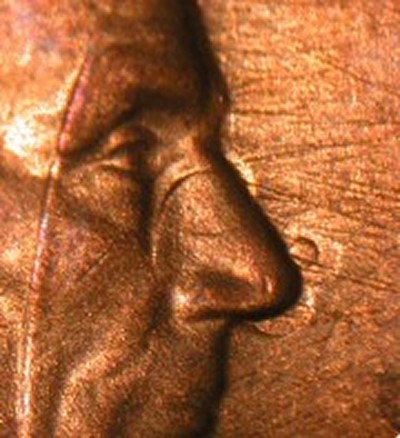
      • 1988-P nickels with lump on head
        • COIN WORLD SPECIAL: article posted HERE
      • Massive die collapse in 2003-D dime (ES Nov/Dec 2011; CW 8/29/11)
      • Paralleling and flanking die cracks (CW 8/12/13)
      • Recurring die subsidence error (CW 4/4/11, 3/31/14)
      • Linear die subsidence errors (CW 8/12/13)
    • Thermal warping (CW 5/29/23)
    • Design creep
      • Reverse (hammer) 2014-P nickel die (CW 4/20/15)
      • In fractional Euro coins
    • Peripheral die expansion and erosion (CW 8/13/12, 4/13/15)
    • “Starburst” pattern of radial streaks (cause uncertain) (CW 8/15/05, 11/7/05)
    • Reciprocally deformed, convex-concave dies
      • Centrally-located deformation; 2001-P 50c) (ES Sept/Oct 2008; CW 1/19/15)
      • Peripherally-located deformation; India 2 rupees (CW 1/19/15)

Die breaks

    • Cuds (corner die breaks) (CW 10/17/11, 10/4/21)
      • Irregular cuds
      • Ovoid cuds
      • Crescentic cuds (ES March/April 2005; CW 2/15/16)
      • Circumferential cuds (ES March/April 2005; CW 2/15/16)
      • Rim-to-rim cud (ES May/June 2003, CW 12/24/18)
      • Elongate Cuds (CW 12/8/14, 12/21/20, 7/31/23)
      • On off-center or broadstruck coins (CW 9/12/11)
      • Deep vs. shallow die breaks (CW 6/2/20)
    • Retained Cuds (ES Jan/Feb 2006; CW 4/17/06, 7/24/06, 1/24/11)
      • COIN WORLD SPECIAL: article posted HERE
      • Anvil die (diagnosis often in doubt)
      • Hammer die (doubtful) (CW 8/8/13)
      • With vertical displacement
      • With horizontal offset
      • With lateral spread
      • Outthrust (protrudes beyond die face) (CW 3/11/19)
        • Hammer die
        • Anvil die
  • Interior (internal) die breaks (ES May/June 2003; CW 10/25/10, 11/5/18, 8/14/23)
    • Connected to die cracks or splits
    • Freestanding (ES May/June 2005)
  • Retained interior die breaks (ES July/August 2004)
    • Connected to die crack or split
    • Freestanding
  • Rim cuds (CW 5/3/21)
  • Die chips (CW 6/14/19, 7/8/19)
    • On raised die features (CW 2/28/22)
  • Catastrophic die failure (ES May/June 2007; CW 5/20/13, 2/27/23, 6/19/23)
  • Spontaneous breaks
  • Breaks produced by impacts
  • Textured and dimpled cuds (CW 10/17/11, 10/12/20)
  • Cryptic cuds (CW 4/17/23)

Die exfoliation errors (CW 10/19/20)

Collar breaks (collar cuds) (ES May/June 2008; CW 11/22/10, 5/17/10, 11/22/10, 12/19/16)

    • Complete collar break (abrupt loss of entire arc segment)
    • Irregular collar break
    • Chipped collar
    • Vertical collar crack
    • Retained collar break
    • Rotating collar break (ES July/August 2003; CW 1/6/03, 12/12/16, 4/20/20, 12/28/20)
    • Bilateral split collar
    • On off-center strikes (CW 9/9/19)
    • Catastrophic collar failure (CW 7/17/23)

Die cracks (CW 4/25/16)

    • Rim-to-rim
    • Arcing rim-to-rim (“pre-cud”) die crack (ES Jan/Feb 2006; CW 2/8/21)
      • With lateral spread
    • Blind-ended
    • Bi-level die cracks (ES July/August 2004)
      • Protruding marginal die segments (CW 5/19/14)
    • Radial, antipodal die cracks (with centralized subsidence) (ES Sept/Oct 2011; CW 6/20/2011)
    • Die Crazing (Crazed Die)
    • Shattered dies (ES Jan/Feb 2006, May/June 2007; CW 4/7/08, 9/17/18, 4/6/20)
      • Broas Pie Baker Store Card Token of 1863
      • Two or more splits in die
      • Numerous wide, intersecting, raised die cracks
      • Numerous intersecting bi-level die cracks
      • Various combinations of brittle fracture
      • In response to impacts (CW 6/19/17)
    • Impact-Induced Die Cracks (CW 6/19/17)

Split dies (ES Jan/Feb 2006; CW 6/2/03, 4/10/06, 4/17/06, 6/20/2011, 5/11/15, 9/17/18, 4/26/21, 4/18/22, 7/18/22)

    • Median (bisecting) split die
    • Asymmetrical split die (CW 7/31/23)
    • False split (bilateral, radial, antipodal die cracks) (ES Sept/Oct 2011; CW 6/20/2011)


Green lettering – major heading

Blue lettering – linked to subject matter

Brown lettering – subject matter covered under that heading

Black lettering – no entry yet

Pivoted Die Error

PART VI. Striking Errors:

Die Alignment Errors:

Pivoted die error


Definition:
Any lateral misalignment greater than 10% is likely to involve the entire die assembly.  There just isn’t enough play in the hammer die’s recess to allow this sort of lateral movement.  Even if there was, the die would surely fall out.  It may be that most horizontal misalignments have nothing to do with a loose die and everything to do with an unstable die assembly.

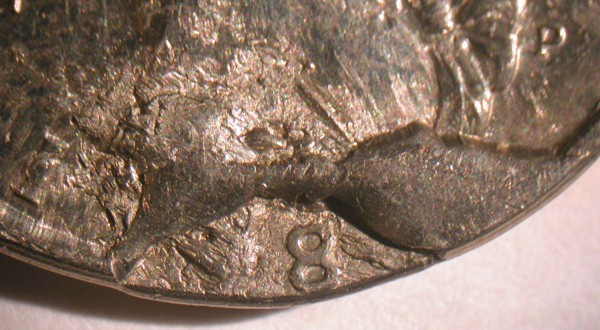
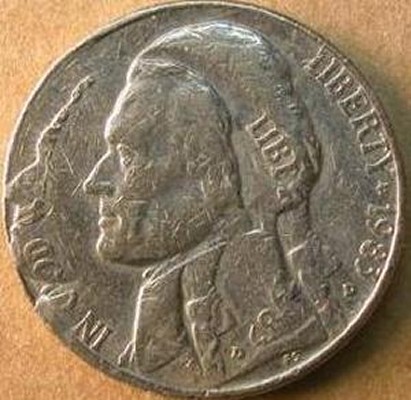
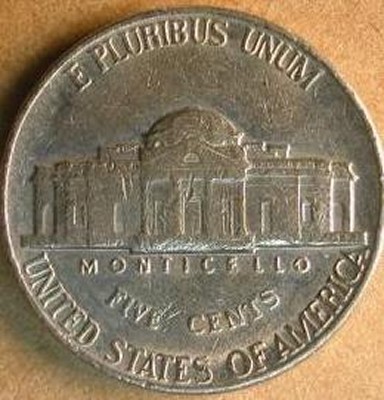
If major horizontal misalignments can be caused by movement of the entire die assembly, then other sorts of lateral movements are also possible.  This 1983-D nickel shows a normal first strike and a possible pivoted die error on the second strike.  The obverse die was shifted to the left about 30% and rotated perhaps 20 degrees.  While this could be a combination of a horizontal misalignment and a rotated die error, it could represent a single movement of the hammer die assembly — a pivot.

In a pivoted die error, the obverse die seems to rotate around a vertical axis that runs along the side of the die shaft and may even occupy empty space lateral to the die shaft.  In actuality, the entire die assembly is pivoting.

As described above, pivoted die errors pose a diagnostic challenge. Unless the apparent rotation is greater than 45 degrees, any potential pivoted die error can also be interpreted as a combination of a horizontally misaligned and rotated die (or die assembly). It takes an unusual error to break this impasse.

This 1996-P quarter features a centered double strike, with a clockwise rotation of the coin between strikes. The first strike was in-collar while the second strike was out-of-collar (broadstruck). This coin also incorporates a counterclockwise pivot of the obverse (hammer) die between strikes.

As expected, primary and secondary design elements on the reverse face show a consistent rotational offset around the entire perimeter.

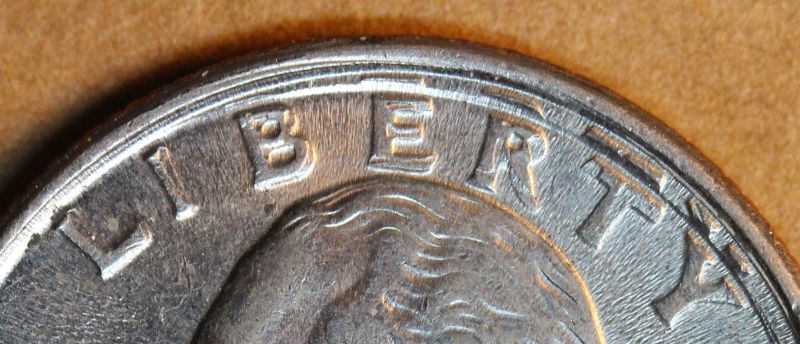
The date shows the same rotational offset. However, at the opposite pole, the primary and secondary letters of LIBERTY show a smaller amount of offset that shrinks as one moves from right to left. The first few letters of LIBERTY show no rotational offset at all.

This pattern could only have occurred if the obverse (hammer) die assembly had pivoted counterclockwise as the coin was rotating clockwise. The axis of rotation would have been located near 6:00. Owing to the pivot, the obverse design is shifted slightly more toward the southwest than the reverse is toward the northwest.

Numerous Intersecting Bi Level Die Cracks

PART IV. Die Errors:

Die Cracks:

Shattered Die

Definition: A “shattered die” features numerous intersecting die cracks.  Along with the profusion of die cracks, a shattered die can also incorporate other forms of brittle fracture such as die breaks and retained die breaks.

A shattered die often indicates a terminal die state, i.e., a die just short of catastrophic failure.  A series of coins struck by a shattered die can often be arranged in a progression of increasing severity.

A network of intersecting bi-level cracks constitutes one type of shattered die. In a bi-level die crack, there is vertical displacement at the site of the crack. This means the die face has sunk in on one side of the crack.

An example of converging radial bi-level die cracks can be seen in this 2000 Indian 2 rupees coin. These bi-level die cracks meet in the center of the obverse face.


A more extensive set of bi-level die cracks can be seen below in a 1913 Chinese 100 cash coin. The obverse face shows at least seven bi-level die cracks and a few smaller conventional die cracks. At least one crack shows characteristics of both. This is not that unusual, as you can have both horizontal spread and vertical displacement in the same location, or a transition from vertical displacement to horizontal spread as you proceed along the crack. Despite its tenuous structural integrity, this die was nowhere near terminal failure and was likely able to strike quite a few more coins in this condition.

The shattered die found on this 2007-P Roosevelt dime consists of a 50% retained cud with numerous bi-level die cracks within the body of the retained cud.  At least seven similar shattered obverse dies are known among 2007-P dimes.This coin is in the collection of Richard Creny. Image by R. Mentzer.

The shattered die shown below has extensive evidence of brittle fracture. Many types of brittle fracture may be represented, e.g., die breaks, retained die breaks, die cracks, a split die, etc. The die may or may not be approaching catastrophic failure (see Catastrophic Die Failure). Not surprisingly, a series of coins struck by a shattered die can often be arranged in a progression of increasing severity.


Note: Two separate specimens are shown below.

The 1985 India 25 paise shown below Features a large retained cud, a small retained interior die break, and numerous die cracks, most of them bi-level. The right side of the obverse face and the corresponding left side of the reverse face are weakly struck. This is largely due to a tilted die error (vertical misalignment) of the entire obverse face. The left side of the obverse is quite strongly struck, despite the large retained cud. This should have led to a reduction in effective striking pressure. The fact that it didn’t indicates that this part of the obverse die face was tilted down, while the opposite pole was tilted up. This tilt was most likely due to a break at the base of the die or through the shaft of the die – a break that allowed the die to tilt down strongly toward one pole.


The 2002 Brazilian 10 centavos shown below expresses various forms of brittle fracture.  There are three cuds, one retained interior die break, and a tracery of intersecting die cracks of both the conventional and the bi-level type.
 

Median Bisecting Split Die

PART IV. Die Errors:

Split Die:

Median (bisecting) split die

Definition: A split die develops when a rim-to-rim die crack extends deep into the die neck and die shank (shaft). The width of the split is proportional to its depth of penetration. Split dies usually divide the die face into two sub-equal parts. These may be termed “median”, “bisecting”, or “symmetrical” split dies. A width of .5 MM is the determination point which differentiates a rim to rim bisecting die crack from a split die.
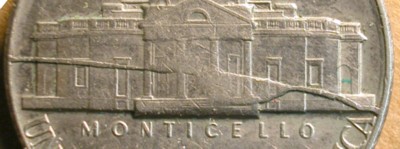
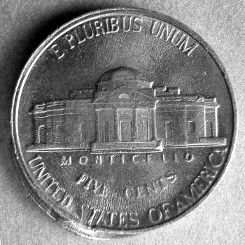
1973-D nickel that shows a relatively narrow median split die on the reverse face. The split is straddled by a retained interior die break. An island of metal sank into surrounding softer steel, leaving part of Monticello sitting on a pedestal.
 

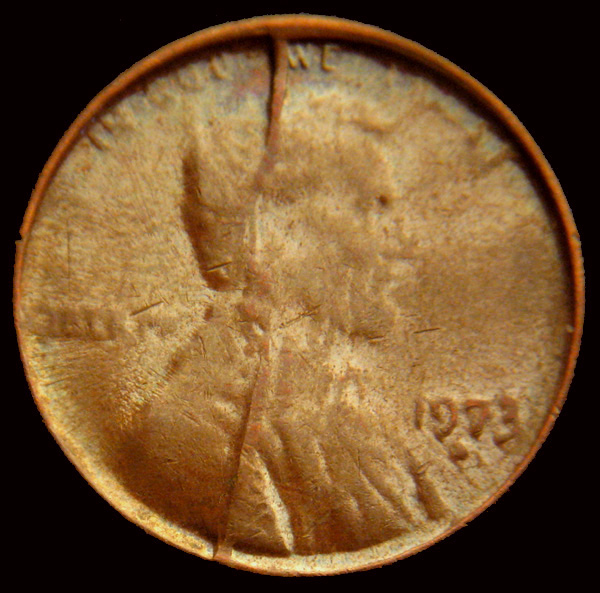
The 1973-D cent pictured above was struck by a split, capped die.  In other words, the coin was struck by a die that
had a wide median split and that was also covered by a late-stage die cap.  Split die errors often co-occur with capped die strikes.  It seems that when a planchet is struck, coin metal wedges itself into the split, causing the coin to stick to the die face. This coin is courtesy of Don Wenger.

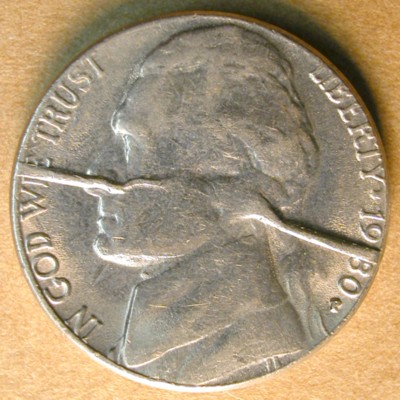
1980-P nickel that shows a very wide median split die on the obverse face.


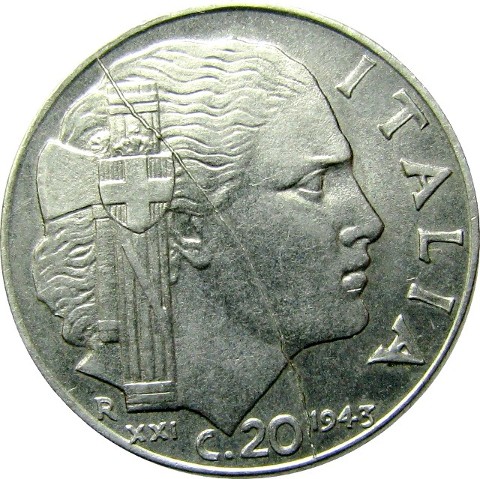
Narrow median split die spans the obverse face of this Italian 1943 20 cent.

Irregular Collar Break

Part IV. Die Errors:

Collar Cuds:

Irregular Collar Break

Definition: Many collar breaks take the form of an irregular bite extending from the upper edge of the working face of the collar.

Many collar breaks take the form of an irregular bite extending from the upper edge of the working face.

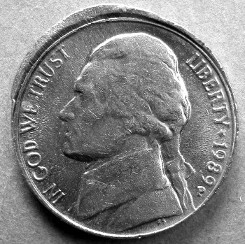
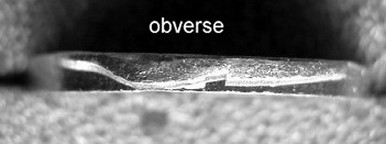
This 1989-P nickel has a large, irregular collar break that extends from 10:00 to 1:00 (obverse clock position).

Low angle view of the collar break.

The lowest
tip of the break’s advance falls just shy of the reverse rim (image below).

Floating Die Clash

PART IV. Die Errors:

Die Clashes:

Floating Die Clash

Definition: A floating die clash is generated in the aftermath of a die break.  After it breaks off, the die fragment remains behind in the striking chamber and is struck by the dies.  Usually one of the dies is protected by a planchet.  If the other die strikes the working face of the die fragment, the incuse, mirror-image design elements on the fragment are transferred to the intact die (or the intact portion of the broken die).  Those transferred elements are raised and normally-oriented on the die face.  Every coin that is struck afterward has incuse, mirror-image design elements in an unpredictable location.  Most floating die clashes are restricted to the field, as this is the portion of the die face that is most vulnerable to damage.

To see more floating die clashes, click HERE

Die Subsidence

PART IV. Die Errors:

Die deterioration/deformation errors: 

Die Subsidence (a.k.a., sunken die)

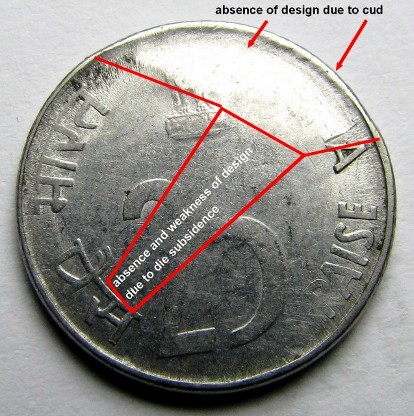
Definition: Die subsidence is a form of plastic deformation that results in a portion of the die face sinking in. The term “subsidence” is derived from geology. It means a sinking land surface. A synonym for die subsidence error is “sunken die error”. The coin itself will show a bulge on one face. The opposite face may or may not show weakness in the design. It rather depends on how deeply the die face recedes.

The appearance of die subsidence errors is highly variable. It can be local or global (affecting the entire die face). Localized forms can be compact, elongated, circular, or oblong.

Die subsidence errors are often associated with cracking. The die cracks (conventional or bi-level) can skirt or penetrate the zone of subsidence. Other errors sometimes found in association with die subsidence errors include split dies, shattered dies, interior die breaks, retained interior die breaks, and retained cuds.

The causes of die subsidence errors are conjectural. They may reflect an abnormally soft interior that results from improper heat treatment (e.g., cooling, heating, tempering, quenching). They may reflect an intrinsic flaw in the die steel or the use of the wrong type of steel. Subsurface cavities, or pockets of low-density contaminants such as slag might also contribute to the formation of a zone of subsidence.

Note: Several specimens follow

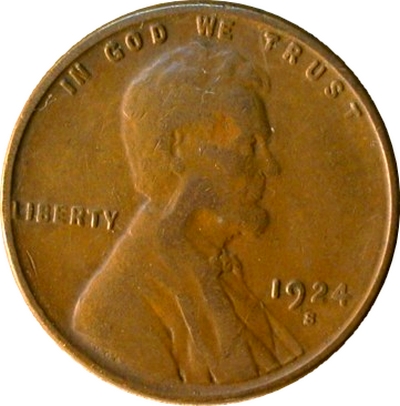
One of the best-known and most readily available die subsidence errors is the 1924-S “goiter” cent. A zone of subsidence crosses Lincoln’s neck looking more like a distended external jugular vein than an enlarged thyroid gland. The swelling is flanked by two thin die cracks. Uncirculated specimens show the details of Lincoln’s neck continuing uninterrupted across the bulge.

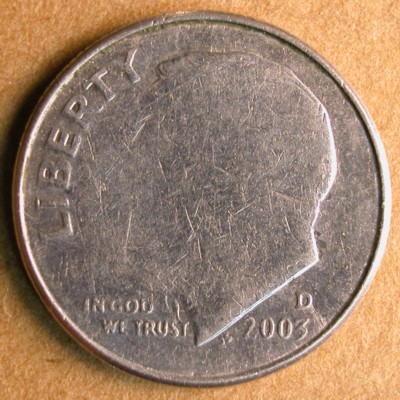
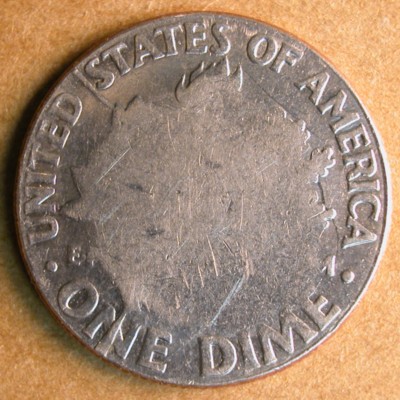
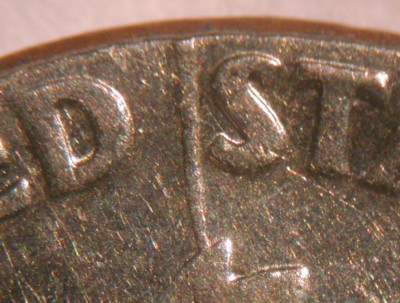
Undoubtedly the most severe case of die subsidence ever seen in a U.S. coin appears on a 2003-D dime. The center of the reverse die face collapsed, leaving a featureless elevation on the reverse face of the coin.  The entire coin buckled toward the recess. This left the obverse face of the coin with a featureless hollow. Two wide radial die cracks extend from the rim to the zone of subsidence, where they are lost to further view.
.

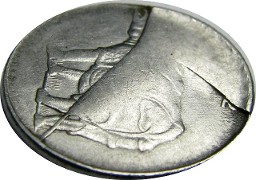
 Shown here is an Indian 25 paise with a die subsidence error in association with a split die and what might be either a cud or a retained cud.

  • « Previous Page
  • 1
  • 2
  • 3
  • 4
  • …
  • 7
  • Next Page »
  • Home
  • Introduction To This Website
  • Error-ref.com News
  • Comprehensive Error-Variety Checklist
  • Index Of Completed Entries
  • Part I. Die Subtypes:
  • Part II. Die Varieties:
  • Part III. Die Installation Errors:
  • Part IV. Die Errors:
  • Part V. Planchet Errors:
  • Part VI. Striking Errors:
  • Part VII. Post-Strike Mint Modifications:
  • Part VIII. Post-Strike Striking Chamber Mishaps:
  • Part IX. Post-Strike Mint Damage:
  • Part X. Wastebasket / Composite Categories:
  • Part XI. Non Errors:
  • Featured Articles Of Interested
  • Interest & Not So Interesting Facts
  • Other Sites And Forums Of Interest
  • Our Thanks Go To
  • About The Authors
  • Contact Us

Copyright © 2026