Error-Ref.com

You are here: Home / Search for "die break"

Search Results for: die break

Retained Interior Die Break

Part IV. Die Errors:

Die Breaks:

Retained Interior Die Break

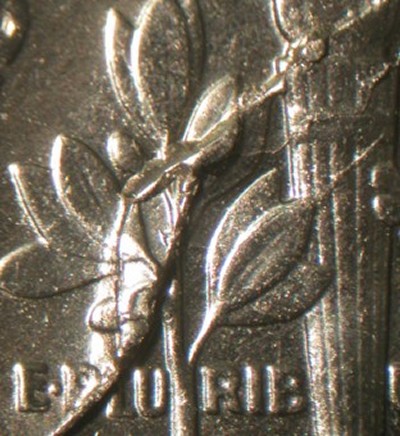
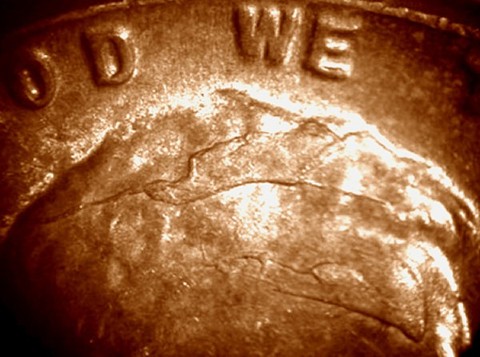
Definition: An island of metal surrounded by a die crack that sinks into the die face.  On the coin it’s seen as an island of design that sits on a low plateau.  It’s almost impossible to determine if a retained interior die break is actually detached from the remainder of the die face or simply sank in as the result of subsurface deformation beneath a cracked surface.

A retained interior die break may or may not be connected to the rim by die cracks or a split die.  If such a connection is absent, it is called a freestanding interior die break. Many retained interior die breaks straddle splits in the die face.

Retained interior die breaks are also referred to as retained internal die breaks.
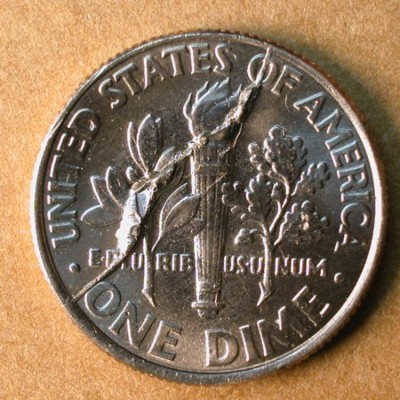
The reverse face of this 2007-P dime shown above has an asymmetrical split die straddled by a retained interior die break.  Additional die chips are arranged along the split.
Retained Interior Die Breaks: Connected To Die Crack

PART IV. Die Errors:

Retained Interior Die Breaks: 

Connected to die crack or split

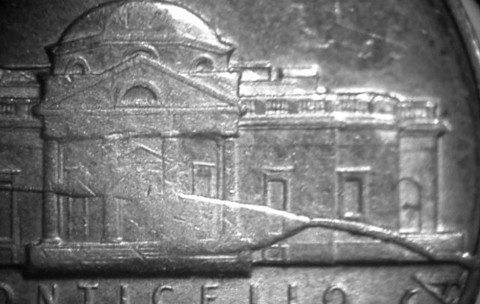
Definition: A retained interior die break occurs when a flake detaches from the die face but, instead of falling off, it
sinks into the surrounding metal.

Depicted below is a large, retained interior die break straddling a split die in an uncirculated 1973-D nickel. Part of Monticello (the building, not the motto) is raised up on a pedestal, and there is an abrupt step-down to the rest of the design. Essentially, the split diverged around the flake at one end, and reunited at the other end. Of course, deep to the flake, the split would have to have been continuous. The flake would probably have been somewhat wedge-shaped if sectioned vertically from north to south. After breaking free, the flake sank into softer surrounding metal, leaving a corresponding raised area on the coin.

Retained Interior Die Breaks: Freestanding

PART IV. Die Errors:

Retained Interior Die Breaks: 

Freestanding

Definition: Defined as an area of the die that has become detached but is still retained in the die.

Lincoln cent dies of the middle through late 1950’s were prone to cracking around the top of Lincoln’s head.

In the specimen below, there are a number of die cracks that extend from the raised island of metal and end blindly. Since none of the cracks reach the rim, the island of metal they radiate from is considered a freestanding retained interior die break. Another retained interior die break is forming to the southeast, creating an elevation that resembles a loose skin flap.

Interior Die Break Connected To Die Crack

PART IV. Die Errors:

Interior Die Break:

Connected to a Die Crack or Split


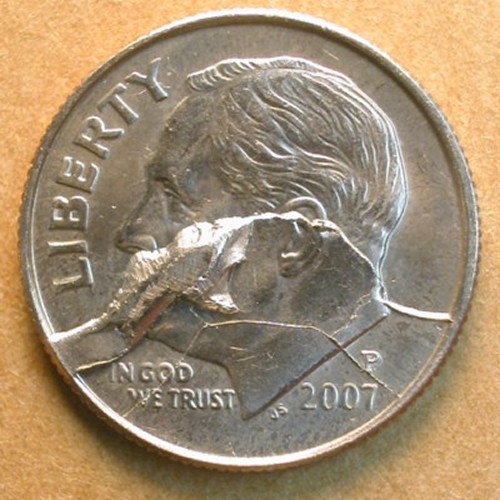
Definition: When a thick flake spalls off the interior of the die face it leaves a void we call an interior die break.  It appears on the coin as a featureless lump.  Unlike a cud, an interior die break has no direct connection to the design rim.  Interior die breaks are often connected to die cracks and sometimes straddle a split in the die face (split die).  When it is not connected to a die crack, it is called a freestanding interior die breaks.


This 2007-D dime was struck by a shattered obverse die.  Many forms of brittle fracture are evident, including a 50% retained cud and many bi-level die cracks.  A large interior die break has replaced Roosevelt’s mouth and cheek.


Freestanding Interior Internal Die Breaks

PART IV. Die Errors:

Interior Die Breaks: 

Freestanding


Definition: It’s a rare event when a die chip is so large that it warrants being designated an interior die break. Interior die breaks should not be confused with “cuds”. By definition, a cud is a die break that includes the rim and at least a little bit of the field.

Interior die breaks have no direct connection to the rim. They may have an indirect connection via a die crack or split die. Since voids left in the die face by natural fractures span an unbroken size continuum, there is no clear boundary between a “die chip” and an “interior die break”.

Any void encompassing an area of 4 square millimeters or more qualifies as an interior die break. Any void that covers less than 1 square millimeter is a die chip. In between is a gray area. Die chips are commonly encountered in all denominations. In Lincoln cents they include “BIE” errors, “plugged” 5’s and 9’s, and “bugs in the wheat ear”.

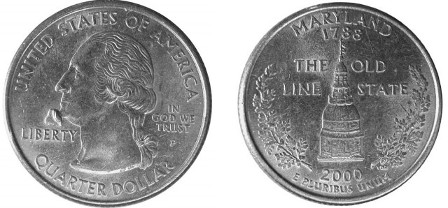
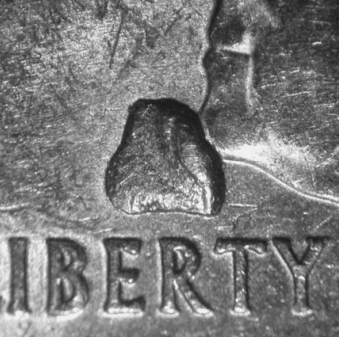
Maryland quarter with a large, freestanding interior die break at the tip of Washington’s chin.


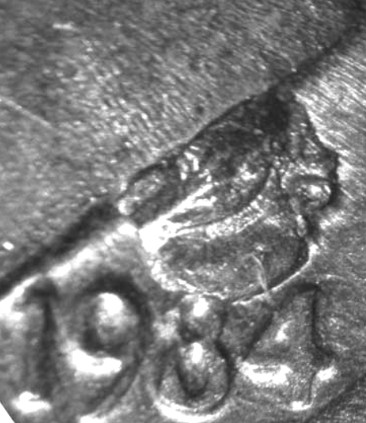
Freestanding interior die break on a 1984-P Roosevelt dime. It is situated between Roosevelt’s neck (a long, straight edge), the date, and the mintmark.

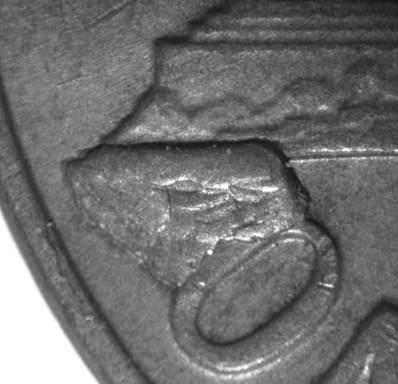
1970-D cent with a freestanding interior die break between the base of the Memorial (another straight edge), the rim, and the “O” of ONE.

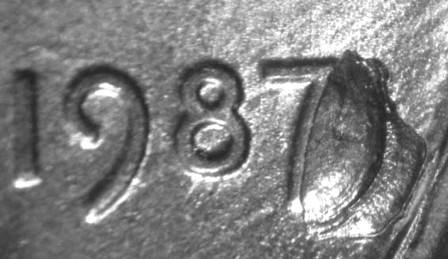
1987 cent with a freestanding interior die break that extends from the side of the “7” (a gently curved edge) and = almost reaches the rim.

Die Breaks

Part IV. Die Errors:

Die Breaks

Definition:  A die break is a form of brittle failure in which a piece of the die face breaks off and falls out.  Mint workers call this kind of defect a “piece-out”.  Tiny die breaks tend to form within narrow interstices of the design. When not connected to the rim, such tiny die breaks are referred to as “die chips”.

The vast majority of large die breaks occur at the die’s margin.  The sharp junction between die neck and die face is particularly prone to failure.  Any die break that involves the rim and at least a little bit of the field is called a “cud”.Most die breaks represent cases of spontaneous brittle failure.  A small minority of die breaks arise as the result of impacts.  The latter are often accompanied by signs of die damage in the intact portion of the die face.

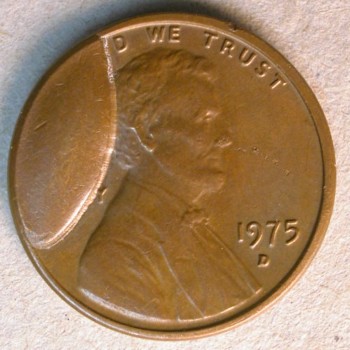
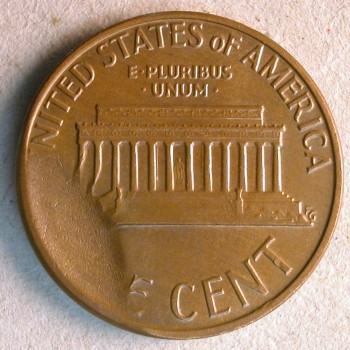
This 1975-D cent shows a large cud (marginal die break) on the left side of the obverse face.  As with all large die breaks, the area directly across from the die break on the opposite face is sunken-in.  When the coin is struck, metal bulges into the void in the die face and simultaneously retreats from the intact die.

Die Breaks Produced By Impacts

PART IV. Die Errors:

Die Breaks:

Die Breaks Produced by Impacts

Definition: Die breaks can occur spontaneously or because of an impact.  An impact can also weaken a die, producing micro-cracks that lead to eventual failure.  The source of the impact could be the opposing die, a piece of a collar, or some other hard object.


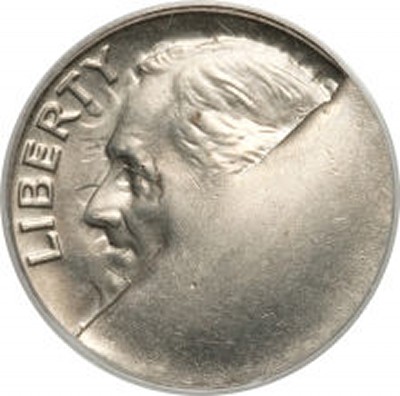
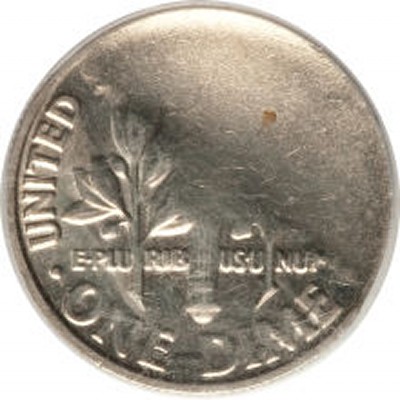
Half of the obverse die broke away prior to the strike that created this undated Roosevelt dime. This enormous die break may have been caused or initiated by a strong die clash. Deep, extensive clash marks can be seen on both the obverse and reverse face.

Images are courtesy of Heritage auctions.

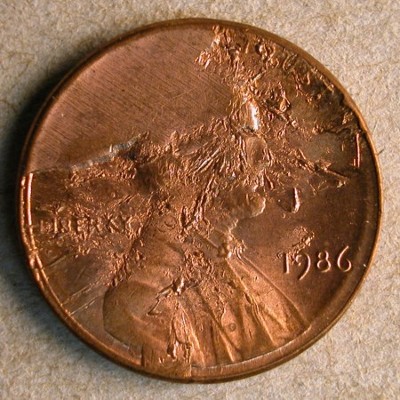
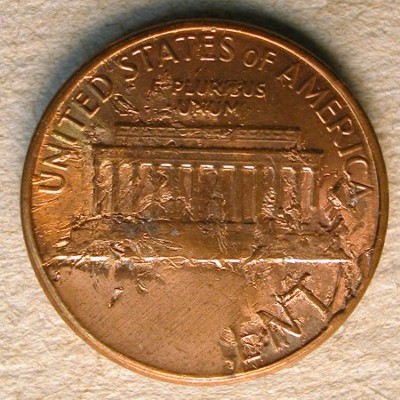
The dies that struck this 1986 cent show extraordinarily heavy impact damage.  In addition to a profuse number of
impact scars and die dents, the cent shows a large cud in the northwest quadrant of the obverse face and a small cud at the base of Lincoln’s bust.  It’s likely that these pieces of the obverse die were knocked off by the same foreign body or bodies that were responsible for the die damage.  Another possibility is that the larger die fragment broke off first, landed between the dies and shattered upon impact.  This could have created the debris field responsible for the widespread damage.

Struck-In Die Fragments

Part VI. Striking Errors:

“Struck-Through” Errors:

Retained Struck-Through Errors:

Struck-in die fragments


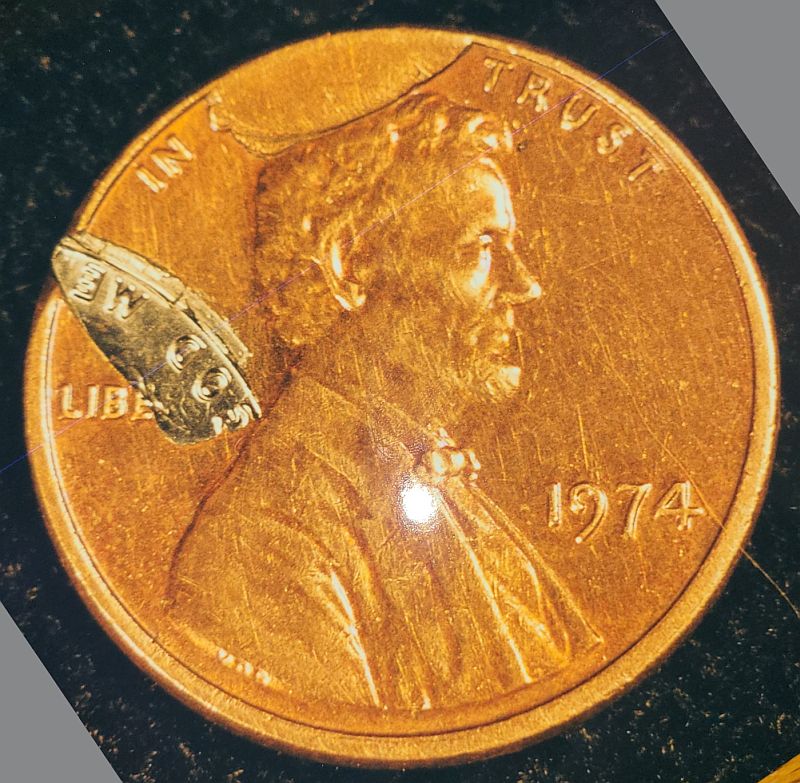
Definition: A die fragment that is struck into a planchet and retained. Retained die fragments are quite rare. Most are derived from one of the dies responsible for striking the coin that carries the fragment.


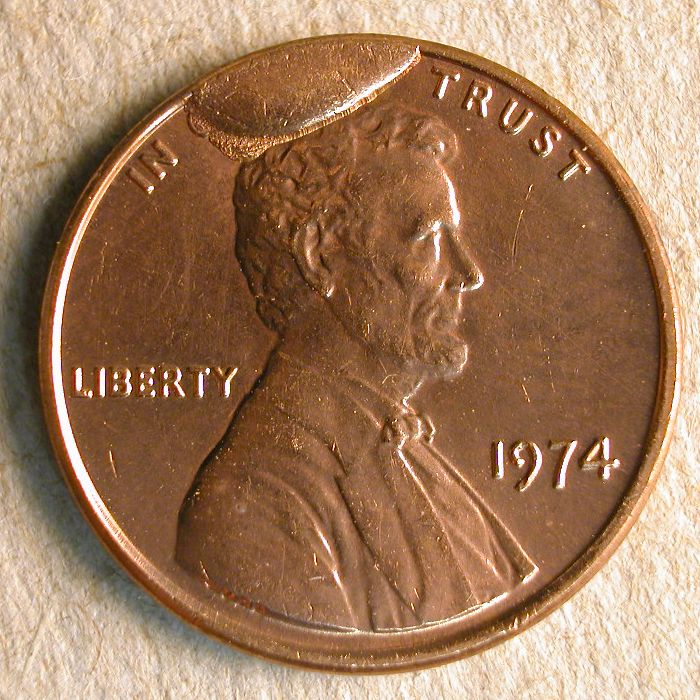
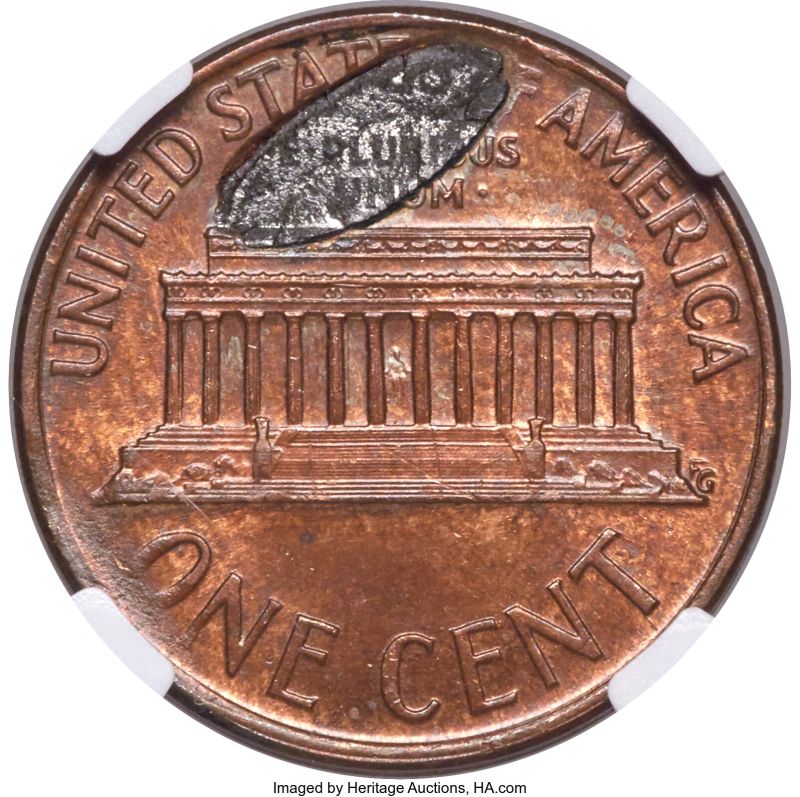
A fragment broke away from this 1974 obverse cent die and landed upside down on the planchet represented by the illustrated cent. The fragment was driven into the cent, where it remained until discovery. The impact between the intact portion of the die and the fragment generated a floating die clash, which appears on every cent struck afterward. Photo courtesy of James Krieb.


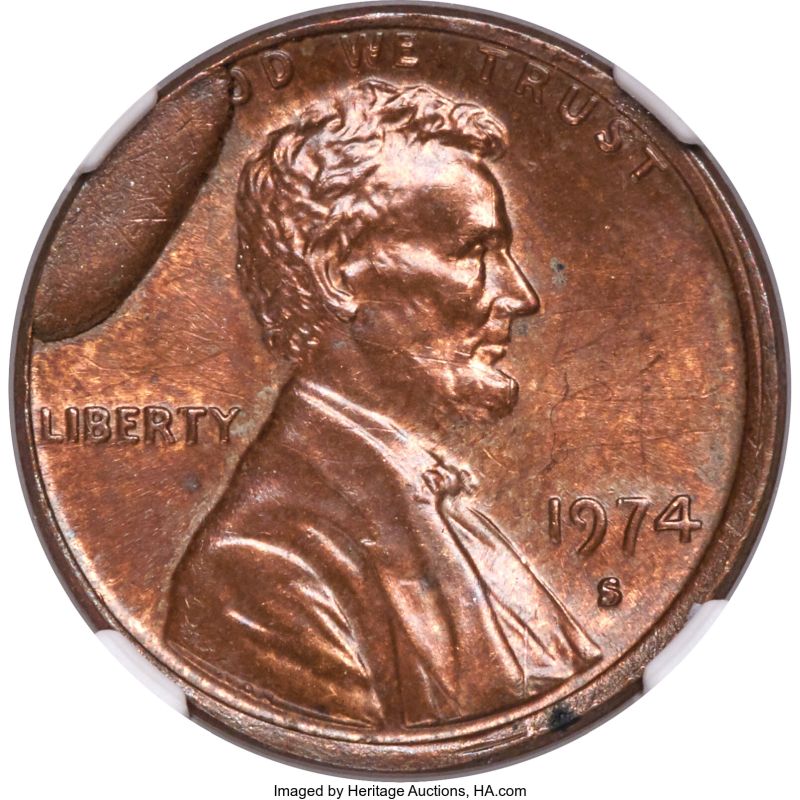
This 1974 cent was struck later by the broken, damaged obverse die and displays the floating die clash produced when the obverse die struck the fragment.


A die fragment broke off the left side of this 1971-S obverse die and landed on the reverse die, with its lettering apparently facing upward toward the obverse die. A planchet was then fed in on top of the fragment so that the fragment was driven into the reverse face of this cent.

Exogenous Floating Die Clash

Part IV. Die Errors:

Die damage with design transfer:

Floating die clash:

Exogenous floating die clash


Definition: Clash marks generated by a die fragment that did not calve from either of the dies that struck the coin.

Around half a dozen endogenous floating die clashes are known. These are clash marks generated by die fragments derived from one of the dies that struck the coins carrying the clash marks. As a result, one of the dies has a corner die break that appears on the coin as a “cud”.

Only one exogenous floating die clash is known. Discovered by Robert Piazza, it appears on the reverse face of a 1972-D cent. The clash consists of an impression of the perimeter of the field portion of the die fragment’s working face, as well as the tops of two incuse letters that may represent. These incuse letters belong to the reverse design and may represent the AM of AMERICA.


The die fragment may have come from an adjacent die pair or a nearby die couplet. It’s also possible that the fragment was derived from a previous die that was replaced after it broke. The fragment could have lodged in a die recess and then fallen out, with its working face directed downward toward the anvil (reverse) die.

Outthrust Die Fragments

Part IV. Die Errors:

Die Breaks:

Retained Cuds:

Outthrust Die Fragments

Definition: A coin struck by a retained cud (retained corner die break) in which the die fragment protrudes beyond the plane of the die face.

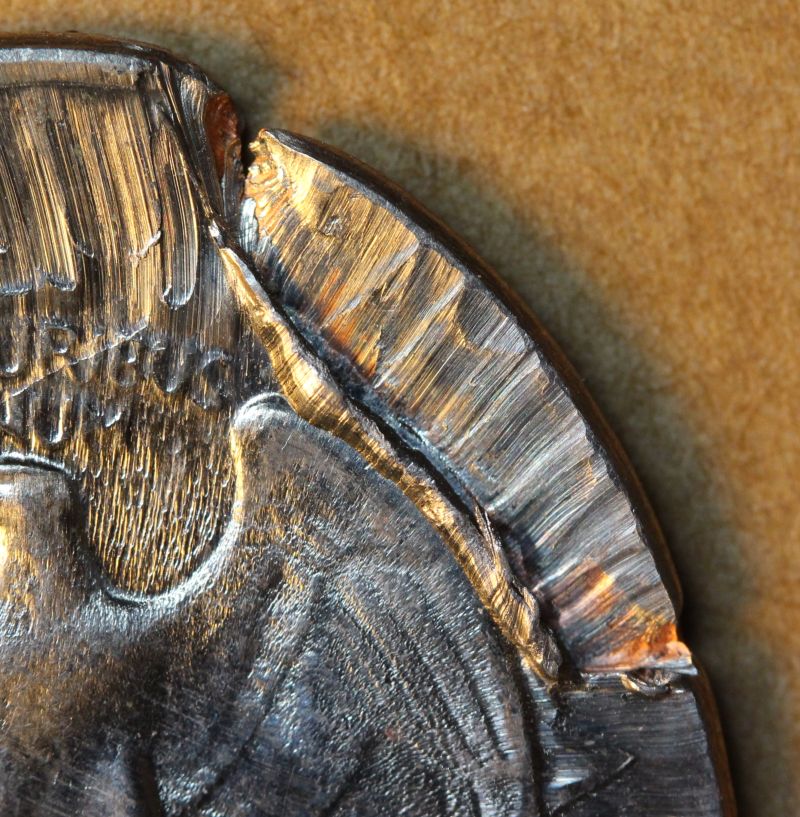
In most retained cuds, the die fragment sinks in, beneath the plane of the die face. This leaves this part of the coin’s design sitting on a low plateau. In rare instances, the die fragment protrudes beyond the die face, generating an island of design on the coin that is recessed. In order for the die fragment to protrude, it’s possible that bits of die steel or other debris become wedged in between the die fragment and the intact portion of the die neck.


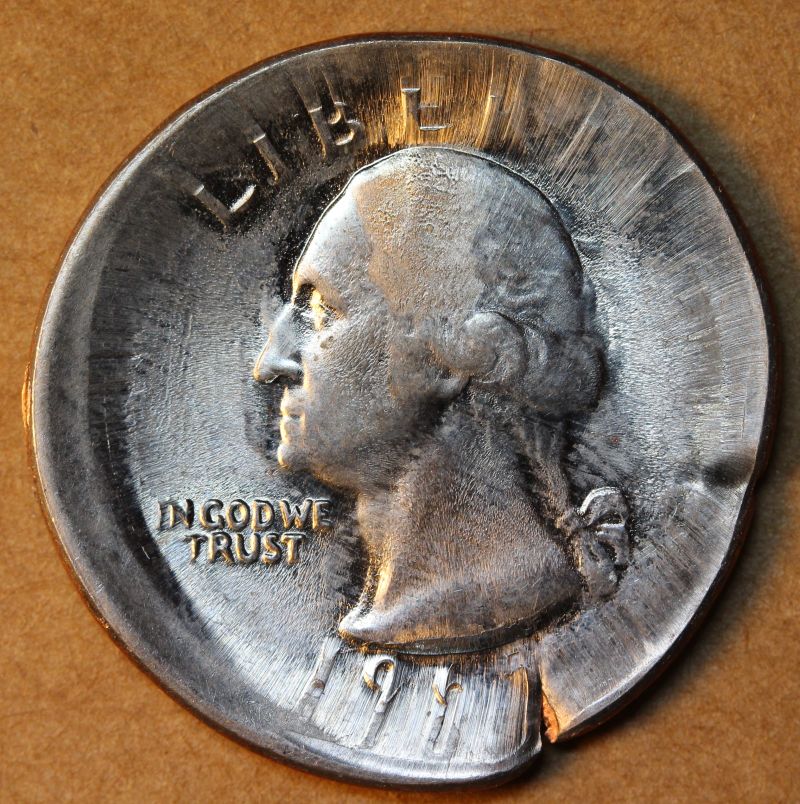
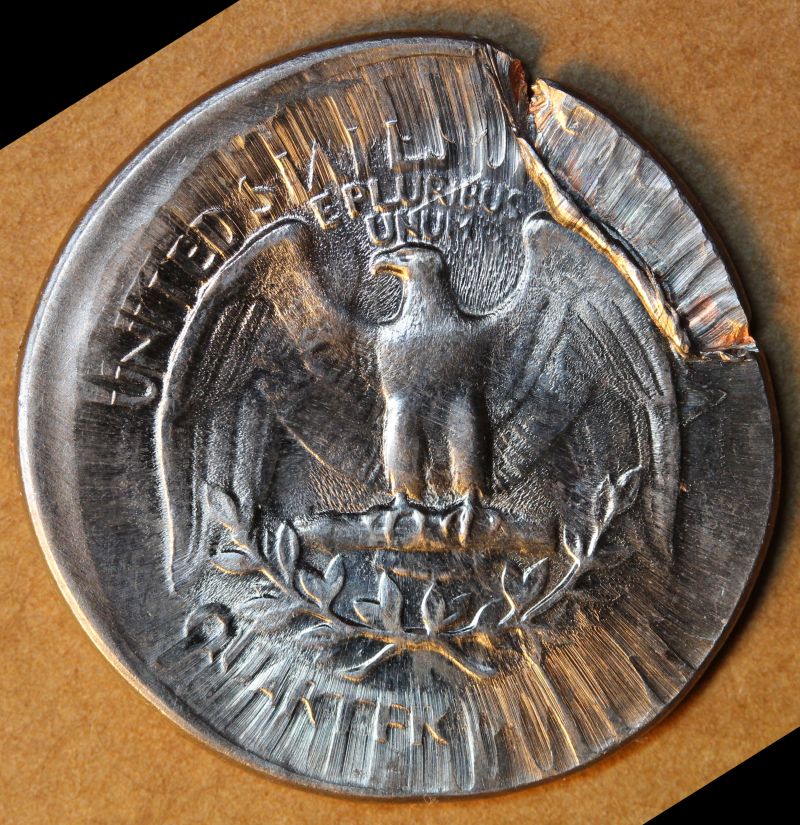
This 1965 quarter dollar takes the form of an enormous broadstrike. The northeast quadrant of the reverse face was struck by an outthrust die fragment (outthrust retained cud). The grossly smeared letters of AMERICA are recessed relative to the rest of the design. This area is demarcated internally by a relatively thick ridge that represents coin metal that extruded between the die fragment and the intact portion of the die face. This means that the die fragment was also displaced laterally (lateral spread).

  • 1
  • 2
  • 3
  • …
  • 7
  • Next Page »
  • Home
  • Introduction To This Website
  • Error-ref.com News
  • Comprehensive Error-Variety Checklist
  • Index Of Completed Entries
  • Part I. Die Subtypes:
  • Part II. Die Varieties:
  • Part III. Die Installation Errors:
  • Part IV. Die Errors:
  • Part V. Planchet Errors:
  • Part VI. Striking Errors:
  • Part VII. Post-Strike Mint Modifications:
  • Part VIII. Post-Strike Striking Chamber Mishaps:
  • Part IX. Post-Strike Mint Damage:
  • Part X. Wastebasket / Composite Categories:
  • Part XI. Non Errors:
  • Featured Articles Of Interested
  • Interest & Not So Interesting Facts
  • Other Sites And Forums Of Interest
  • Our Thanks Go To
  • About The Authors
  • Contact Us

Copyright © 2026