Error-Ref.com

You are here: Home / Search for "mule"

Search Results for: mule

Mule Clash

Part IV. Die Errors:

Clashed Dies:

Mule Clash

Definition: Clash marks from dies that should never have been paired.  Mule clashes were, until recently, considered a 19th century phenomenon.  Six are known from this century:

  1. An 1857 Flying Eagle cent that shows a clash between its obverse die and the obverse die of a $20 double eagle gold coin.
  2. An 1857 Flying Eagle cent that shows a clash between its reverse die and the reverse die of a Seated Liberty quarter dollar.
  3.  An 1857 Flying Eagle cent that shows a clash between its obverse die and the obverse die of a Seated Liberty half dollar.
  4.  An 1857 Seated Liberty quarter dollar that shows a clash between its reverse die and the reverse die of an 1857 Flying Eagle cent.
  5. An 1864 2 cent coin that shows a clash between its reverse die and the obverse die of an Indian Head cent.
  6. An 1870 Shield nickel that shows a clash between its obverse die and the obverse die of an Indian Head cent.

It’s widely suspected that all of these mule clashes are the result of mischief by mint employees.

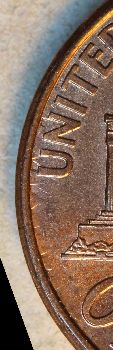
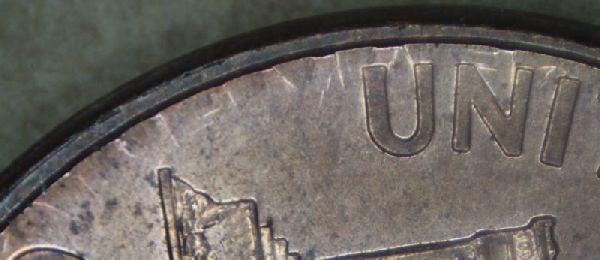
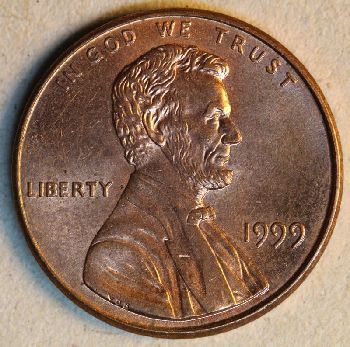
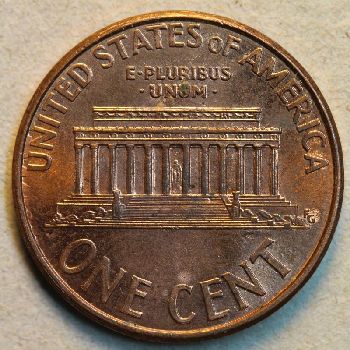
The latest mule clash was discovered in 2018 by Amy Antone in a pile of cents diverted from pocket change.  It appears on the reverse face of a 1999 cent.  Appearing on the left side, just inside the design rim, is an arc of incuse, mirror-image letters (“oF AMERIC”).  The letters are doubled, documenting two die clashes that were slightly offset from each other.  The tops of the letters are slightly cut off, indicating that the die responsible for the clash was slightly misaligned toward the left.  The peripheral location of the letters indicates that one of the two dies (presumably the hammer die), was tilted.

It’s not clear whether the two dies were actually installed in a press at the time of the clash.  It’s also unclear whether this clash was accidental or intentional.  This bizarre clash comes from an 11-year time period (1990-2000) that produced over 34 “radical MAD clashes” in Lincoln cents.  All of these clashes are weak, tilted, and often drastically misaligned.  The conditions that led to these clashes may have contributed to the production of this mule clash.


Temporal Transitional Mule 2000 Macedonia

PART III. Die Installation Errors:

Mules: 

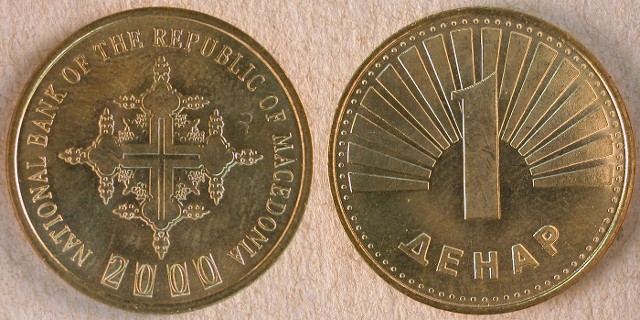
Temporal mule, 2000 Macedonia 1 denar muled with

obverse die used 3 previous years

Definition: Mules are coins struck by mismatched dies.

Shown below is a 2000 Macedonia 1 Denar. The reverse of this special, 1-year issue carries an ornamental cross.
The obverse is supposed to show a Byzantine coin. This mule, however, carries the ordinary 1 Denar design that was used in 1993, 1997, and again in 2001. It’s possible a 1 Denar design from 1997 or 2001 was mistakenly employed as the obverse die. It’s equally possible that a leftover special-issue reverse was mistakenly substituted when the normal design was re-instituted in 2001.

Mules Two Anvil Dies

PART III. Die Installation:

Mules: 

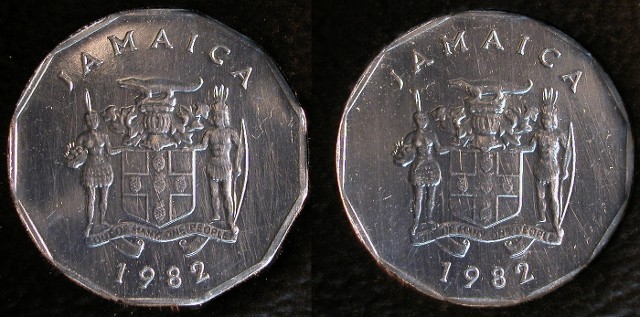
Two anvil dies

Definition: Mules are coins struck by mismatched dies.

The 1982 Jamaica cent shown below displays the obverse design on each face. Since Jamaica is a former British colony the obverse design was probably struck by the anvil die. The U.K. and its former colonies typically use the obverse die as the anvil die.


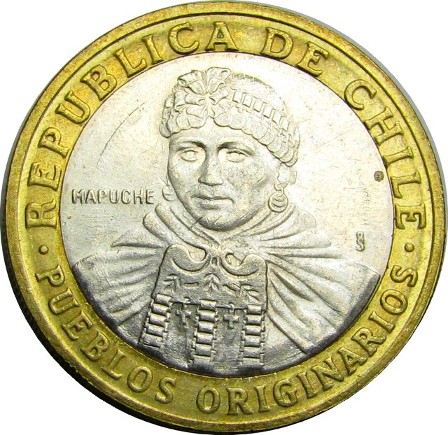
The obverse design on the Chilean 100 pesos bi-metallic coin shown below is carried by the anvil die.  One properly installed anvil die was paired with a second anvil die acting as the hammer die. Only one example of this mule is currently known.


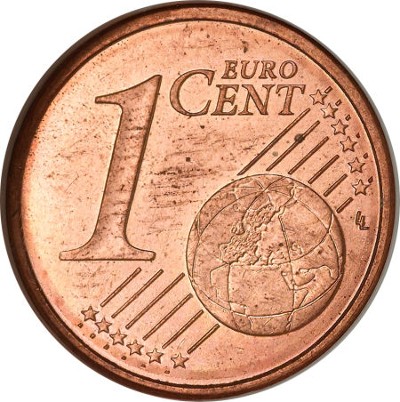
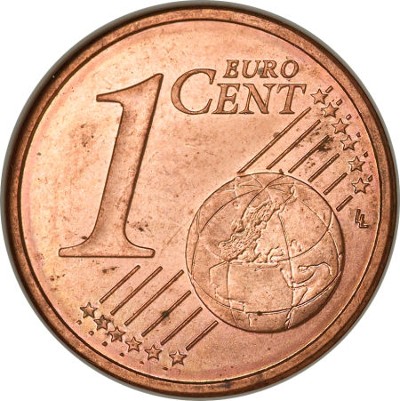
The images below show a 1 EURO cent — country of origin and date unknown — that was struck with two reverse (anvil) dies.

Images are courtesy of Heritage Auctions.

Mules Two Different Countries

PART III. Die Installation Errors:

Mules: 

Struck with Dies from Two Different Countries

Definition: Mules are coins struck by mismatched dies.

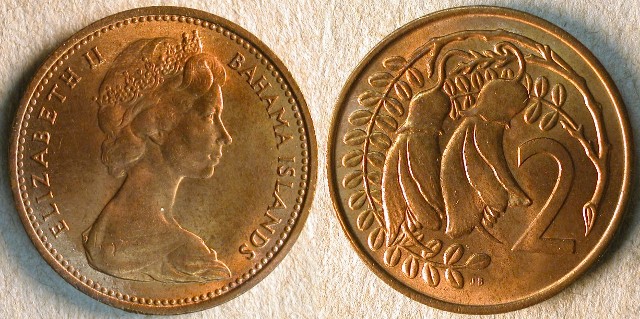
Some mules are purely accidental, and their release sometimes goes unnoticed until after thousands enter circulation. That’s the case with the (1967) New Zealand two cent mule shown below. The obverse mistakenly carries a Bahamas 5 cent design. Current estimates suggest at least 30,000 were released before mint officials realized what happened.

The Bahamas/New Zealand mule (1967) is one of the few to belong to this rare species of different denomination & different country. And yet, it is one of the best-known and most abundant mules. It pairs an incorrect Bahamas 5 cent (anvil/obverse) die with a correct New Zealand 2 cent (hammer/reverse) die. It was struck on a normal bronze New Zealand 2 cent planchet inside a 2 cent collar. A normal Bahamas 5 cent coin is composed of copper-nickel.


Mules Wrong Anvil Die

PART III. Die installation Errors:

Mules: 

Wrong anvil die

Definition: Mules are coins struck by mismatched dies. In this case the wrong anvil die was installed in a coin press.

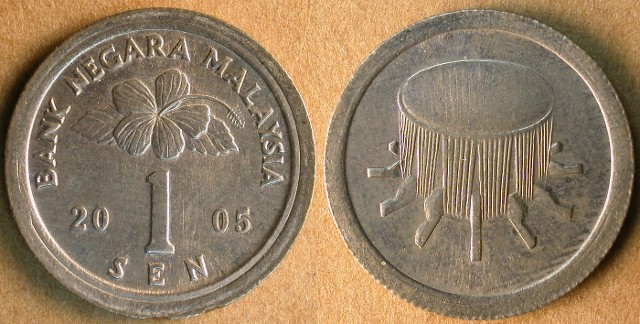
This Malaysian 10 sen mule was struck on a 10 sen planchet in a reeded 10 sen collar and carries a normal 10 sen obverse. The reverse face was struck by a 1 sen reverse (anvil) die.

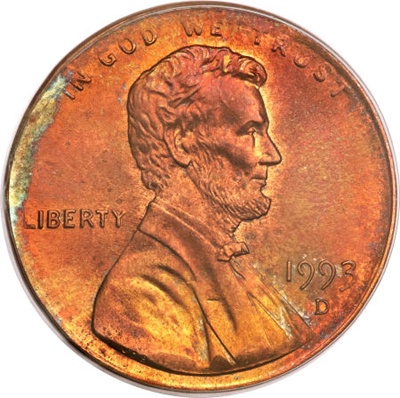
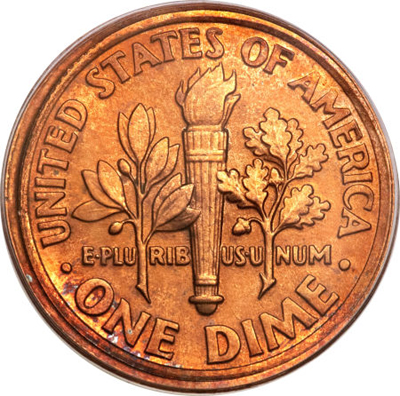
This dual denomination mule was struck in 1993 by the Denver mint. It had the correct hammer die (cent die) and the coin was struck on the correct planchet. However, the anvil die (dime die) was mistakenly installed in the coin press which resulted in this unique combination.

Images courtesy of Heritage Auctions.
.

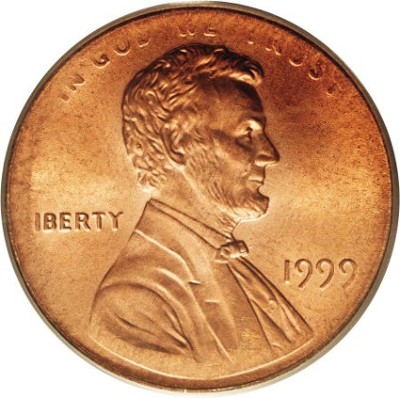
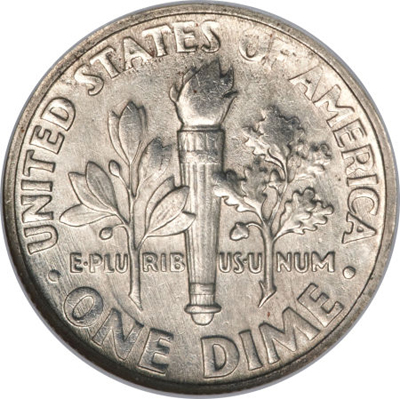
This dual denomination mule coin was struck in 1999 by the Philadelphia mint. It had the correct hammer die (cent die) and the coin was struck on the correct planchet. However, the anvil die (dime die) was mistakenly installed in the coin press which resulted in this unique combination.

Images courtesy of Heritage Auctions

Mules Wrong Hammer And Anvil Die

PART III. Die Installation Errors:

Mules: 

Wrong hammer and anvil die

Definition: Mules are coins struck by mismatched dies. In this case both hammer and anvil dies were not correct.

This Malaysian mule would be classified as a “double mule” It was struck by a 1 sen obverse die and a 1 sen reverse die installed in a 10 sen press. The coin was struck on a copper-nickel 10 sen planchet inside a 10 sen collar and shows the reeded edge normal for the 10 sen denomination (the 1 sen coin has a smooth edge).

Mules Wrong Hammer Die

PART III. Die Installation Errors:

Mules:

Wrong hammer die

Definition: Mules are coins struck by mismatched dies. In this case, the wrong hammer die was installed in a coin press.

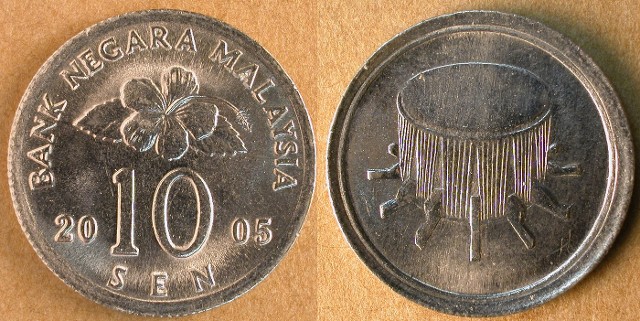
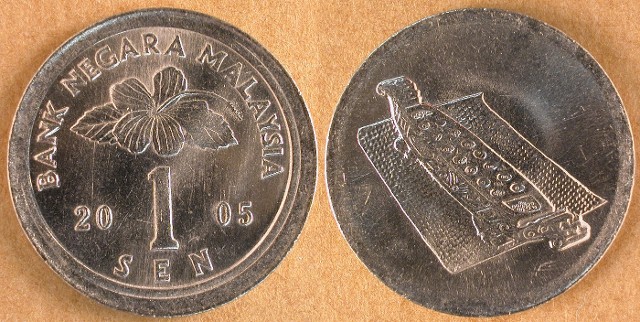
The 2005 Malaysian mule shown below was struck on a copper-nickel 10 sen planchet inside a reeded 10 sen collar and features a normal 10 sen reverse design. The obverse (struck by the hammer die) shows an unexpected and appreciably smaller 1 sen design. This resulted in a weakly struck periphery on the reverse face. A normal 1 sen coin is copper-plated steel.


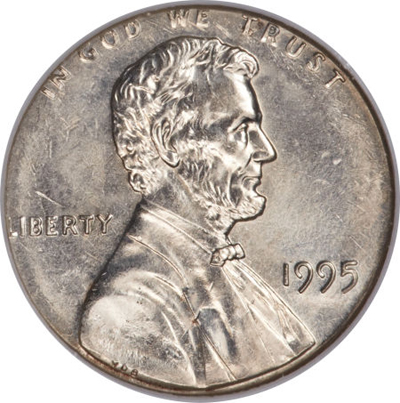
This dual denomination mule was struck in 1995 on a dime planchet by a press that was striking dimes.  The reverse die (anvil die) was appropriate while the obverse die (hammer die) was incorrect.

Images courtesy of Heritage Auctions.

Regular Issue Die Muled With Commemorative

PART III. Die Installation Errors:

Mules: 

Regular-issue die muled with commemorative

die, September and November 1999

Canadian quarters

Definition: Mules are coins struck by mismatched dies.

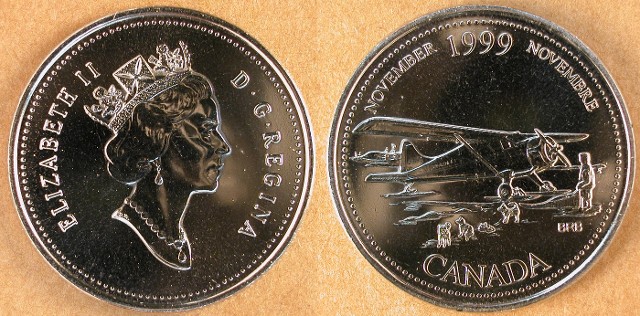
Two 1999 mules from Canada’s Millennium series fall into this category. A September 1999 quarter and a November 1999 quarter pair the intended commemorative reverse (hammer) die with an incorrect obverse (anvil) die that was supposed to strike ordinary quarters with a caribou reverse. As a result, the coin carries no denomination. Thousands of each were produced.

The image below is a November 1999 Canada Millennium quarter muled with an obverse (anvil) die intended to be used for ordinary quarters with a caribou reverse. It still has a proof-like finish, though, suggesting it was polished in the same fashion as the Millennium dies.

Regular Issue Die Muled With Government Med

PART III. Die Installation Errors:

Mules: 

Regular-issue die muled with government medal or

token die, 2000 Canadian “Map Mule”

Definition: Mules are coins struck by mismatched dies.

The infamous 2000 Canada Millennium “Map mule” falls into this category. A normal commemorative obverse (anvil) die carrying the bust of Elizabeth was paired with a hammer die that was supposed to strike the map-bearing reverse of the Royal Canadian Mint medal that is included in each mint set. Only a few hundred were released.

Mule: Die Lager Than Norm Die / Collar

PART III. Die Installation Errors:

Mules: 

Mule die larger than normal die and collar

Definition: Mules are coins struck by mismatched dies.

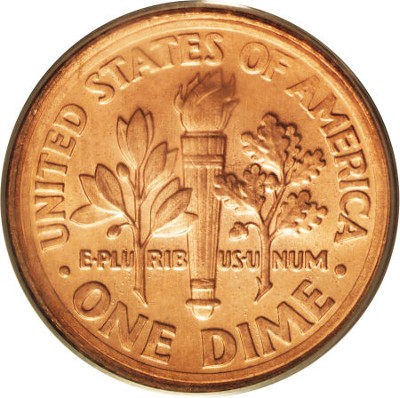
The unique 1995 cent/dime mule struck on a dime planchet inside a dime collar fits this description.

A normal dime reverse die was employed as the anvil die, while a cent obverse die was employed as the hammer die. The striking of this mule must have been a noisy affair, as the periphery of the hammer die would have collided with the beveled entrance of the collar with each down-stroke.

  • 1
  • 2
  • 3
  • 4
  • Next Page »
  • Home
  • Introduction To This Website
  • Error-ref.com News
  • Comprehensive Error-Variety Checklist
  • Index Of Completed Entries
  • Part I. Die Subtypes:
  • Part II. Die Varieties:
  • Part III. Die Installation Errors:
  • Part IV. Die Errors:
  • Part V. Planchet Errors:
  • Part VI. Striking Errors:
  • Part VII. Post-Strike Mint Modifications:
  • Part VIII. Post-Strike Striking Chamber Mishaps:
  • Part IX. Post-Strike Mint Damage:
  • Part X. Wastebasket / Composite Categories:
  • Part XI. Non Errors:
  • Featured Articles Of Interested
  • Interest & Not So Interesting Facts
  • Other Sites And Forums Of Interest
  • Our Thanks Go To
  • About The Authors
  • Contact Us

Copyright © 2026