Error-Ref.com

You are here: Home / Search for "off center"

Search Results for: off center

Design Creep

Part IV. Die Errors:

Die Deterioration/Deformation Errors:

Design Creep


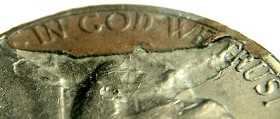
Definition: In this rare die deformation error, the die face expands during the press run.  In lateral view, it comes to resemble the battered handle of a rock chisel.  Eventually the die face expands beyond the working face of the collar (presuming the hammer die is involved).  The result is that the face of the coin struck by the deformed die lacks the design rim and the peripheral design elements are cut off.

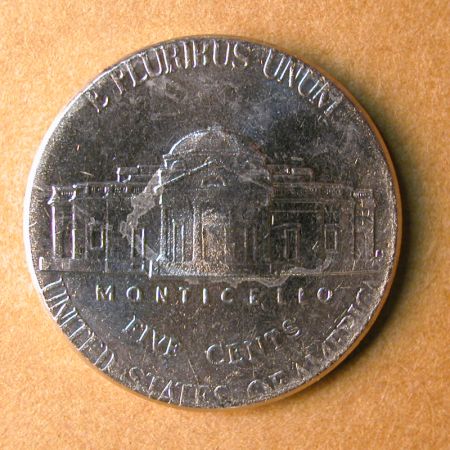
Among domestic coins, design creep has only been seen in a single run of 2014-P nickels, all of which were discovered by Robert Scheschuk.
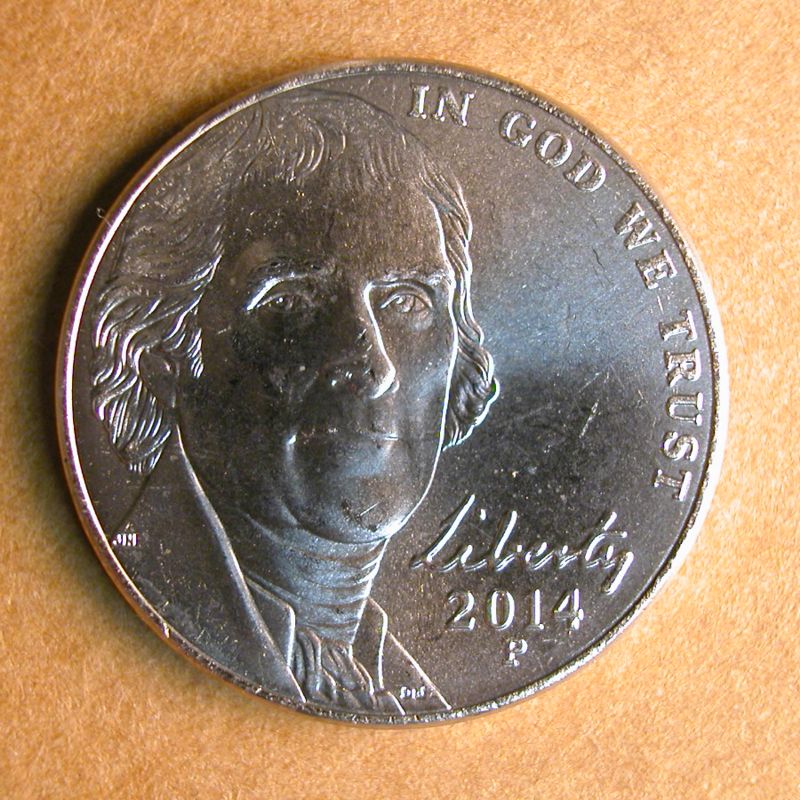
02a_design_creep_2014P_5c_rev 02b_design_creep_2014P_5c_obv

The reverse face of this 2014-P nickel (struck by the hammer die) shows the effects of design creep.  The design rim is absent and peripheral letters are cut off along the coin’s edge.  This effect is more severe along the southern arc of the coin.  Additionally, the center of the coin displays a peculiar “cottage cheese” texture.  Here the details of Monticello are indistinct.
Die Crack Curved Rim To Rim or Pre Cud

PART IV. Die Errors:

Die cracks:

Arcing rim-to-rim die crack (a.k.a., pre-cud) 

Definition:  A die crack that follows a curved trajectory from one point on the rim to another.  The area of the die face cordoned off by such a crack generally amounts to less than 40% of the total area.  The die crack shows only lateral spread.  The presence of either vertical displacement or horizontal offset would indicate the presence of a retained cud.  If the lateral spread exceeds half-a-millimeter, it should be labeled a curved, asymmetrical split die. 

An arcing rim-to-rim die crack may progress to a retained cud, a cud, or an asymmetrical split die.

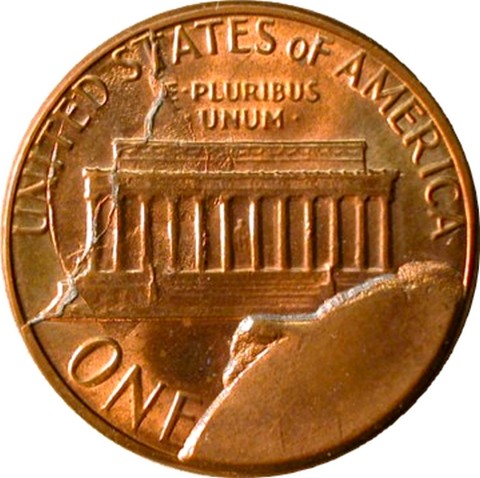
A prominent pre-cud die crack is present on the reverse of the 1985 cent depicted below. There is no vertical displacement or horizontal offset, so one must assume this area was still attached to the main portion of the die. It also has a large cud in the SE quadrant of the reverse. In addition to that it shows a curved, roughened area of die damage in the NW quadrant caused by a collision between the reverse die and the broken surface of the loose die fragment. That collision might have caused the die to crack in this area.

Below is the reverse of a 1985 cent that shows (1) a large cud in the SE quadrant, (2) a “pre-cud” die crack in the NW quadrant, and (3) a curved, roughened area of die damage in the NW quadrant. The die damage is from a collision between the obverse die and the die fragment that broke away from the SE quadrant.


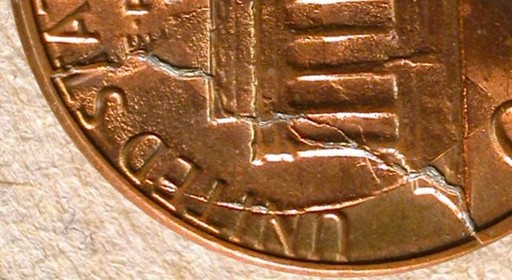
Close-up of the pre-cud die crack. It could conceivably have worsened to become a cud, a retained cud, or an asymmetrical split die.


Coin Struck On A Type I Blank

PART V. Planchet Errors:

Upset Mill Errors:

Coin Struck on a Type I Blank:

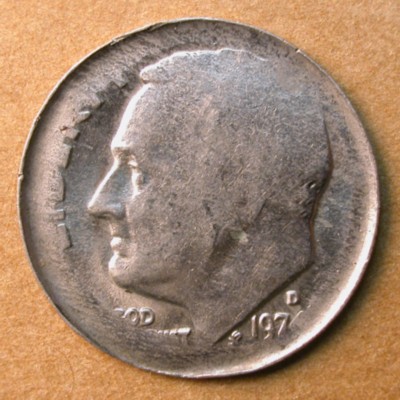
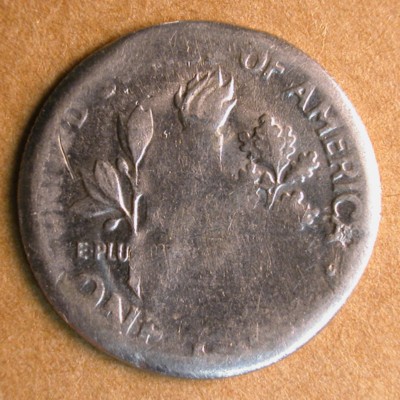
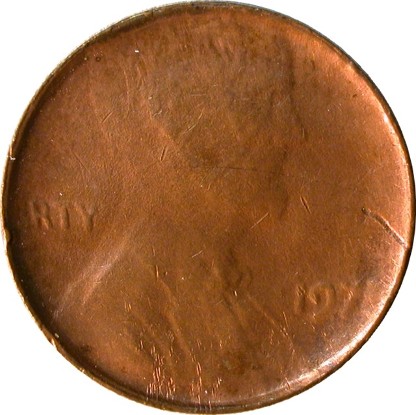
Definition: This error type occurs when a blank does not pass through the upset mill and it is struck as a coin. Because it is not rolled and squeezed to a smaller diameter, no proto-rim is generated along the outer margin of the blank.  The edge is also not smoothed out, and instead retains a rough, cut-and-tear texture.

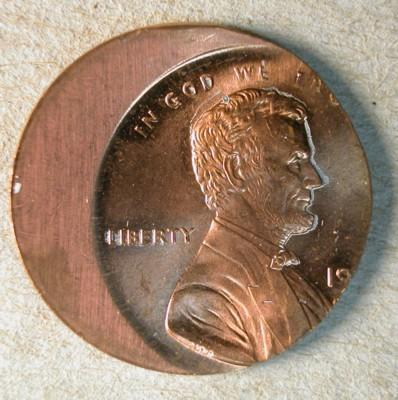
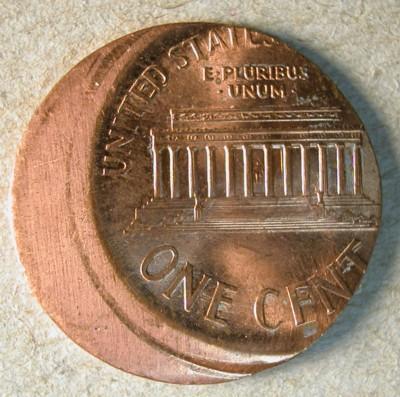
This copper-plated zinc cent was struck off-center on blank.  The outer margin of the blank is flat.  It lacks the elevated proto-rim of a planchet (“Type II planchet”).  Even though the edge of the blank was plated with copper before the strike, it still shows the rough, cut-and-tear texture that is usually seen on blanks and that results from the blank being pushed through a hole in a perforated base plate by the blanking die (punch).  It is very rare to find a copper-plated zinc cent that is struck on a blank.  We are aware of only three examples.

Coins Struck On Washers Gears And Other Hardware

Part V: Planchet Errors:

Wrong planchet and off-metal errors: 

Coins struck on washers, gears, and other hardware

.

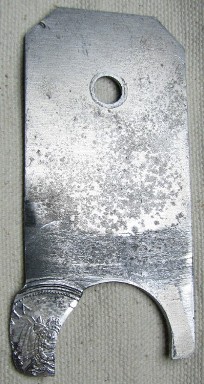
Definition: Hardware includes washers, nuts, bolts, or machine parts such as malfunctioning feeder fingers.

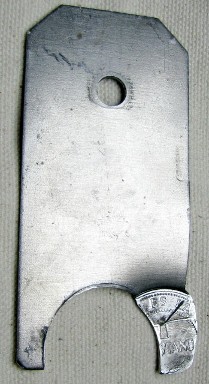
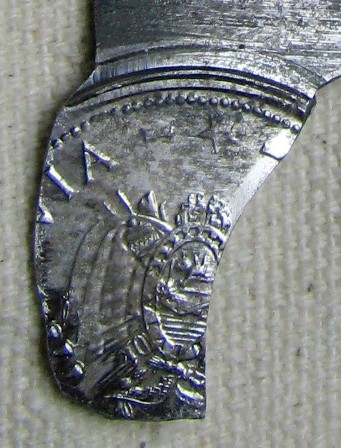
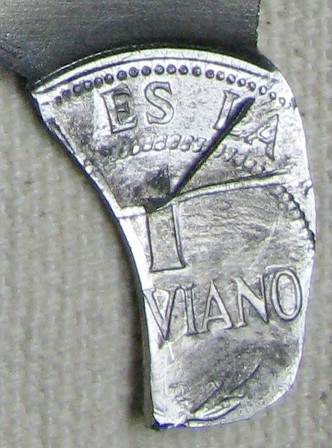
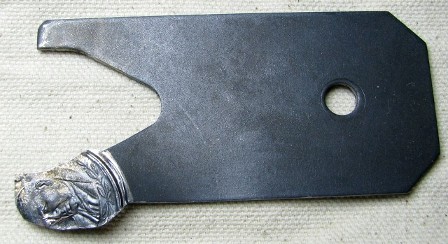
 Below: A large Bolivian feed finger struck by 1 boliviano dies.

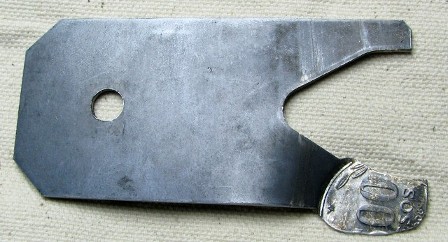
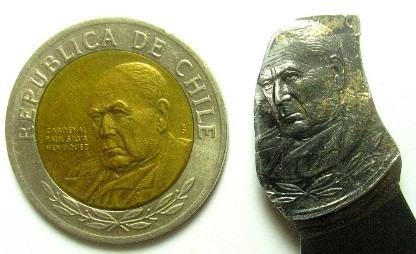
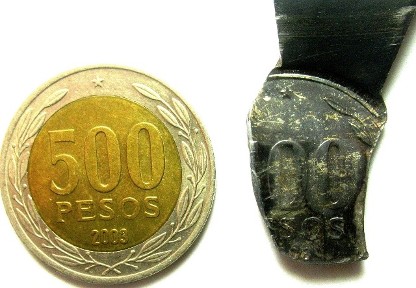
Below: A large feed finger struck by Chile 500 pesos dies.  This isa bimetallic issue.  A normal coin has been placed next to the struck tip of the feed finger.

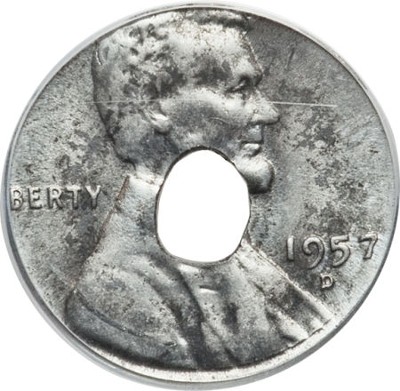
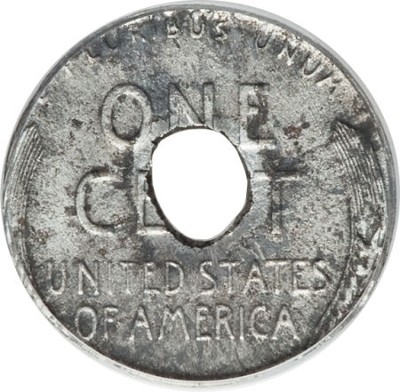
The images below show a 1957-D Lincoln cent that has been struck on a washer. Images courtesy of Heritage Auctions.

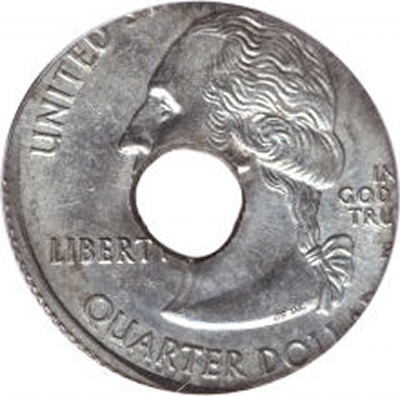
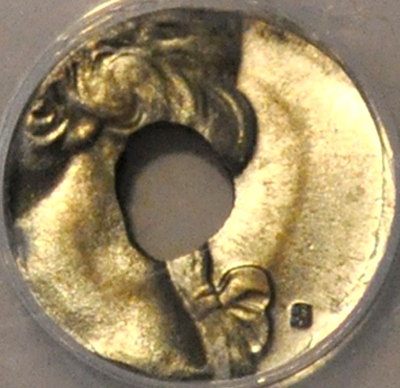
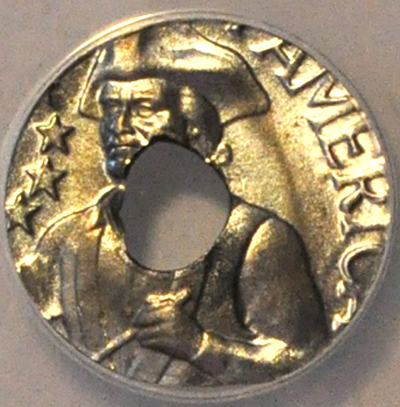
This 2006-P North Dakota Statehood quarter was struck on a washer. The 1976-S Bicentennial Washington quarter pictured below was struck on a magnetic washer. This is not a proof coin, but was instead struck with a normal finish.  It was evidently struck with dies that were striking quarter dollars for a special mint set that was produced by the San Francisco Mint in that bicentennial year.
Images are courtesy of Heritage Auctions.
 5125176751251834
The 1776-1976 Bicentennial Washington quarter pictured below was struck on a magnetic washer. Images are courtesy of Jon Sullivan.


Collar Clash

Part IV. Die Errors:

Die Clash:

Collar Clash

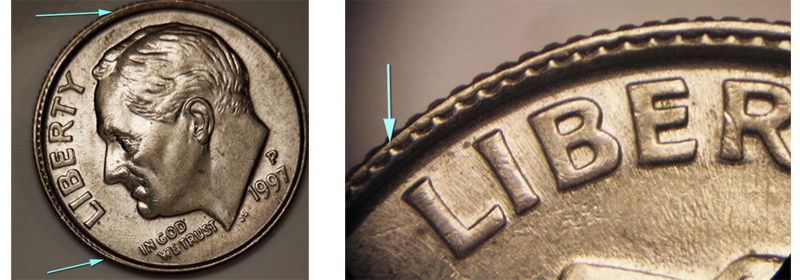
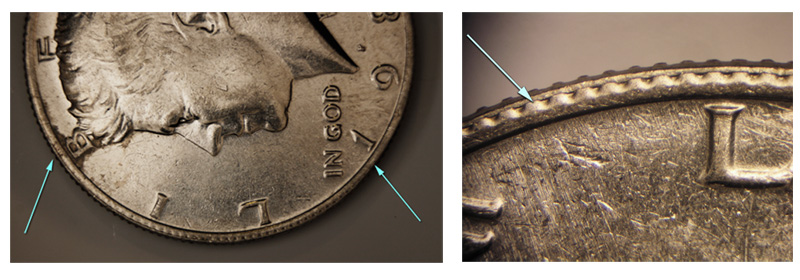
A collar clash represents damage to the rim gutter of the die from contact with the collar.  It shows up most clearly in reeded issues, where it takes the form of serrations along the top or the edge of the design rim.  In an off-center strike, a collar clash will appear in the form of parallel grooves in the “slide zone”.

Collar clash is far more common on the hammer die.  It occurs when a temporarily misaligned hammer die collides with the top of the collar and/or scrapes along its working face.

When collar clash occurs on the anvil die, it is probably from a repeated up-and-down scraping action of the die neck against the working face of the collar.  However, a sharp sideways impact that drives the die neck into the collar’s
working face could also produce this pattern of serrations.

Below is a 1997-P dime with a collar clash from from K8-K12.

Another collar clash on a 1980-P Kennedy half dollar seen from K7-K11.

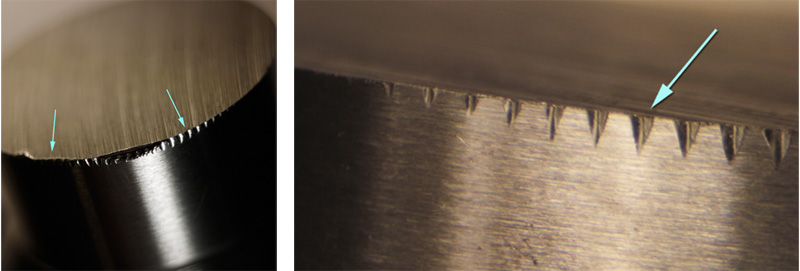
Below is two views of a defaced state quarter working hub with evidence of a previous collar clash. The grooves match the width and spacing of the reeding found on a quarter. The face was ground off down to the level of the rim gutter leaving some of the collar clash marks visible.

Retained Struck Through: Struck In Copper Foil

Part VI: Striking Errors:

Struck Through Error:

Retained:

Embedded Copper foil

Definition: Thin layers of copper can be rolled into coin metal strip or struck into planchets. In most cases, the source of the copper is uncertain.  It could represent copper that flaked off a length of cent strip or from one or more
cent planchets.  It may be copper that separated from the surface of an improperly annealed nickel planchet.

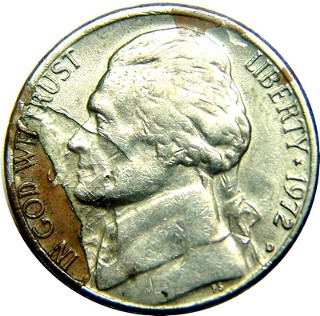
Shown below is a 1972-D nickel with three pieces of copper foil embedded in the surface.  These were most likely struck into the coin.  The largest piece wraps around the coin’s edge for a short distance


Coreless Or All Clad Coins

Part V: Planchet Errors:

Bonding / Bonding Mill Errors:

Coreless or All Clad Coins:

Definition: “Coreless”, “all-clad”, or “solid-clad” coins.

This is a normally clad denominations struck on a solid, full-diameter, solid copper-nickel planchet.  Such planchets may be derived from both clad coin metal strips if the former protrude beyond the core strip at the leading or trailing end of the merging strips as they enter the bonding mill.  The two clad strips would then be pressed together to form a composite, bi-laminar copper-nickel strip.

A more likely scenario has one of the the clad strips protruding beyond the other two strips at the leading or trailing end of the merging strips.  A blank punched from this protruding end would be composed of solid copper-nickel (75% copper and 25% nickel).  A possible candidate is the dime shown below.

This 1974-D dime was struck on a very thin, solid copper-nickel planchet.  It weighs 0.9 grams, which is over twice the weight of a normal clad layer (0.4 grams).  The unstruck areas of the obverse face show rough linear striations that were almost certainly generated by the rotating descaling brushes that clean the coin metal strips before they enter the bonding mill.

Other, heavier candidate coins — both dimes and quarters — have been offered up as coreless specimens.  However, some were definitely foreign planchets while others were “orphan” off-metal errors (see “off-metal/wrong planchet errors”).

Counterbrockages

PART VI. Striking Errors:

Counterbrockages:

Early, Mid & Late-Stage Counterbrockages:

Definition: A counterbrockage occurs when an error coin with a brockage is struck into a planchet.

NOTE: Counterbrockages can be in-collar, out-of-collar, centered, or off-center. They can be aligned with, or rotated relative to, the opposite, die-struck face. The degree of expansion and distortion depends on how many previous planchets were struck and whether one or both participants in the error were confined by the collar.

The 1975 cent shown displays an early-stage counterbrockage of the obverse design on the obverse face. It was produced when an obverse die cap with a brockage of the obverse design on the reverse face struck a succession of planchets, this being one of them.

Counterclash Type I

PART IV. Die Errors:

Die Clash:

Counter Clash Type I

Definition: This type of die clash must have at least two different sets of clashes to form. When the first set of clash marks are formed on the opposing die, they become part of that die’s unintentional design. If a second clashing of the
dies occurs, that unintentional design element or clash mark is then clashed back to the original die that it came from. However, the clash mark will be offset in position from the original design element that created the initial clash mark. That offset of position maybe small or great and is dependent on the relative position of the dies when they clashed in both instances.

To see more of this counter clash click HERE

To learn more concerning counter clashes click HERE

Counterclash Type Ii

PART IV. Die Errors:

Die Clashes:

Counterclash Type II

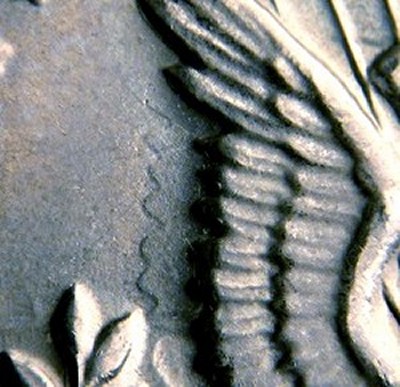
Definition: Type II counterclashes trace their origin to a stray piece of hard metal that invades the striking chamber. The metal can be a die fragment, a piece of the collar, a piece of hardware like a bolt or washer, a broken-off machine part, or just about anything else one can imagine. In most cases it’s impossible to identify the nature and origin of the foreign object. The object receives an initial strike, which leaves it with a raised design on one or both faces (one face can be protected by a planchet). The object then shifts position within the striking chamber and is struck again. This transfers the design back to the die face in the form of an incuse mirror image. Generally, only the field portion of the die face is affected. Every coin struck afterward shows raised, normally-oriented design elements in an unexpected location.


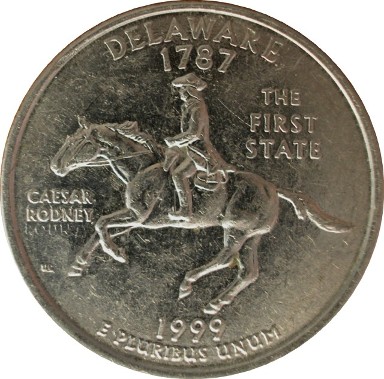
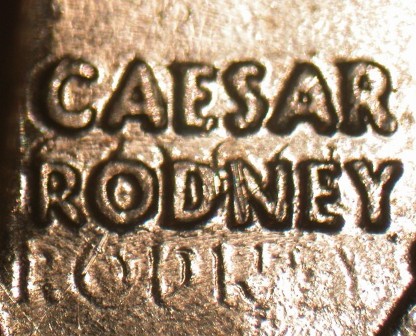
There are six Type II counterclash errors recognized among U.S. coins. There is a 1969-S cent with an extra E PLURIBUS UNUM on the reverse face that runs at an angle of almost 90 degrees to the normal motto. There are two 1983 and a 1985 cents. One of the 1983 (CLO-001) shows an extra LIBER upside down and above the date. The other 1983 (CLO-002) shows an extra N GO weaving through IN GOD WE TRUST. The 1985 shows an E from E PLURIBUS UNUM in bay 3.There is a 2000-P Sacagawea dollar with a rather faint counterclash involving the letters ICA (from AMERICA) and the designer’s initials TDR. Finally, the images below illustrate the fifth, a very strong counterclash involving the letters CAESAR RODNEY on the reverse face of a 1999-P Delaware state quarter.

.

1999-P Delaware quarter with a Type II counterclash image of CAESAR RODNEY on the reverse face.

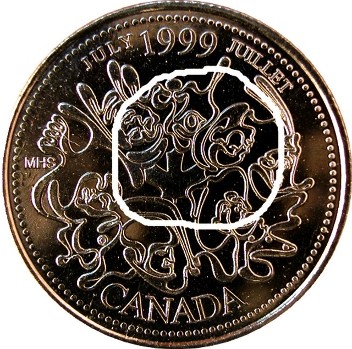
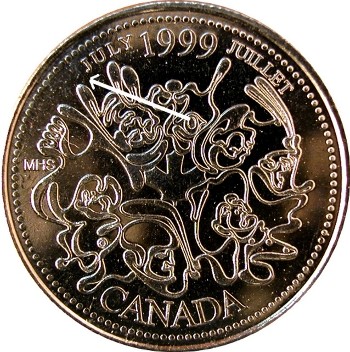
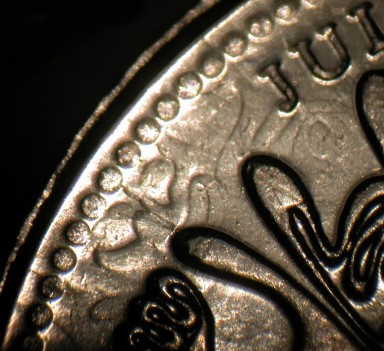
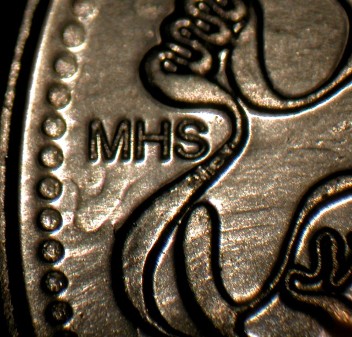
There are three Canadian quarters with counterclash errors. The February 1999 Millennium series quarter shows a “floating hand”. The September 1999 quarter shows an extra face within the body of the little girl on the right (the “four faces” counterclash) and the July 1999 Canadian quarter with counterclash appearing in both the field and on the design. Below images highlight the July 1999 Canadian quarter.

July 1999 Canadian Quarter (below two images)
The general area from which the counterclash was derived indicated by white circle (left image). The straight white line (right image) indicates the amount of displacement between the normal design and the corresponding part of the counterclash

A close-up of the counterclash near the 10:30 clock position (left). A close-up of the counterclash near the 9:30 clock position (right).

  • « Previous Page
  • 1
  • …
  • 14
  • 15
  • 16
  • 17
  • 18
  • …
  • 21
  • Next Page »
  • Home
  • Introduction To This Website
  • Error-ref.com News
  • Comprehensive Error-Variety Checklist
  • Index Of Completed Entries
  • Part I. Die Subtypes:
  • Part II. Die Varieties:
  • Part III. Die Installation Errors:
  • Part IV. Die Errors:
  • Part V. Planchet Errors:
  • Part VI. Striking Errors:
  • Part VII. Post-Strike Mint Modifications:
  • Part VIII. Post-Strike Striking Chamber Mishaps:
  • Part IX. Post-Strike Mint Damage:
  • Part X. Wastebasket / Composite Categories:
  • Part XI. Non Errors:
  • Featured Articles Of Interested
  • Interest & Not So Interesting Facts
  • Other Sites And Forums Of Interest
  • Our Thanks Go To
  • About The Authors
  • Contact Us

Copyright © 2026