Error-Ref.com

You are here: Home / Search for "off center"

Search Results for: off center

Lamination: Fold Over Before Strike

PART V. Planchet Errors:

Lamination:

Lamination Fold-over Before Strike

Definition: A lamination error occurs when metal flakes off the surface of a coin or planchet.  It is generally believed that the flaking, peeling, and cracking is due to impurities in the alloy which causes metal to separate along horizontal planes of weakness.

When a lamination flake fails to detach completely and instead folds over before the strike, it leaves a “struck-through” error beneath it.  Lamination flakes that break off completely and that are struck into planchets different from the ones they’re derived from are responsible for a subset of those struck-through errors designated as “struck through a fragment”.
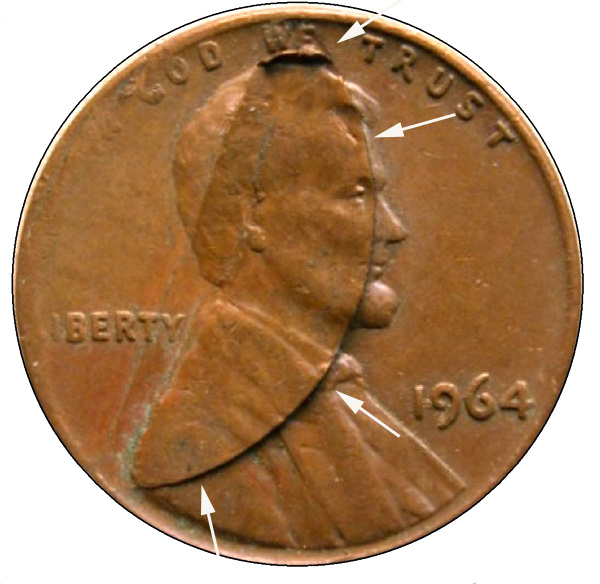

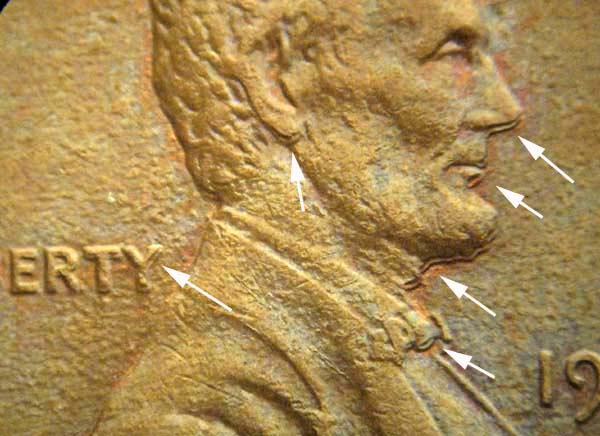
The image above shows a 1964(P) Lincoln cent with a semi-lunar (half-moon shaped) lamination flap that lifted up from the edge of the coin and folded over onto what would eventually become the obverse face of the coin.
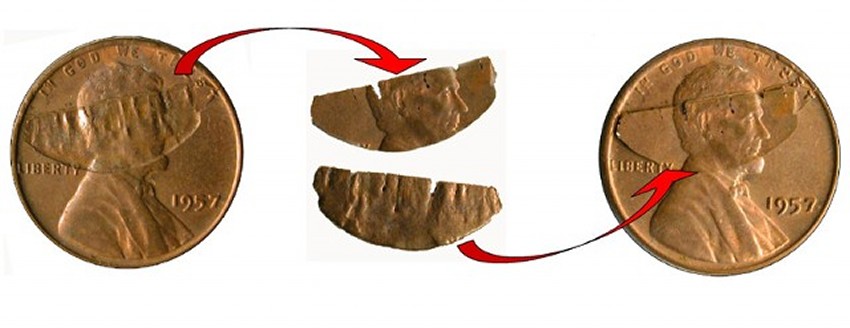
 

The 1957(P) Lincoln cent pictured above had a lamination flap fold over onto what would become the obverse face.  When the flap was struck into the coin, it left a semi-lunar struck-through error beneath it.  The flap broke off after the strike but was retrieved.

Lamination Loss: After Strike

PART V. Planchet Errors:

Lamination:

Lamination loss after strike:

Definition: Flakes of metal can peel off the surface of a coin after the strike. Such defects are generally attributed to the presence of contaminants in the alloy.  In some instances, flakes of metal lift off the face of a coin as the result of an inadequately mixed alloy.


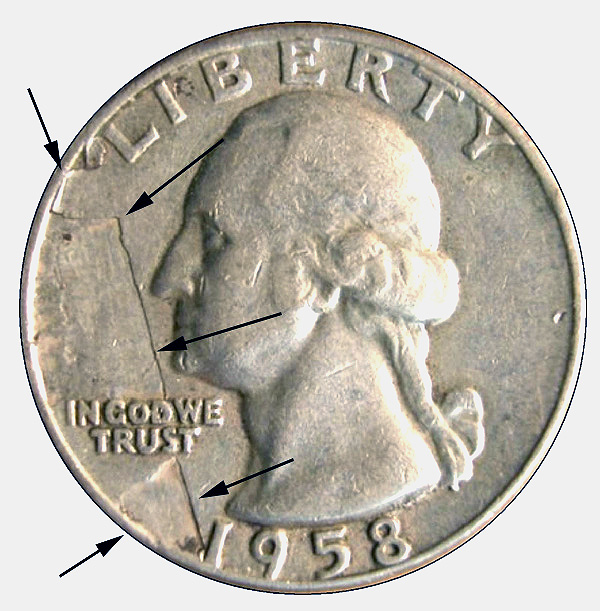
The 1958-D Washington quarter pictured above shows two areas where flakes spalled off the coin after the strike (indicated by black arrows).


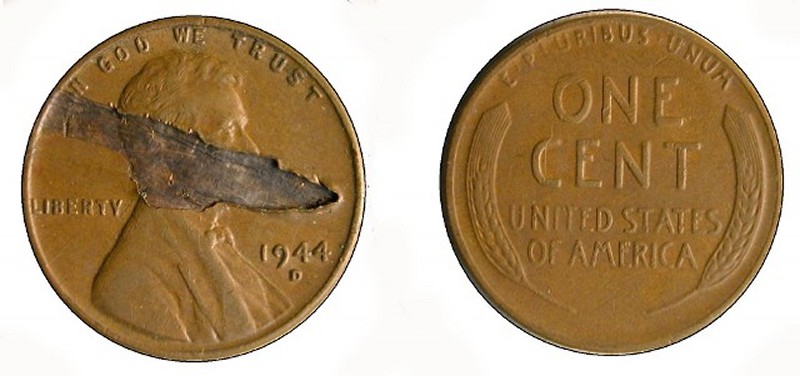
A more dramatic and instructive example of a lamination flake that broke away after the strike can be seen in the above image of a 1944-D Lincoln cent.  The floor of the depression, which was left behind by the missing flake, is quite dark and probably represents the contaminants that caused the metal to separate in the first place.

Laminations In Clad Coins

PART V. Planchet Errors:

Lamination Errors:

Lamination on Clad Coins

Definition: A lamination error occurs when metal flakes off the surface of a coin or planchet.  It is generally believed that the flaking, peeling, and cracking is due to impurities in the alloy which causes metal to separate along horizontal planes of weakness.

Because copper-nickel clad layers are already very thin, it is quite unusual for lamination errors to develop within a clad layer.  Yet such errors do occur.  They can be distinguished from “partial clad” errors because the copper core is not exposed in a lamination error.

.


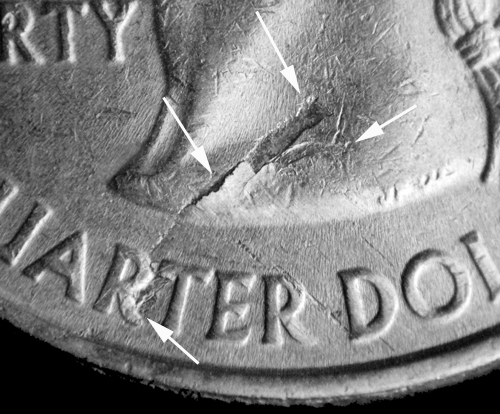
A small section of metal on this 2002P Indiana Statehood quarter has peeled away and detached itself from the coin’s surface. Another area of delaminating metal – still attached – can be seen to the left of the area with the missing surface metal (indicated by white arrows).


Longacre’s Doubling

PART X. Wastebasket / Composite Categories:

Longacre’s Doubling

While Longacre’s doubling is most associated with the Indian Head Cent. It is also found on the Seated Liberty denominations and other coins of that era.

There are two theories for Longacre’s doubling. The first, which is most popular, is that the master die was placed into the die steel to form the master die. To add details to the die, the engraver would then shave the sides of the punch used to add design elements, leaving a lip on that punch’s sides. The engraver would then conduct an extra hard hit to the punch leaving the shaved sides effects into the die. The effect would eventually wear off as the master die did age, which is why not all coins from a particular working die would have the Longacre’s doubling.

This is the second scenario. After adding the design elements to the master die, the engraver would move the punch slightly and tap it again. This would produce a ‘lip’ on the die, and the effect would make the metal flow into the punched in design elements more readily. In theory, this would also have prolonged the die’s life.

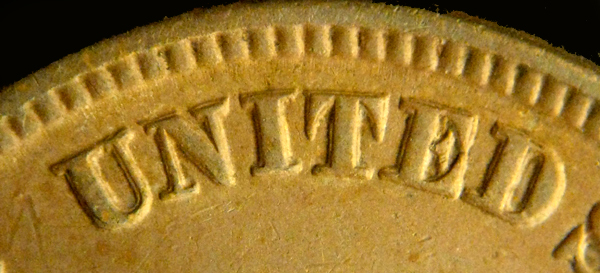
The image below shows Longeracre’s doubling on the word UNITED on an 1883 Indian Head Cent.

48740828

Low, Narrow Reeds Caused By Truncation Of Ridges

PART IV. Die Errors:

Abnormal reeding: 

Low, Narrow Reeds caused by Truncation of Ridges

on Collar face

While the subject and study of abnormal reeding has been around for two or more decades, this sub category focuses on a coin of recent vintage, a 2008-P New Mexico state quarter. First, however, a brief history of reeding variants.

One of the best known examples is the “infrequently reeded” 1921 Morgan dollar. A rather extensive discussion of this variant can be found on pages 113-144 of Frank Spadone’s “Major Variety and Oddity Guide to United States Coins” (8th edition). Spadone notes that there are only 154 reeds versus the normal 188 reeds found on other silver dollars produced in 1921. He further observes that the grooves between the reeds are simple slots rather than the more elaborately defined notches seen in other dollars. He suggests it represents a first attempt at fabricating a collar for a denomination that hadn’t been minted for 17 years.

A very uncommon cause of abnormal reeding is collar damage or improper machining. Both Arnold Margolis and Alan Herbert report the use of a broach to create the ridged working face of the collar. A broach is a cylindrical tool with longitudinal ridges that is hammered or driven into a smooth, unfinished collar to create the ridged working face. A worn or damaged broach, or the improper penetration of broach, can theoretically produce abnormal reeding. It’s quite possible that other techniques are periodically used to create the ridged working face. It would be a simple matter to cut evenly-spaced grooves into the working face with a machine tool.

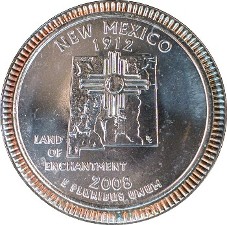
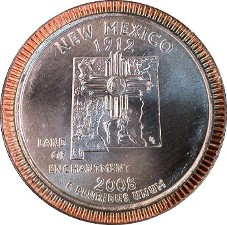
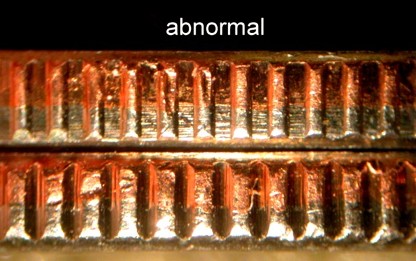
This rather roundabout introduction leads us to the focus of our entry – a 2008-P New Mexico quarter with abnormal reeding. The reeding on this quarter takes the form of low, thin ridges separated by broad, flat valleys. A normal quarter shows taller, wider ridges separated by deeper, V-shaped valleys. The ridges on the working face of the collar were ground off almost to their bases.

An essentially identical error is known on a 1964-D quarter.

Below is a 2008-P New Mexico quarter. The left image displays normal reeding. The right image displays abnormal reeding. Center image is a comparison edge view of both the normal and abnormal reeding.


http://www.coinworld.com/articles/a-second-case-of-abnormal-reeding-on-a-state

Machine Doubling

PART VI. Striking Errors:

Machine Doubling

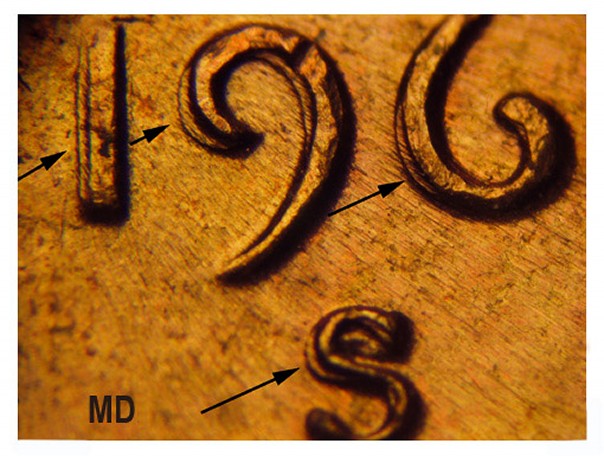
Definition: This form of doubling typically results from vibration or instability affecting the die, die assembly, or press frame.  It has also occasionally been blamed on a coin sticking to the anvil die during ejection (“ejection doubling”).

Machine doubling has many synonyms: mechanical doubling, machine doubling damage, machine damage doubling, ejection doubling, shift doubling, and strike doubling.

.
There are three basic forms of machine doubling:

Push doubling:  Push doubling occurs when a die bounces off the surface of the coin, shifts position, and lands lightly in a different spot.  A diagnostic feature is marginal shelving at the edges of design elements.  Interior features often show rounded doubling that is easily mistaken for the effects of a double strike or a doubled die.  Push doubling can occur on either face, although its most dramatic expressions tend to appear on the face struck by the hammer die.  Cases of push doubling can involve up to three closely-spaced sets of accessory design elements.  Push doubling can occur on both faces simultaneously and often in different directions.  Up to three different doubling directions can be represented on a single face.

Slide doubling:  In this form of doubling, a die drags itself through the newly-struck design, smearing the features.  Strong cases of slide doubling are always restricted to the face struck by the hammer die.  After reaching the lowest point of its downstroke, the hammer die shifts to one side without bouncing.  As it drags itself across the newly-struck design, it piles coin metal into a series of ridges.  Weak cases of slide doubling found on the reverse face have previously been assigned to “ejection doubling”, but there is no way to prove that this is actually what happened.

Rim-restricted design duplication: This rare form of doubling has to date only been detected on Presidential dollars (Washington to Madison), 1994 cents (several die pairs), a 2004 cent, and certain quarters and dimes where the peripheral letters hug a very narrow design rim.  It always occurs on the face struck by the hammer die.  After reaching the lowest point of its downstroke, the hammer die bounces up, shifts to one side, and lands lightly on the design rim, leaving a set of raised design elements.  It is also sometimes referred to as “one-sided, rim-restricted design duplication”.

The images below show “Push” machine doubling.

Malaysian Assisted Errors; 2005 – 2007

Part V: Planchet Errors:

Wrong planchet and off-metal errors: 

Struck on larger planchet or coin, Malaysian

“assisted errors” 2005-2007

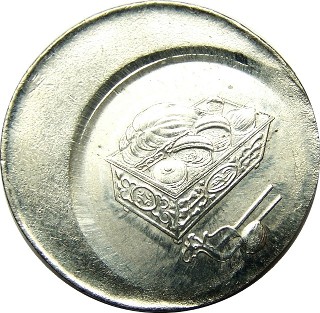
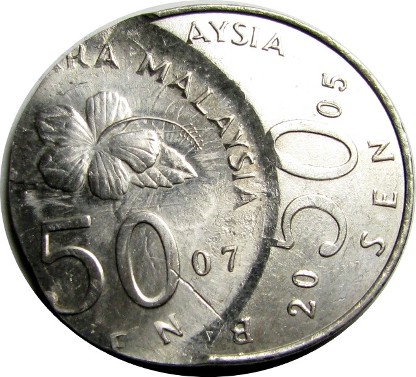
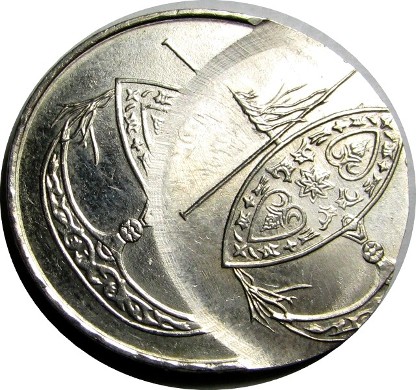
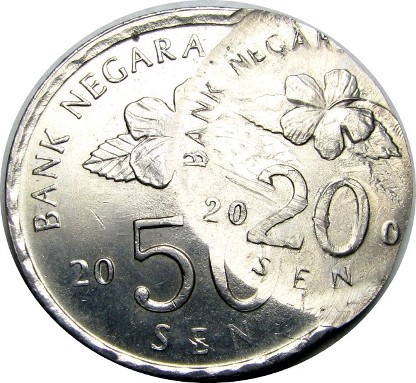
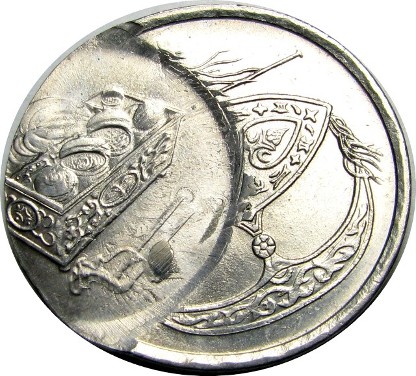
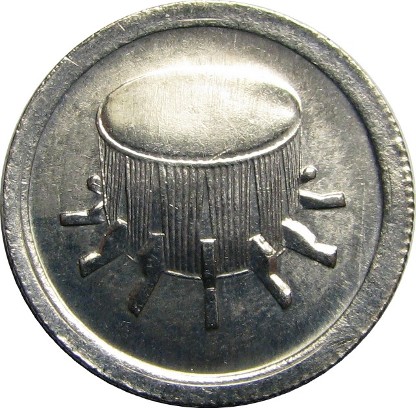
Definition: Assisted errors are undoubtedly a major headache for mint management teams. Simply put, these errors are created by enterprising mint employees and smuggled out of the facility. Despite the intentional nature of these errors, they are highly sought after and quite collectible.

The Malaysian mint accounts for a great variety of assisted errors during the years 2005 to 2007.

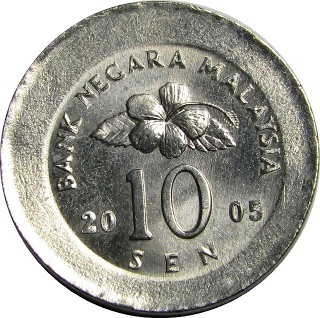
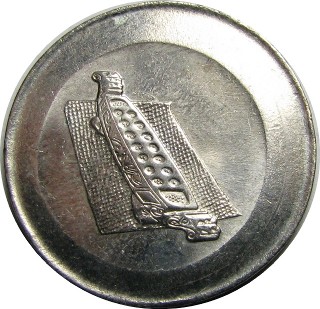
A 2005 Malaysian 10 sen struck on larger 20 sen planchet.

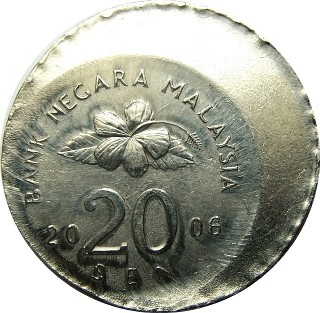
A 2006 Malaysian 20 sen struck on larger 50 sen planchet.

Same denomination, different year. A 2005 die-struck Malaysian 50 sen over-struck by 2007 50 sen dies.

Double denomination. Die-struck Malaysian 50 sen over-struck by 20 sen dies.


A 2005 Malaysian 10 sen obverse die muled with 1 sen reverse die. A mis-match of obverse and reverse dies of different denominations.

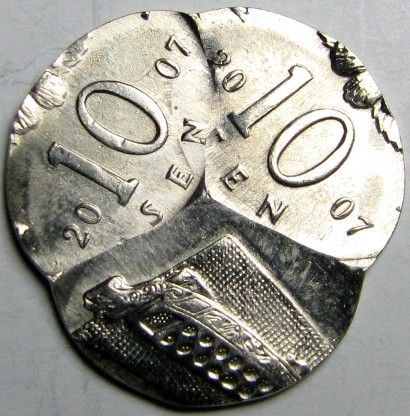
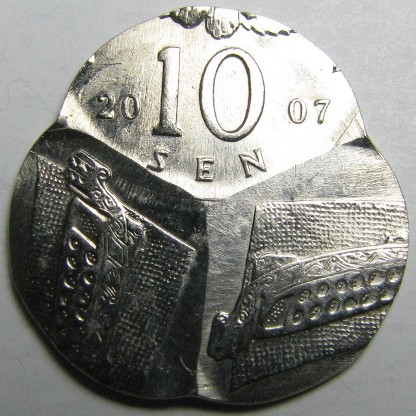
Flip-over, triple-strike with three full dates on a Malaysian 10 sen coin. Given the near perfect symmetry of this triple-strike and three full dates, (one on each of the three separate strikes), it would seem to have required some help. Likely, it is an assisted error.
Minor Design Change Modifications

Part I. Die Subtypes:

Mid-year Design Modification: 

Small Date/Large Date Varieties

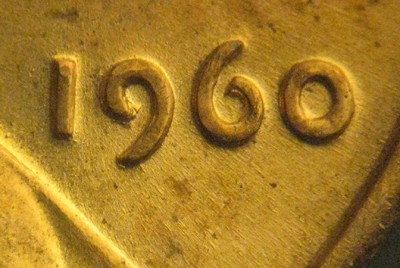
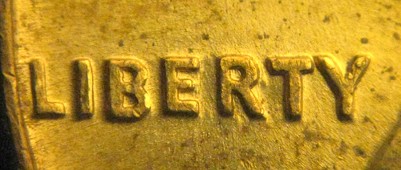
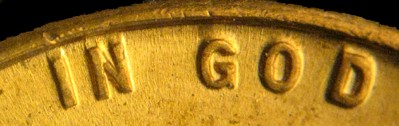
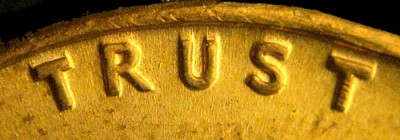
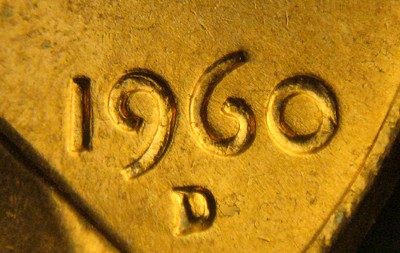
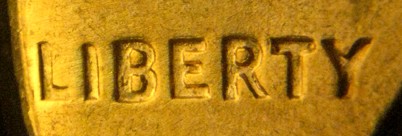
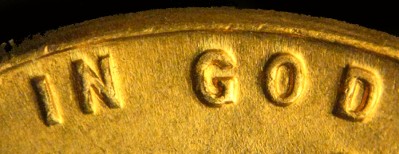
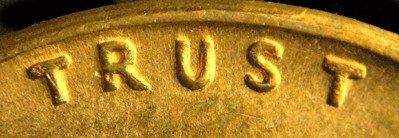
The first Lincoln cent produced in 1960 is referred to as the “small date”. It appears that the date, LIBERTY, and IN GOD WE TRUST were ground off the master hub and a new master die was prepared that was missing these design elements.

The master die was then engraved with the date, LIBERTY and IN GOD WE TRUST. This, in turn, was used to fabricate
a new master hub which was then employed in making a new master die for the year.


In the later part of April or the beginning of May, the U.S. Mint introduced a new obverse design for the 1960 Lincoln cent that incorporated some changes in the design elements. The digits of the date were thinned and numerals 6 and 0 were enlarged. The Mint stated that there was a recurring problem with the last two digits of the date chipping out. The word LIBERTY seemed to revert to the style found on the 1959 Lincoln cent. While the words IN GOD WE saw no changes, the word TRUST did have some minor changes made, most notably in the R of TRUST.

At first, the director of the Mint denied that a change had taken place and only later, when evidence appeared that contradicted his statement, did the story change.  But the belated, official explanation for the design change has been disputed. There may be much more to this story than has been admitted. For an in depth look at what may have happened CLICK HERE

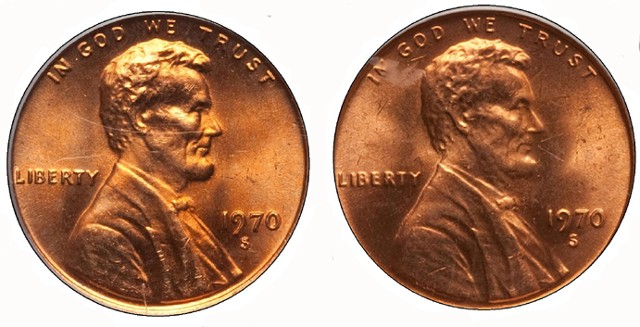
For some obscure reason, the date on the 1970-S Lincoln cent shows two different styles (see photos below). Labeled “large date” and “small date”, the differences chiefly affect numerals 9 and 7.  In the large date, the tip of the upper curl of the 9 points downward at an angle of 45°, while that of the small date points in a horizontal direction. Numeral 7 of the large date appears to be lower in relation to the other digits, while numeral 7 of the small date appears to be even with the other digits.
LARGE DATE                                                                                    SMALL DATE

Through the 1970s, a steadily rising demand for Lincoln cents meant that more working dies had to be produced. This meant that more working hubs had to be made from the same master die. This increased  use caused the bust
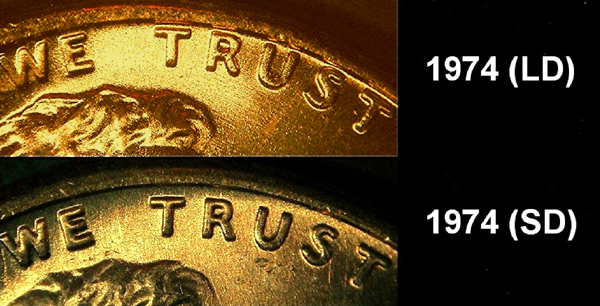
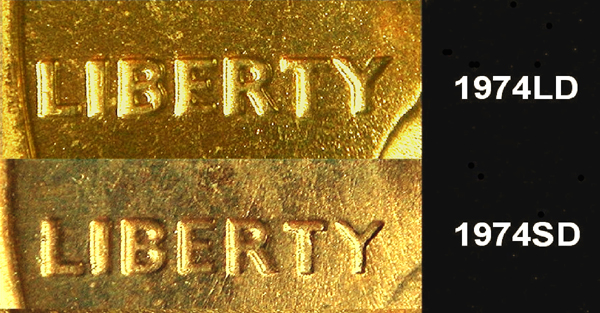
of Lincoln to expand on the master die, which in turn pushed the peripheral design elements towards the rim. In 1974, just about halfway through the production of the year’s supply of working hubs, the mint re-positioned the date, the motto “IN GOD WE TRUST” and LIBERTY away from the rim.  In the course of this redesign, the date was also slightly modified and was christened the “small date” variant.

The images below show the position of LIBERTY. Note the position of the L relative to the design rim in the “large date” and “small date” varieties. Also shown is the relative position of TRUST in the “large date” and “small date”.

SMALL DATE                                                                                LARGE DATE

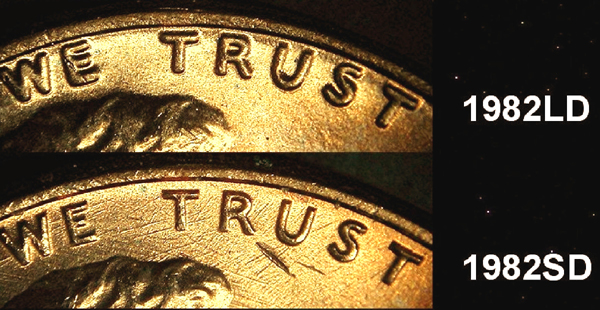
The same gradual expansion of the master die that occurred  in 1974 occurred again in 1982. This prompted the mint to change the position of the peripheral design elements midway through the production cycle.  Also during this year, the 95% copper planchet was replaced with a planchet of copper-plated zinc. Between the Philadelphia and Denver Mints, these combined changes resulted in a total of seven different business strike cents.

Again, note the change in position of TRUST from the large date to the small date. The small date, produced later in the year, shows a wider gap between letters and rim.”


SMALL DATE                                                                                          LARGE DATE

Missing Clad Layer Partial After Strike

PART V. Planchet Errors:

Bonding / Bonding Mill Errors:

Missing Clad Layer:

Partial:

After Strike

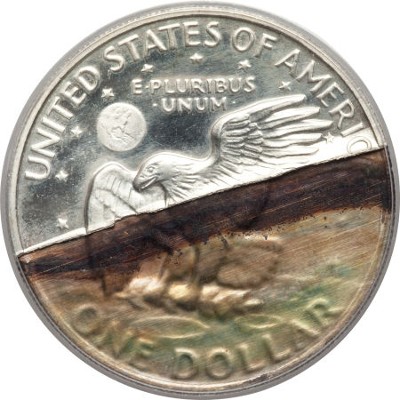
Definition: A portion of the clad layer separates from the coin after the strike.  Exposed design elements are
characteristically mushy.  Loss of the clad layer is due to a failure for this portion of the clad layer to fuse with
the core in the bonding mill.  Inadequate cleaning of the core and clad strip may be responsible.

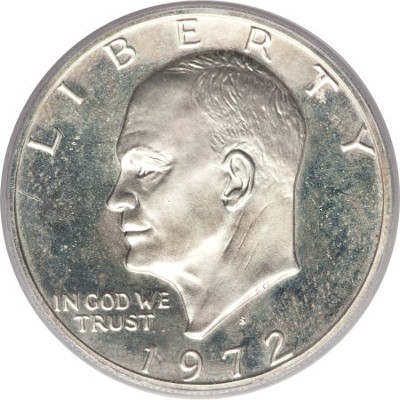
This 1972-S Proof Eisenhower dollar had part of the clad layer (80% silver, 20% copper) on the reverse face split off after it was struck.

Images are courtesy of Heritage Auctions.

Improper Annealing

PART V. Planchet Errors:

Annealing Errors:

Improper Annealing:


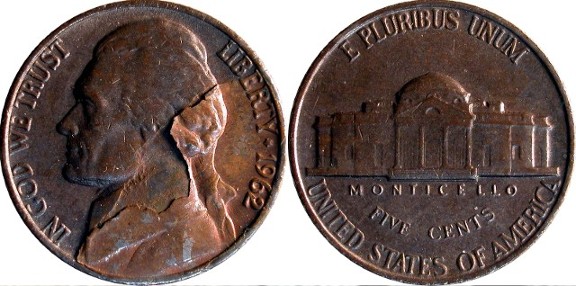
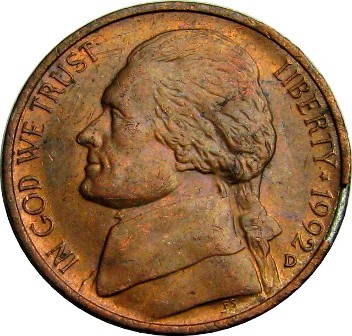
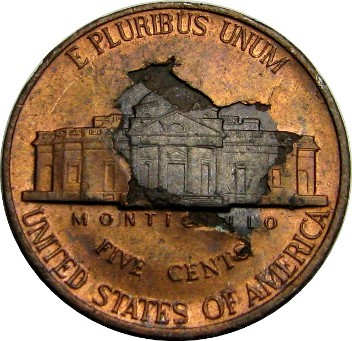
Definition: For decades error collectors have puzzled over copper-nickel and Cu-Ni clad coins struck on planchets with a layer of copper on the surface. In times past, these errors were called “copper wash” and “sintered plating” errors. The 1962 nickel shown below is a typical example. It has a thick layer of peeling copper on the right side of the obverse face. The rest of the obverse face and all of the reverse face is black. Copper, red, black, brown, and gray are colors typically found in these errors. Coverage can be complete or incomplete. The copper can range from a slight tinge to a thick coating.


In recent years, eyewitness testimony has convincingly pointed to annealing as the specific step in the planchet preparation responsible for the surface copper. In light of this testimony, these errors are now generally labeled “improper annealing” errors by the major grading services.

In 2010 Mike Diamond contacted US Mint officials with convincing evidence which in the end supported his hypothesis that copper and nickel atoms in the 75% Cu / 25% Ni alloy were migrating and segregating themselves into layers of relative purity. In response to an inquiry first made to Tom Jurkowsky, the Mint’s Director of Public Affairs, an answer came henceforth. Michael White, a spokesman for the Office of Public Affairs, consulted with the Mint’s technical staff who reported a mechanism very similar to the first scenario Mike Diamond laid out. The atoms are migrating to the surface and rearranging themselves into uniform layers. The proximate cause, according to Mr. White, is prolonged exposure to heat, a failure to maintain an oxygen-depleted atmosphere in the annealing oven, or a combination of both. Here is Mr. White’s verbatim explanation:

Dear Mr. Diamond:

“I’ve consulted with our technical experts regarding the cause of the appearance of the coins in the photographs attached with your e-mail.

The samples shown in the photos were the result of a loss of protective atmosphere or being stuck in the annealing furnace for a prolonged period of time, or both.

This would result in migration of the copper and nickel to the surface of the blank. Since there is three times as much copper then nickel in the outer layer of these coins, the diffusion of copper to the surface will be significantly greater than the diffusion of the nickel, resulting in the reddish appearance noted. 

Depending on the time the blank sits in the annealer, and whether it is exposed to oxidizing conditions, various reactions can occur. This will result in the type of phenomenon shown in the photos, where a distinct layer of material forms on the blank surface (primarily copper, with a high degree of oxidation), which is quite brittle, and will break off in pieces. This will expose the original blank surface, which would also be oxidized, but closer in color to the original alloy. We have seen these types of blanks but only infrequently.

I hope you find this information useful.”

1992-D Jefferson nickel which has been improperly annealed. A thick, heavy coating of copper atoms has migrated to the surface & oxidized on both the obverse & reverse face.


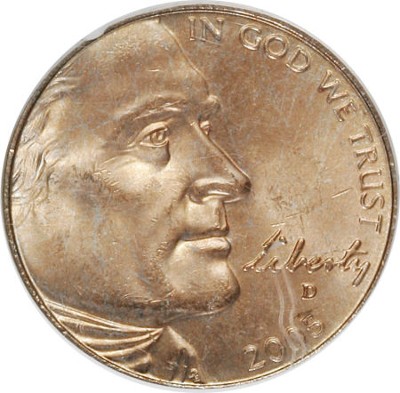
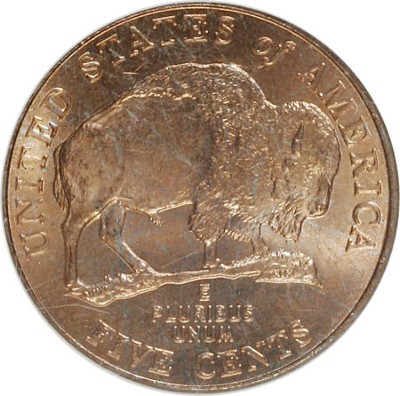
Another example of improper annealed planchet is the 2005-D Jefferson nickel with Bison reverse.

Images are courtesy of Heritage Auctions.


  • « Previous Page
  • 1
  • …
  • 11
  • 12
  • 13
  • 14
  • 15
  • …
  • 21
  • Next Page »
  • Home
  • Introduction To This Website
  • Error-ref.com News
  • Comprehensive Error-Variety Checklist
  • Index Of Completed Entries
  • Part I. Die Subtypes:
  • Part II. Die Varieties:
  • Part III. Die Installation Errors:
  • Part IV. Die Errors:
  • Part V. Planchet Errors:
  • Part VI. Striking Errors:
  • Part VII. Post-Strike Mint Modifications:
  • Part VIII. Post-Strike Striking Chamber Mishaps:
  • Part IX. Post-Strike Mint Damage:
  • Part X. Wastebasket / Composite Categories:
  • Part XI. Non Errors:
  • Featured Articles Of Interested
  • Interest & Not So Interesting Facts
  • Other Sites And Forums Of Interest
  • Our Thanks Go To
  • About The Authors
  • Contact Us

Copyright © 2026