Error-Ref.com

You are here: Home / Search for "off center"

Search Results for: off center

Plating Disturbance Doubling

PART X. Wastebasket / Composite Categories:

Doubling:

Plating Disturbance Doubling

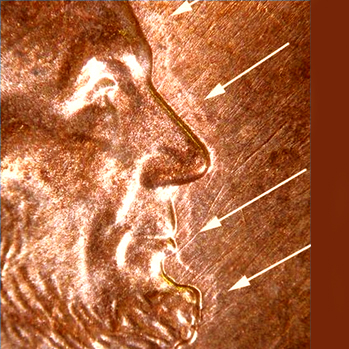
Definition: Also known as Disturbed Plating Doubling, this is a form of raised doubling that occurs only on copper-plated zinc cents.  It’s something of a hybrid between blistered plating and split plating doubling.  Tensile stresses that are generated next to the raised design during the strike cause the copper plating to lift up.  The result is a raised outline or silhouette next to the normal design element.
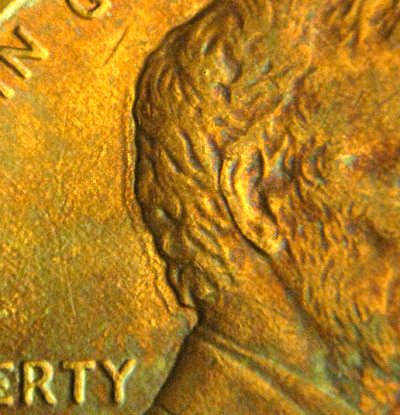

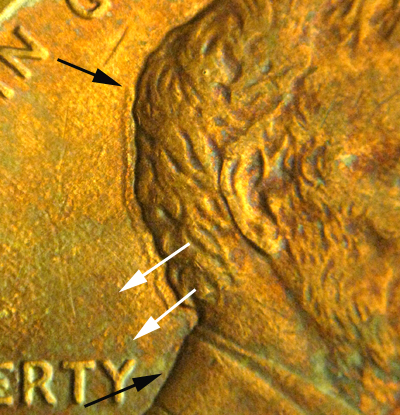
Plating disturbance doubling can be found on on the obverse of this 1991(P) Lincoln cent. An offset raised outline of the back of Lincoln’s head can be seen to the WSW of the normal design element.
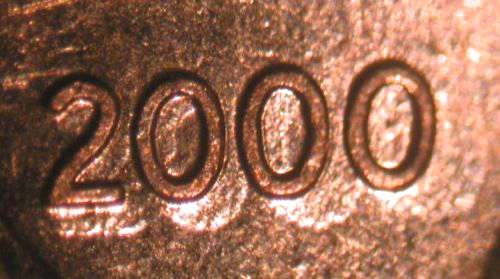
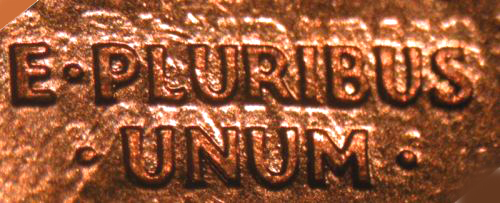
01a_dist_plating_dblg_2000_1c_date01b_dist_plating_dblg_2000_1c_EPUPlating disturbance doubling can be found on both faces of this 2000 cent.  An offset raised date and an offset raised version of E PLURIBUS UNUM are shown.
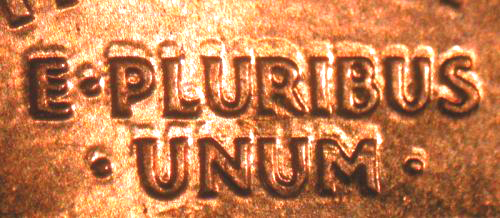
02_dist_plating_dblg_1993D_1c_EPUAn offset, raised version of E PLURIBUS UNUM can be seen north of the normal raised letters On this 1993-D Lincoln cent.03_extra_profile_1993_centA raised outline of Lincoln’s face can be seen to the right of his normal profile on this 1993(P) Lincoln cent.


Numerous Closely Spaced Strikes

PART VI. Striking Errors:

Multiple Strikes:

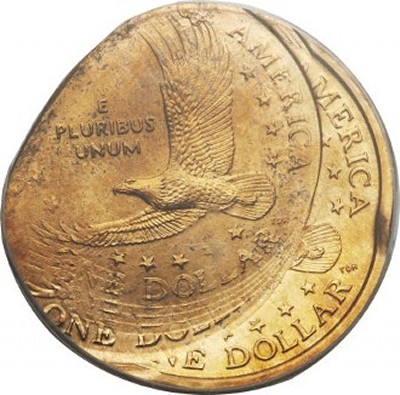
Numerous Closely-spaced Strikes

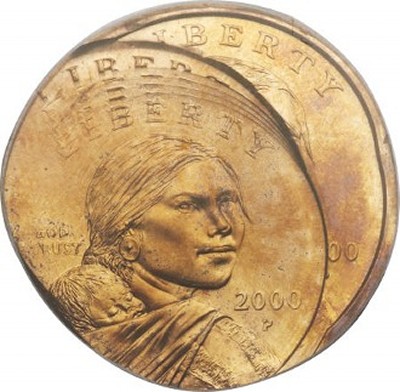
Definition: This error occurs when a newly-struck coin fails to properly eject from the striking chamber and is struck several more times by the same die pair. A multi-struck error of this nature can occur inside or outside of the collar.

This 2000P Sacagawea dollar coin was struck 6 times. The first strike appeared to be normal, while the remaining five strikes were delivered off-center.  The coin moved slightly between each off-center strike.

Images are courtesy of Heritage Auctions.

Two Different Denominations

PART III. Die Installation Errors:

Mules: 

Two Different Denominations

Debuting in May of 2000, this slip up was destined to make history. At the time, it was the only known “mule” coin in United States history.

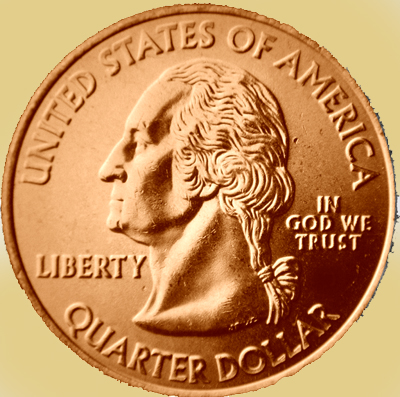
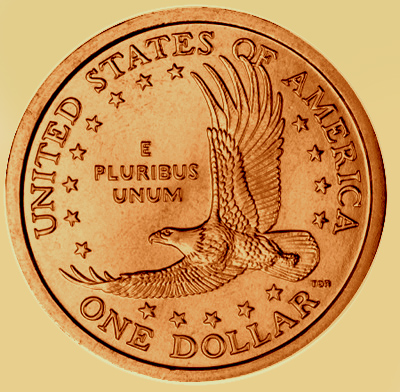
For those who are not professional numismatists, a mule is a pairing of two different coin designs on one coin — in this case, a State Quarter and the brand new Sacagawea dollar. Previous to the discovery specimen of this famous coin, mules were not known to exist in United States coinage, though commonly found in foreign series.

After authentication and subsequent confirmation of its existence by the United States Mint, a firestorm of controversy was set off. How could this happen? Was it intentional? The biggest debate — was it legal to own?

After near forensic inspection and an unconfirmed report by an anonymous US Mint employee, it was determined that the anomaly was produced due to the similar sizes of the “coin dies” of a State Quarter and the new Sacagawea dollar. A coin die is the part of a coin press that places the design on the coin. Ironically, this was the very reason that the previous dollar coin, the Susan B Anthony, was despised by the public.

The quarter die was placed into a press currently in production of Sacagawea dollars. The rest is history — several coins were struck before the error was discovered. Many of the coins were discovered before reaching the public and were subsequently destroyed.

Interestingly, upon closer inspection of the 10 known specimens, it’s apparent that the errors were produced at three separate times. It’s theorized that these are “copycat” errors produced by rogue US Mint employees after word spread of the first discovery. Many of the coins were discovered in Philadelphia, the home of the primary United States Mint.

While it’s been nearly a decade since the last sale of the Sacagawea Mule, it’s speculated that they could bring a whopping $250,000 at auction. 8 of the 10 known specimens have been handled by the author, Fred Weinberg of Beverly Hills.

There are now ten (10) confirmed specimens of the Sacagawea Dollar/Quarter Mule. The ten confirmed specimens
are:

Mule #1. The “Discovery” specimen, found in Mountain Home, Arkansas by Frank Wallis. Originally sold by Bowers & Merena Auction Galleries at the 2000 ANA Philadelphia Millennium Sale for $29,900. Purchased from Dwight Manley by Fred Weinberg in late June 2001 and then sold to Tommy Bolack for $67,000.  PCGS MS-66 (Die Pair #1)

Mule #2. The “eBay” specimen, sold by Delaware Valley Rare Coin Co., in Bromall Pennsylvania for $41,395 in July 2000. Purchased at the Heritage Numismatic Auctions Signature Sale held June 1, 2001 at the Long Beach Coin Expo for a then record price of $56,350, by Tommy Bolack. NGC MS-67 (Die Pair #2)

Mule #3. The “Heritage Auction” specimen, sold in the Heritage Numismatic Auction Pre-ANA Sale August 6, 2000 for $31,050. Then into a private collection, after being purchased off an eBay Auction in October 2000. Currently owned by Tommy Bolack. NGC MS-66 (Die Pair #2)

Mule #4. The “Margolis” specimen, originally from Fred Weinberg of Encino, CA. Sold by Arnold Margolis to a private collector in September 2000 for $47,500. PCGS MS-65 (Die Pair #1)

Mule #5. The “Greg Senske” specimen, found in Cape Girardeau, Missouri. This coin was discovered Sept. 2000 in change from a cashier at a cafeteria, and was in a 25-coin roll of Sacagawea $1, wrapped in a U.S. Mint designated paper wrapper. This piece is not on the market at this time. NGC MS-67 (Die Pair #3)

Mule #6. The “Fred Weinberg” specimen, discovered on the East Coast in June 2000 and sold by Fred Weinberg at the Long Beach Coin Expo October 5, 2000 for $50,000 to an anonymous collector. Purchased in May 2003 for $75,000 by Tommy Bolack. PCGS MS-66 (Die Pair #1)

Mule #7. The “Philadelphia” specimen, purchased by Tommy Bolack from Maryland Coin Exchange in early February 2001 for $48,000. MCE purchased this piece from the man who discovered it in a roll of dollars in July 2000 in Pennsylvania. NGC MS-64 (Die Pair #2)

Mule #8. The “Tommy Bolack-1” specimen, purchased in June 2001. The purchase price was not disclosed. PCGS MS-66 (Die Pair #1)

Mule #9. The “Tommy Bolack-2” specimen purchased in July 2001. The purchase price was not disclosed. PCGS MS-65 (Die Pair #1)

Mule #10. The “Treasury” specimen, first reported in August 2001 by a convenience store owner who received it in payment in his downtown Philadelphia store in summer 2000. It was taken by Treasury Dept. officials in August 2001 to verify authenticity and to examine the piece at the Philadelphia Mint. It was returned by the Treasury Department in October 2001 and subsequently purchased by Fred Weinberg, who sold it in November 2001 to Tommy Bolack for $70,000.

Multiple Clips And Combination Clips

Part V: Planchet Errors:

Blanking and Cutting Errors:

Multiple clips and combination clips:


Definition: Two or more clips of the same type or of different types can appear on the same coin.  Any combination of curved, straight, ragged, and elliptical clips is possible.

The percentage of missing metal, or mass, on a clipped planchet is often expressed as a measurement of weight. The measurement will normally be expressed in grams or grains.

For expanded treatment concerning clip diagnostics click here.

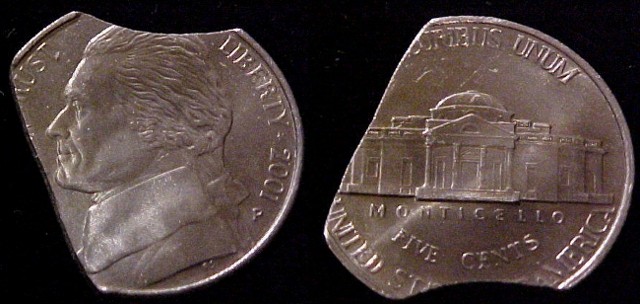
Below is a 2001-P Jefferson nickel with a combination curved and straight clip. Image courtesy Ynes Zavala.

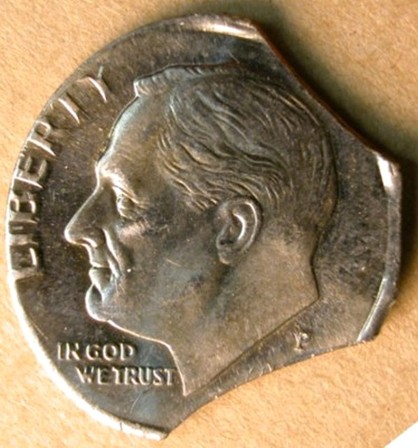
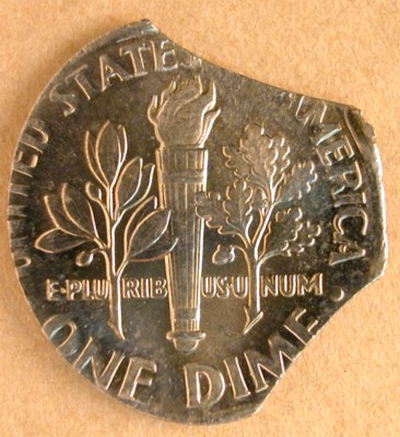
Shown below is a quad-clipped dime that consists of an elliptical clip (best seen on the left) and three curved clips.

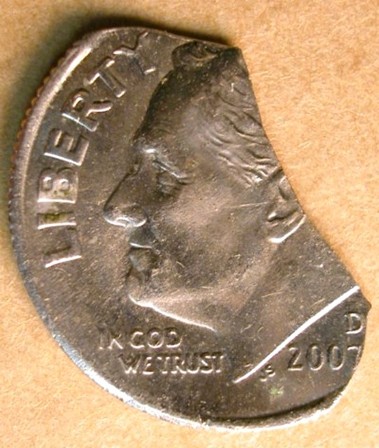
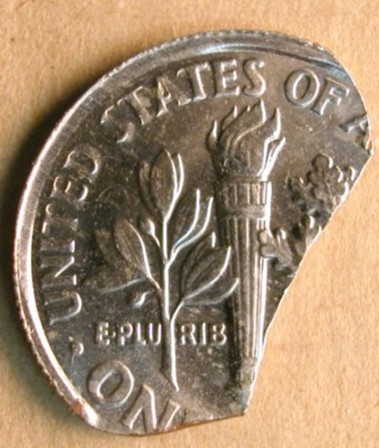
Depicted below is a 2007-D dime with an elliptical clip and a curved clip that interrupts the right side of the ellipse.


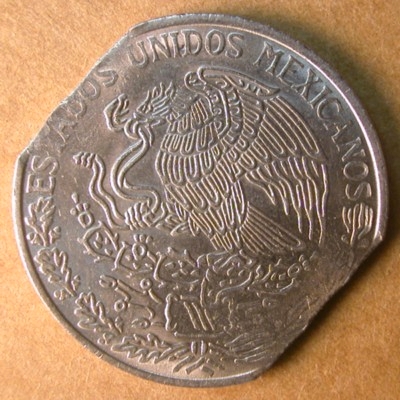
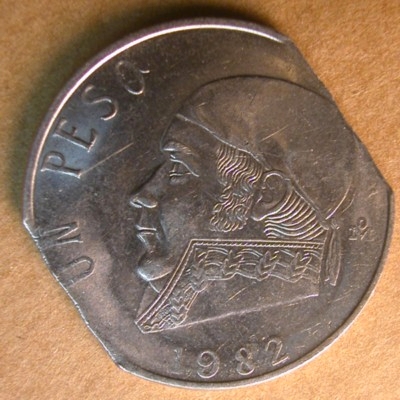
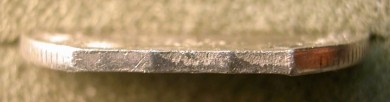
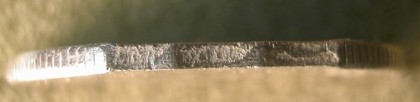
1982 Mexican 1 peso coin with six curved clips. Three overlapping curved clips are situated at opposite poles. The edge shots show a nice cut-and-tear texture.


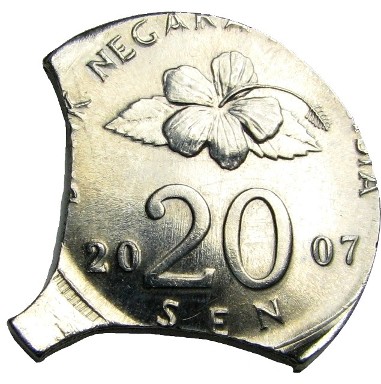
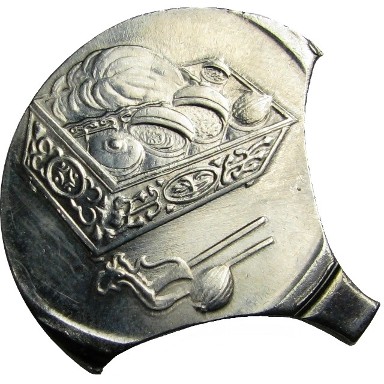
A Malaysian 20 sen struck off-center on a double curved clipped planchet.


Multiple Counterbrockages

PART VI. Striking Errors:

Counterbrockages:

Multiple Counterbrockages

Definition: A counterbrockage is an expanded and distorted image (raised and normally-oriented) that is generated when a brockaged coin is struck into a planchet.

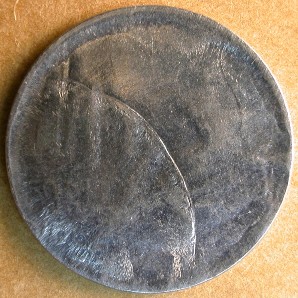
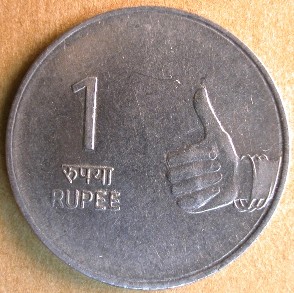
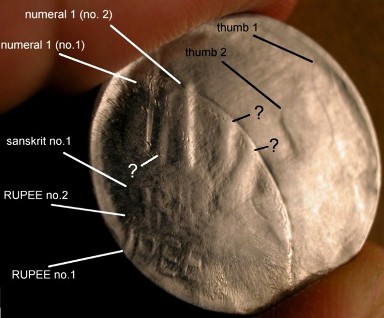
A single counterbrockage is rare enough, but the 2007 India 1 rupee coin shown below is a double counterbrockage of the reverse design on the reverse face. Detailed images with companion information as to how this double counterbrockage may have occurred is further below.

As with most 1 rupee coins, the reverse face was struck by the hammer die.

First, here are two images with the left being our double counterbrockage and the right being a normal 1 rupee coin.

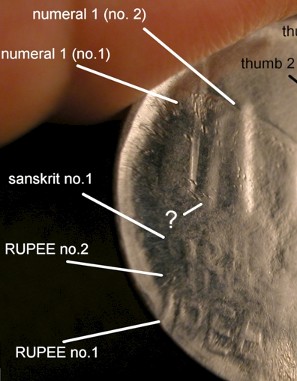
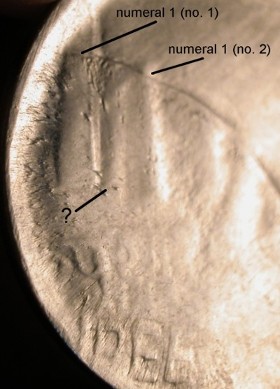
Directly below are three images with the counterbrockage design elements labeled on the left half of the coin. Features of uncertain status are labeled with a question mark.

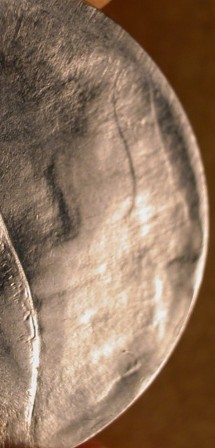
A close-up of the right side of the reverse showing the two upraised thumbs. The more peripheral thumb is larger and clearer. The curled fingers 2-5 can be faintly discerned down and to the left of the thumbs.

A close-up of the two versions of “RUPEE” (the smaller one very faint) and the Sanskrit letters above them.

With respect to the thumb and the word RUPEE, these more peripheral design elements are larger and more distorted than the versions that lie closer to the center of the coin. The puzzling thing is that these more peripheral elements are also clearer than the more centrally located ones. Ordinarily, the more expanded a counterbrockage is, the less clear it is.

There are at least four scenarios that can be invoked to explain the appearance of this coin. None assumes more than one strike.

Scenario 1. The coin that created the counterbrockage was, itself, struck against a double-struck rupee. That would have left a double brockage of the reverse design on the obverse (bottom) face of the coin. The problem with this scenario is that both sets of design elements should be the same size and one set (representing the earliest strike) should be decidedly incomplete.

Scenario 2. The coin that created the counterbrockage could have been double-struck against a single 1 rupee coin, with movement between each strike. The problem here is that there is too much spread between “primary” and “secondary” counterbrockage design elements and the spread is radial, rather than offset.

Scenario 3. The coin that created the counterbrockage could have been double-struck against two different 1 rupee coins. This is highly unlikely, given the close association between “primary” and “secondary” counterbrockage elements. There is also little chance that two different coins would have been so perfectly placed beneath the coin that would eventually generate the counterbrockage.

Scenario 4. This is by far the most complex scenario, but it has much to recommend it. It entails four steps.

  1. The coin that created the counterbrockage was originally fed into the striking chamber as an unstruck planchet on top of a normal rupee. The two were struck together and the top coin stuck to the reverse (hammer) die. The bottom coin also remained in the striking chamber, seated on the obverse (anvil die).
  2. A fresh planchet was fed in between the original coins and the threesome were struck together. This caused the brockage on the top coin to spread out. The bottom coin’s raised design did not spread out much because it was confined by the collar.
  3. The middle coin was ejected and the top and bottom coins (now die caps) were struck against each other for a second time. This created a second, smaller brockage on the obverse (bottom) face of the top coin (hammer die cap). This second brockage was minimally expanded but not particularly clear as a result of the bottom coin being mashed in the previous strike by a planchet.
  4. The bottom coin is ejected and a fresh planchet is fed in. It is struck by the hammer die cap and is left with two counterbrockages, one peripherally located and one more centrally located.

Although Scenario 4 is quite complicated, it fits the facts better. Regardless of its accuracy, what IS clear, is that a very complicated chain of events must lie behind the creation of this wonder of an error.

Multiple Machine Doubling In One Direction

PART VI. Striking Errors:

Machine Doubling:

Multiple machine doubling in one direction:

Definition: Machine Doubling is the product of die instability and displaced energy from the original strike that involves either a die rebounding off of the surface of the coin; or from a shift or turn of a die after the initial strike. The resulting impact largely affects struck devices on the coin. In its rudimentary form it is very common. In the extreme it can grossly distort devices or in some cases mimic a double strike. The doubling can also become tripling or quadrupling if the energy of the original strike rebounds and returns multiple times. Also called: machine doubling damage, machine damage doubling, mechanical doubling, strike doubling, shift doubling, ejection doubling, shelf doubling, shear doubling and field doubling.

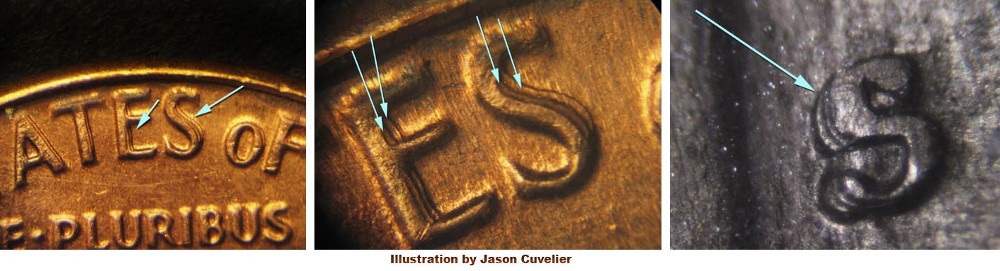
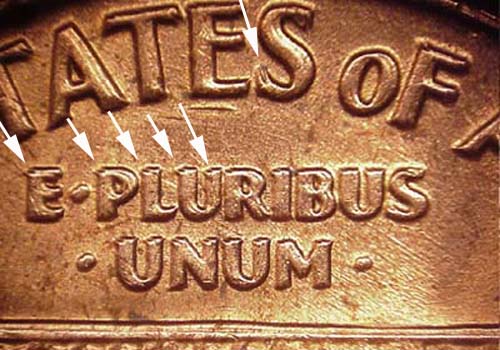
Machine doubling can in one direction rebound more than once. Below are two examples of machine tripling; the first on a Lincoln memorial cent and the second on a Jefferson nickel reverse. In the case of the Lincoln, most of the motto displays machine doubling, whereas the ES and a fragment of the T show localized machine tripling.

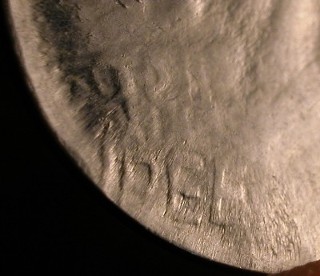
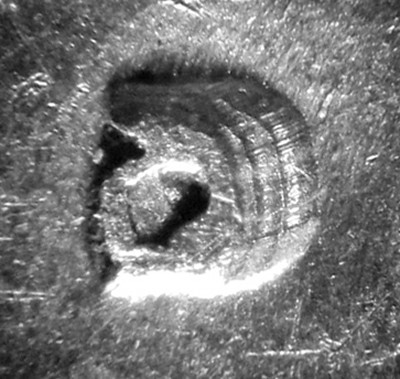
The image to the right shows a D mintmark on a 1936 Washington quarter. Two things that are unusual about this anomaly are, first it is isolated machine doubling. No other design element near the mintmark shows any signs of machine doubling. This isolation may be caused by the mintmark being a bit higher (sunk deeper into the die) than the surrounding design elements and more prone to being “hit” by the retreating die that causes this anomaly.

Careful examination of this machine doubling shows at least three different steps or “hits”. Two actions may have caused this phenomena; a chattering anvil die or a resonating coin.

Like any solid material, a coin will vibrate or resonate at a certain frequency when struck. In that very brief moment that the coin does come into the second contact with a die, the vibrations generated by the coin will cause the multiple steps of machine doubling to occur with just one contact of the coin to the die.

Image is courtesy of Ed Nieko

New Images Text Layout 6


PART X. Wastebasket /Composite Categories:


Incuse machine doubling


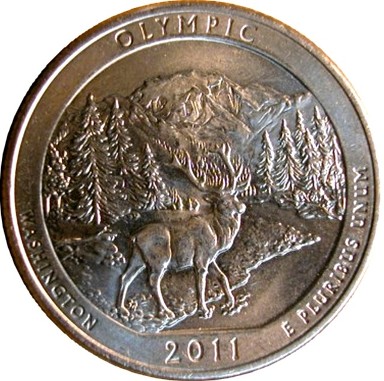
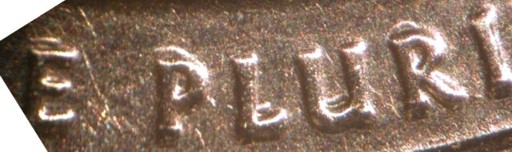
Incuse machine doubling: Machine doubling that affects design elements that are normally incuse. The example shown here is a 2011-D Olympic National Park quarter. Peripheral design elements on the reverse face are all incuse. In this specimen the letters E PLUR show strong machine doubling. After reaching the lowest point of its downstroke the hammer (reverse) die bounced up, shifted toward the northwest, and landed lightly on the elevated ring that encircles the reverse face. This left a lightly-impressed set of letters offset from, and overlapping, the normal incuse letters. These extra letters are much smaller and thinner than the normal letters because the apex of each raised letter on the die face is narrower than the base in vertical cross section. 


Coin courtesy of Alex Tuel


Notching

NOTCHING

Notching is an affect caused by the formation of a doubled die. The notch is formed on the serifs of letters and numerals and is the result of the positioning of the first image to the offset of the second image. While true notcing is only formed on doubled dies, a condition that is similar is seen with die deterioration doubling.

The image below shows notching on a 1964 Lincoln cent doubled die. The image is courtesy of Coppercoins.


Mules Two Different Countries

PART III. Die Installation Errors:

Mules: 

Struck with Dies from Two Different Countries

Definition: Mules are coins struck by mismatched dies.

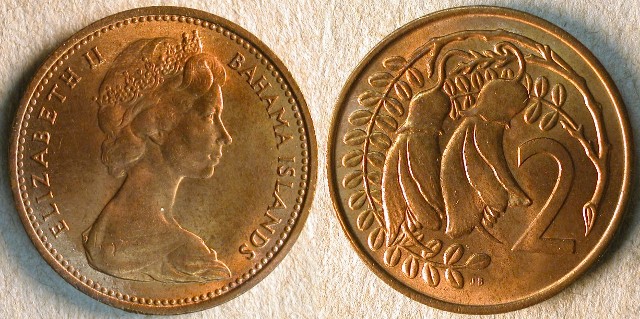
Some mules are purely accidental, and their release sometimes goes unnoticed until after thousands enter circulation. That’s the case with the (1967) New Zealand two cent mule shown below. The obverse mistakenly carries a Bahamas 5 cent design. Current estimates suggest at least 30,000 were released before mint officials realized what happened.

The Bahamas/New Zealand mule (1967) is one of the few to belong to this rare species of different denomination & different country. And yet, it is one of the best-known and most abundant mules. It pairs an incorrect Bahamas 5 cent (anvil/obverse) die with a correct New Zealand 2 cent (hammer/reverse) die. It was struck on a normal bronze New Zealand 2 cent planchet inside a 2 cent collar. A normal Bahamas 5 cent coin is composed of copper-nickel.


Pseudo-mules

PART III. Die Installation:

Mules: 

Pseudo-mules

Definition: A coin with the same raised design on each face, but which is struck with a pair of conventional dies.  Pseudo-mules can be generated by accident or by intent.  There are three ways a pseudo-mule can be generated.  For purposes of this discussion, we’ll describe a pseudo-mule that carries the design of the hammer die on each face.  An example would be a two-headed cent from the 1980’s (before inverted die installation was introduced by the U.S. Mint).

Method 1. A coin flips over on top of a planchet, landing within the collar or in a perfectly centered position. The
two discs are struck together. The original die-struck hammer die design is flattened. The original die-struck anvil die design is obliterated by the force of the strike. The double thickness causes an increase in effective striking pressure, which facilitates erasure of the anvil die design.

Method 2. Two planchets are struck together within the collar, producing two in-collar uniface strikes. The bottom coin is ejected while the top coin flips over and lands on another planchet. During the second strike, the original hammer die design is flattened, while the original featureless surface is struck by the hammer die.

Method 3. The sequence begins with a coin with an in-collar, first-strike brockage of the hammer die design on the face normally struck by the anvil die. The coin flips over and lands in the collar. A planchet is fed on top of it and then struck. The top coin has on its bottom face a first-strike counterbrockage of the hammer die design.

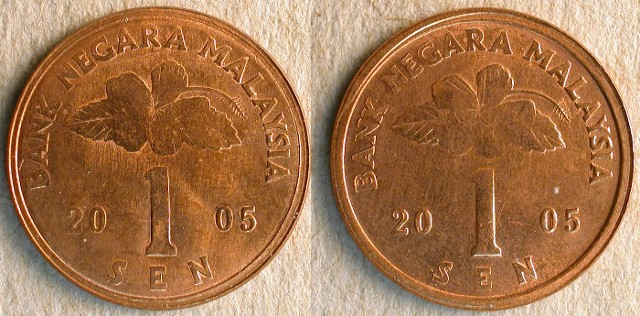
A 2005 Malaysian 1 sen coin shown below carries the obverse design (struck by the hammer die) on each face. It is an intentionally fabricated, double-struck pseudo-mule. Method 2 was almost certainly employed.

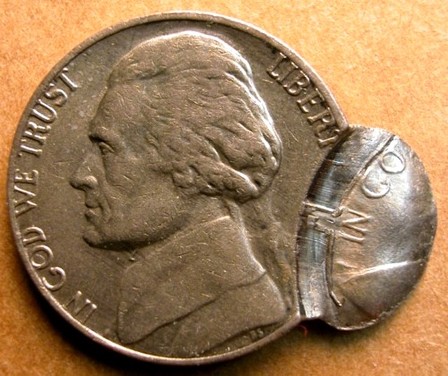
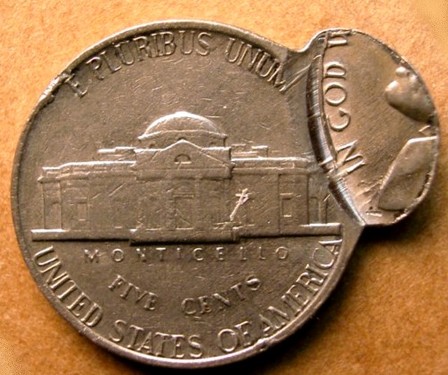
This undated triple-struck nickel shown below displays a spontaneous, off-center pseudo-mule of the obverse (hammer die) design. The second strike was an off-center uniface strike, with the obverse design die-struck. The coin flipped over on top of a planchet and received a second off-center uniface strike in exactly the same spot. The die-struck obverse design from the second strike was flattened by the third strike. The uniface surface from the second strike received a fresh-die struck obverse design during the third strike.
  • « Previous Page
  • 1
  • …
  • 10
  • 11
  • 12
  • 13
  • 14
  • …
  • 21
  • Next Page »
  • Home
  • Introduction To This Website
  • Error-ref.com News
  • Comprehensive Error-Variety Checklist
  • Index Of Completed Entries
  • Part I. Die Subtypes:
  • Part II. Die Varieties:
  • Part III. Die Installation Errors:
  • Part IV. Die Errors:
  • Part V. Planchet Errors:
  • Part VI. Striking Errors:
  • Part VII. Post-Strike Mint Modifications:
  • Part VIII. Post-Strike Striking Chamber Mishaps:
  • Part IX. Post-Strike Mint Damage:
  • Part X. Wastebasket / Composite Categories:
  • Part XI. Non Errors:
  • Featured Articles Of Interested
  • Interest & Not So Interesting Facts
  • Other Sites And Forums Of Interest
  • Our Thanks Go To
  • About The Authors
  • Contact Us

Copyright © 2026